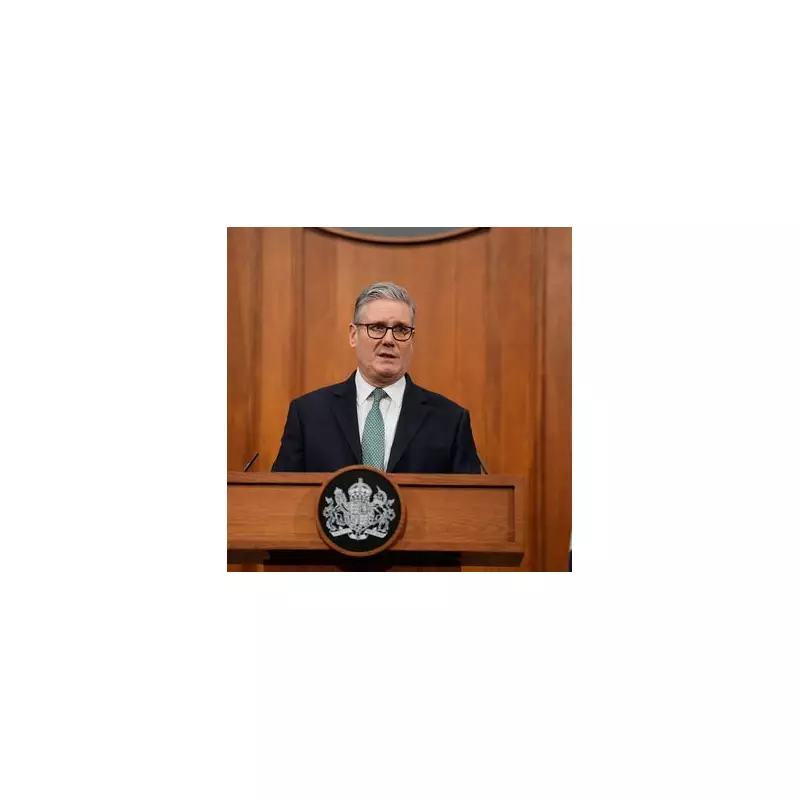
Prime Minister Keir Starmer has delivered a defiant response to what he termed the "erratic" threats of former US President Donald Trump, who has vowed to impose punitive tariffs on the UK and other NATO allies in a dispute over Greenland. In an emergency address from Downing Street on Monday, 19 January 2026, Starmer framed the escalating crisis as a moment for the nation to unite, while firmly rejecting the use of trade wars between allies.
A Defiant Stance Against Economic Pressure
Starmer issued a stark warning that a "trade war is in no one's interest," directly countering Trump's weekend announcement. The US President declared he would slap 10% tariffs on countries, including the UK, from February 2026 for opposing his desired takeover of Greenland. He further threatened to hike these levies to 25% by 1 June if a deal is not secured.
"The use of tariffs against allies is completely wrong," the Prime Minister stated. "It is not the right way to resolve differences within an alliance. Such measures hurt British workers, British businesses and the British economy." He insisted any solutions regarding Greenland must come through "calm discussion," not economic coercion.

Unity at Home, Diplomacy Abroad
Starmer described the situation as a "moment for the whole country to pull together" and notably welcomed the support of Conservative Leader of the Opposition, Kemi Badenoch. He stressed that a strong partnership with the US "does not mean abandoning principle."
Setting a distinct path from the European Union, which is reportedly considering retaliatory tariffs on US goods, Starmer ruled out a tit-for-tat approach. "A tariff war isn't in anybody's interests," he said, committing instead to engage with both European allies and President Trump to de-escalate the situation.
Confronting Bullying and Defending the Alliance
The Prime Minister was directly confronted by Sky News's Beth Rigby, who asked if the US was "bullying" the UK and if this constituted the most serious transatlantic crisis in decades. Starmer acknowledged the threats had been "very badly received across the United Kingdom" and admitted to "differences of opinion" with the US over Greenland's future.
He was unequivocal in stating that "any decision about the future status of Greenland belongs to the people of Greenland and the Kingdom of Denmark alone." Despite the friction, Starmer vigorously defended the underlying UK-US relationship, calling America a "close ally." He highlighted the unparalleled security, defence, and intelligence-sharing partnership, which he said is "vital to every single person" in the UK.
When pressed on calls from some MPs, like Liberal Democrat leader Sir Ed Davey, to cancel the King's scheduled state visit to the US in April, Starmer dismissed the idea. He said his focus was on a "pragmatic response" in the national interest, not "the suggestion of others."
In a pointed message to critics, Starmer linked international diplomacy directly to domestic cost-of-living concerns. He argued that disengaging globally would be a "dereliction of duty," as international events have a direct and profound impact on household finances in Britain.
Asked about the potential for military action, Starmer indicated he did not believe Trump was prepared to use force to annex Greenland. He expressed confidence the issue could be resolved through dialogue, underpinned by the principles he outlined. The Prime Minister concluded by dismissing suggestions he had been "too soft," pointing to significant inward investment secured through his government's approach.