Prime Minister Keir Starmer faces mounting pressure to secure Chinese financial support for British Steel in Scunthorpe as he embarks on a high-stakes diplomatic mission to Beijing. The visit, accompanied by Chancellor Rachel Reeves and Business Secretary Peter Kyle, marks the first prime ministerial trip to China since Theresa May's 2018 attempt to forge post-Brexit trade agreements.
Diplomatic Balancing Act
Downing Street officials are navigating a delicate diplomatic path, acknowledging that while human rights concerns, national security issues, and the imprisonment of British pro-democracy campaigner Jimmy Lai in Hong Kong will be addressed, the primary focus remains on strengthening economic ties between the two nations. In pre-flight remarks, Starmer emphasised that his visit "is not about Donald Trump," despite the former US president's recent threats of imposing 100% tariffs on countries making deals with China.
Economic Realities Versus Political Ambitions
Speaking to Bloomberg, the Prime Minister asserted that China presents "significant opportunities" for British businesses and maintained he would not be forced to choose between China and the United States. However, analysts remain sceptical about the potential for meaningful trade agreements, with the UK's trade deficit with China more than doubling from £17 billion in 2018 to £42 billion by the second quarter of 2025.

Sam Goodman, senior policy director at the China Strategic Risks Institute, suggests the expectations for Starmer's trip are minimal, potentially resulting in "a bunch of MOUs [memorandum of understanding]" concerning financial services and possible greenfield investments in the automotive sector. "The bar for a successful Starmer visit is very low," Goodman observes, highlighting the constrained economic landscape.
The British Steel Imperative
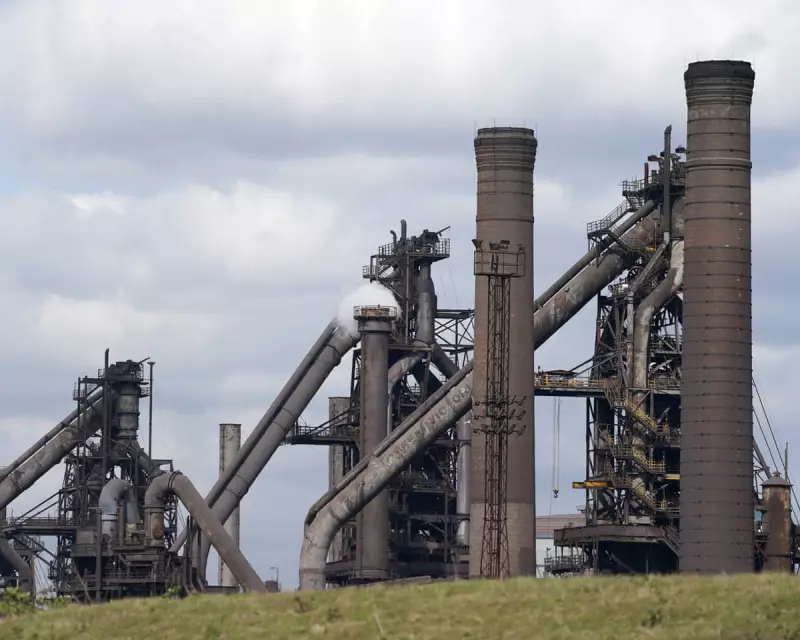
A particularly pressing concern involves British Steel's Scunthorpe plant, which the British government assumed control of last year to prevent closure by Chinese firm Jingye. Starmer will be under considerable pressure to ensure China contributes financially to the steelworks' future, representing a crucial test of the UK's negotiating position.
Expert Perspectives on Limited Gains
Andrew Small, director of the Asia programme at the European Council on Foreign Relations and former European Commission adviser, argues that Beijing is unlikely to deliver the economic boost Labour desires. "Margins have perished in an overheated economy," Small explains, noting that China's record trillion-dollar global trade surplus in 2025 demonstrates its dominant position.
Small employs a vivid analogy to describe current UK government thinking: "Every single statement that one sees from anyone in the UK government on all of this has this sort of South Park underpants quality to it," referencing the satirical cartoon's three-step business plan where profit magically accrues without substantive action. He continues: "There remains this peculiar overhang of viewing China as an economic opportunity that can be unlocked, completely removed from the reality that there are very marginal gains to be made in limited areas."
Weaponised Trade Relations
Experts warn that conducting business with China has become increasingly complex and potentially hazardous. Goodman's unpublished paper for King's College London's Centre for Statecraft and National Security identifies eight tactics China employs to weaponise trading relationships, including import bans and anti-competition investigations targeting companies like French brandy producers, Google, and Nvidia.
Last year demonstrated China's willingness to disrupt global supply chains when export bans on Nexperia chips nearly halted car production worldwide during a dispute with the Dutch government. "Foreign businesses are seen as fair game and a useful pressure point for China in its international relations," Goodman notes.

Investment Asymmetry and Strategic Shifts
Questions persist regarding the uneven nature of Chinese investments in the UK and whether they genuinely create sustainable employment opportunities. Meanwhile, China continues to de-risk its economic exposure in unexpected ways, as evidenced by luxury electric vehicle brand Zeekr delisting from the New York Stock Exchange after just one year, citing an "increasingly complex economic environment."
Goodman suggests this trend may continue, pointing to Shein's likely listing in Hong Kong rather than London as originally considered. These developments occur against a backdrop where President Xi Jinping's confidence has grown following perceived successes in tariff wars with the United States, potentially emboldening China to employ trade as a political instrument more openly.
The delegation accompanying Starmer includes chief executives from major banks and financial services companies alongside selected small- and medium-sized enterprises, plus representatives from Rolls-Royce, which maintains an aero engine services joint venture with Air China. As these business leaders seek opportunities, they confront the stark reality that engaging with China represents a double-edged sword—offering potential rewards alongside significant strategic risks in an increasingly complex global economic landscape.