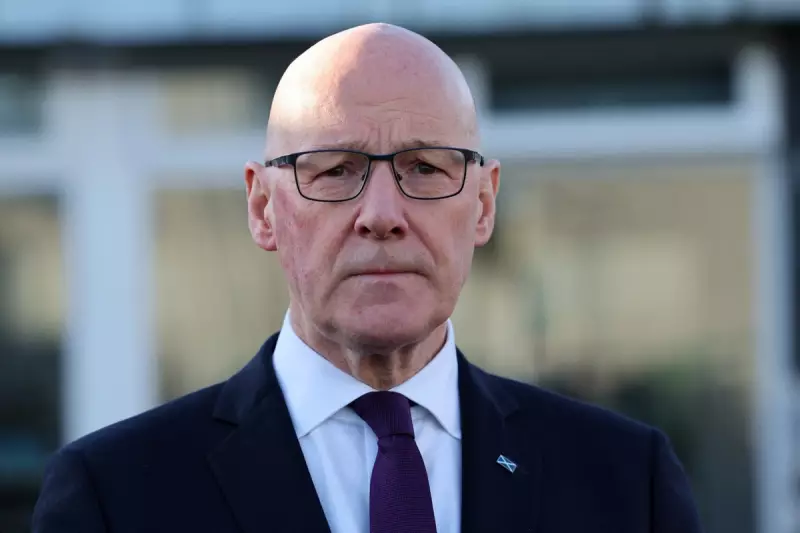
Scottish First Minister John Swinney has launched a fierce condemnation of US President Donald Trump, accusing him of issuing "economic threats" that are "deeply damaging" to both the UK economy and the NATO alliance. The criticism follows President Trump's announcement that he will impose significant tariffs on the United Kingdom and several other NATO nations in a dispute over the future of Greenland.
Economic Threats Over Arctic Territory
The crisis stems from President Trump's ambition to acquire Greenland, a semi-autonomous territory of the Kingdom of Denmark, citing its strategic Arctic location and mineral wealth. In a drastic escalation, the US President declared he would charge the UK a 10% tariff "on any and all goods" sent to the US from February 1, 2026. This levy is set to rise sharply to 25% from June 1, continuing until a deal is reached for Washington to purchase the island.
The same punitive tariffs will apply to a host of other NATO members, including Denmark, Norway, Sweden, France, Germany, the Netherlands, and Finland. President Trump has notably not ruled out military action to achieve his territorial goal, casting a long shadow over diplomatic relations.

Swinney's Stark Warning on Security and Prosperity
In a forceful statement, John Swinney insisted the threatened tariffs were "the wrong thing to do." He warned they pose a dual threat, risking severe harm to the Scottish and UK economies while simultaneously undermining the foundational security of the NATO alliance.
"They have the risk of undermining the economy of Scotland and the United Kingdom because of the scale of the tariffs," Mr Swinney stated. "But they also risk undermining the security and the safety of the NATO alliance." He emphasised that the people of Greenland possess the fundamental right to determine their own future, a principle he believes is being trampled by Washington's tactics.
The First Minister was unequivocal: "It is not appropriate for the United States to use economic threats on others through the application of tariffs to try to get their way in the face of the right of the people of Greenland to decide their own future."
UK Government Urges Calm Amidst Rising Tensions
Prime Minister Sir Keir Starmer addressed the nation from Downing Street, framing the crisis as a "moment for the whole country to pull together." He advocated for the dispute to be resolved through "calm discussion between allies" rather than through military posturing or a retaliatory trade war.
Sir Keir signalled that Britain would not engage in tit-for-tat tariffs, stating that such measures were "not the right way to resolve differences within an alliance." His approach underscores a desire for diplomatic de-escalation, even as the US administration turns up the economic pressure.
The potential impact on specific Scottish industries is causing acute concern. Scottish Conservative business spokesperson Murdo Fraser highlighted that Scotland's whisky and textiles sectors could be particularly badly hit. He pointed out that the Scotch whisky industry had already lost approximately 1,000 jobs in the preceding year, and further tariffs would be "devastating" for key economic sectors.
Mr Fraser has submitted a formal question to SNP ministers, pressing them to outline concrete plans to protect jobs and to convey a strong, unambiguous message to President Trump that the proposed tariffs should not be implemented. The coming weeks will test the resilience of both international alliances and the UK's economic defences.