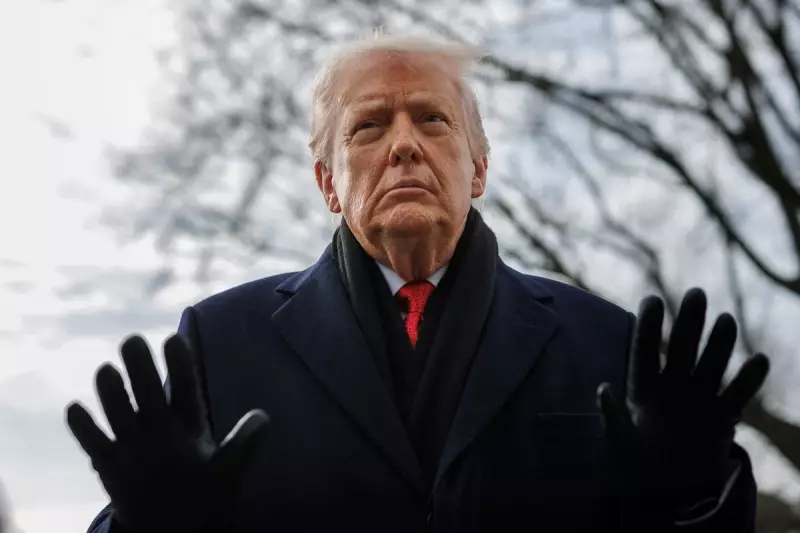
Former President Donald Trump has ignited a fresh transatlantic trade crisis, declaring punitive tariffs on the United Kingdom and several major European nations. The move is a direct retaliation for their opposition to a proposed American takeover of Greenland.
Escalating Tariffs and a February Deadline
In a post on his Truth Social platform, Trump declared that 10% tariffs will be imposed on imports from eight countries starting 1 February 2026. The nations targeted are Denmark, Norway, Sweden, France, Germany, the United Kingdom, the Netherlands, and Finland. The financial pressure is designed to escalate sharply, with Trump warning the levy will rise to a punishing 25% on 1 June.
The former president stated these measures would remain in force indefinitely, with relief only coming "until a deal is reached for the US to purchase Greenland". This revives a controversial ambition from his first term, framing the acquisition as a matter of urgent national and global security.

'World Peace at Stake' in Greenland Standoff
Justifying the aggressive economic stance, Trump invoked the spectre of Chinese expansionism. "World Peace is at stake! China want Greenland, and there is not a thing Denmark can do about it," he wrote. In a characteristically flippant assessment of the territory's defences, he added that Greenland is "only protected by two dogsleds".
His statement also contained a historical provocation aimed at Denmark, suggesting it was "time to give Denmark back" to the United States, a reference to a 19th-century proposal for the US to buy the Danish West Indies.
Implications for UK-EU Trade and Diplomacy
The announcement, made on Saturday 17 January 2026, throws immediate uncertainty into trade relations between the US and its traditional European allies. For the United Kingdom, navigating its post-Brexit trade landscape, the threat of significant new tariffs from a major economic partner represents a serious and unexpected challenge.
The collective response from the targeted European capitals, including London, is now keenly awaited. The situation sets the stage for a major diplomatic confrontation, blending longstanding Arctic strategic interests with volatile trade policy and the personal political style of the former president.