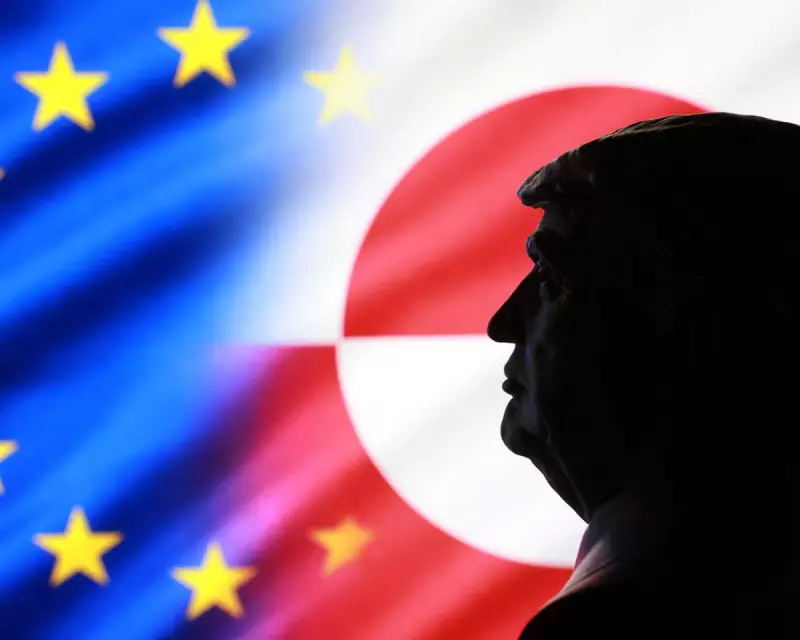
The spectre of a new transatlantic trade war has emerged, with former US President Donald Trump's latest threat to impose tariffs on European allies in pursuit of Greenland. While the political implications are severe, economists warn the deeper economic damage may stem from the corrosive uncertainty such threats create, a lesson the UK learned painfully during the Brexit years.
The High Cost of Not Knowing
As the International Monetary Fund (IMF) has consistently highlighted since Trump's trade war began, the ultimate level of tariffs is only part of the problem. The pervasive uncertainty they generate takes a significant toll of its own. IMF Managing Director Kristalina Georgieva noted in October that in this era, "uncertainty is the new normal."
This principle was starkly demonstrated in the UK following the 2016 Brexit referendum. For several years, businesses held back from crucial investment decisions because they could not foresee the final shape of the policy landscape. The current situation risks a repeat of this damaging paralysis on a broader scale.

A Threat at a Fraught Moment
The proposed tariffs – 10% from February, rising to a punitive 25% on 1 June – come at a particularly delicate time for the global economy. The threat lands as France grapples with a budgetary crisis and Germany hopes for an economic recovery after stagnation in 2025.
For UK Chancellor Rachel Reeves, the timing is especially problematic, dashing hopes for a modest economic upturn after a difficult year. The threat also shatters a recent sense of certainty for UK and EU businesses, who believed they could plan ahead after much-publicised trade deals with the US were ceremonially signed last summer.
Domestic Risks and the Inflation Spectre
Ironically, one of the most potent dangers for the US economy from Trump's move is the risk of resurgent inflation. The tariffs already in place are the highest since the Second World War. While inflation has remained largely subdued so far, analysts warn that as pre-tariff stockpiles of imported parts dwindle, companies will have less room to absorb costs, potentially pushing consumer prices higher.
Higher inflation would likely halt further interest rate cuts from the Federal Reserve – directly contradicting one of Trump's central economic goals, for which he has persistently pressured Fed Chair Jerome Powell.
Will Markets Finally Buckle?
A final critical risk is that this move, which severs economic policy from any conventional logic, could be the trigger that finally unsettles US financial markets. Last year's threat of across-the-board "reciprocal" tariffs caused dramatic market swings, leading Trump to retreat and prompting observers to coin the term "Taco" – "Trump Always Chickens Out."
Since then, investors, particularly in equities, have appeared largely unmoved by Trump's volatile economic decisions. The ongoing AI boom has continued to drive stock indices to record highs, despite some signs of a "flight to safety" into assets like gold and silver.
Investors may again bet on "Taco" and dismiss this latest drama. However, if they conclude that using tariffs against major allies will incur real economic costs, including potentially higher interest rates, turbulent times could lie ahead. As Kristalina Georgieva succinctly warned: "buckle up."