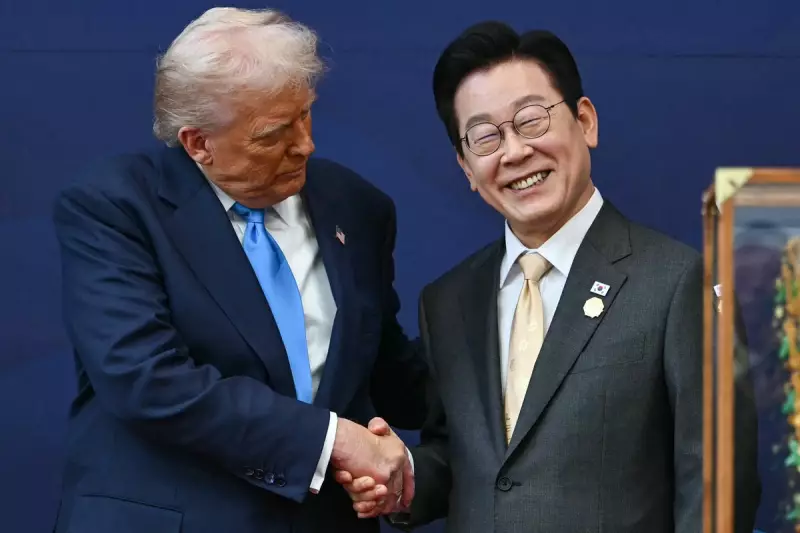
Former US President Donald Trump has declared his intention to significantly increase tariffs on imports from South Korea, escalating trade tensions between the two long-standing allies. In a statement issued this week, Trump announced he would raise duties from the current 15% to a substantial 25% on a wide range of goods, including automobiles, lumber, and pharmaceuticals.
Unratified Agreement Sparks Tariff Threat
The proposed tariff hike stems from what Trump describes as South Korea's failure to enact a comprehensive trade agreement that was initially negotiated in July 2025. The deal, which was reaffirmed during Trump's visit to Seoul in October of that year, has remained unratified by South Korea's National Assembly, prompting the former president's aggressive response.
"Because the Korean Legislature hasn't enacted our Historic Trade Agreement, which is their prerogative, I am hereby increasing South Korean TARIFFS on Autos, Lumber, Pharma, and all other Reciprocal TARIFFS, from 15% to 25%," Trump stated in his announcement.

South Korea's Response and Diplomatic Moves
South Korean officials have responded with surprise and concern to Trump's tariff announcement, noting they had received no official notification of the planned increase. The Blue House, South Korea's presidential office, has reaffirmed its commitment to implementing the trade deal and indicated it would continue taking necessary steps to finalise the agreement.
Industry Minister Kim Jung-kwan, currently in Canada, is scheduled to travel to Washington for urgent discussions with US Commerce Secretary Howard Lutnick. The Ministry of Economy and Finance has stated it is working to understand American intentions while planning to engage with US government officials to explain legislative developments in the National Assembly.
Background of the Trade Dispute
The current tensions represent the latest chapter in ongoing trade negotiations between the two nations. Last year, Trump imposed a 25% tariff on South Korean exports to the United States, later agreeing to reduce this to 15% following the initial trade agreement. In return for tariff reductions, Seoul committed to initiating substantial investments in US business projects worth approximately $350 billion.
However, negotiators have continued to spar over the precise details of the agreement, with the deal remaining unratified despite months of discussions. The investment package, which includes $200 billion in phased cash payments capped at $20 billion annually to maintain stability in the South Korean won, has faced implementation delays.
Potential Motivations and Wider Implications
Analysts suggest multiple factors may have influenced Trump's tariff announcement. Some observers point to recent South Korean regulatory actions following a mass data leak at Coupang, a US-listed e-commerce company. American lawmakers have described investigations into the incident as "discriminatory," with the US State Department expressing significant concerns about Seoul's regulatory approach to online platform businesses.
Choi Seok-young, a former South Korean trade negotiator, interpreted Trump's message as "a political move in which the United States is exerting maximum pressure on South Korea in an effort to force concessions during ongoing negotiations over non-tariff barriers."
The tariff threat represents another potential setback in relations between the two allies, coming amid broader concerns about security and financial stability implications. South Korean Finance Minister Koo Yun-cheol recently indicated that the $350 billion investment package was unlikely to begin in the first half of 2026, citing the weakness of the won and uncertainty surrounding an expected US Supreme Court ruling on Trump's tariffs.
As of Tuesday, the White House had not issued an executive order to implement the proposed tariff increases, leaving room for further diplomatic negotiations between the trading partners.