President Donald Trump has unequivocally pledged to impose punitive tariffs on eight European nations that have opposed his controversial bid to take control of Greenland, a move that has sent shockwaves through financial markets and triggered a significant military reinforcement by Denmark in the Arctic.
Trump's Unwavering Tariff Threat and European Response
In a stark declaration to NBC News on Tuesday, 20 January 2026, the US President stated he would "100 per cent" follow through on his threat to levy a 10 per cent import tax on goods from the European countries rallying behind Denmark and Greenland. The tariffs are scheduled to begin in February. When pressed on whether he would authorise military force to seize the semi-autonomous Danish territory, Trump offered only a terse "no comment."
He redirected focus towards the ongoing conflict in Eastern Europe, remarking, "Europe ought to focus on the war with Russia and Ukraine because, frankly, you see what that's gotten them... That's what Europe should focus on – not Greenland."

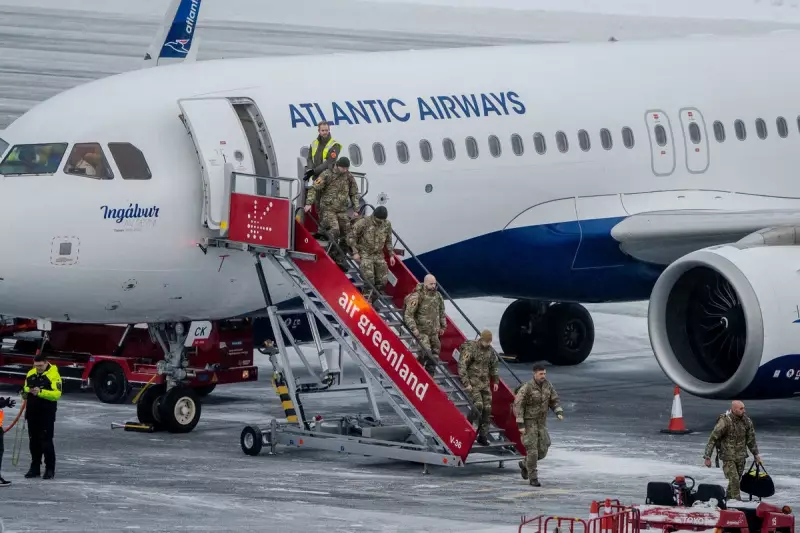
This escalation has prompted a swift and tangible response from Copenhagen. Danish broadcaster TV 2 filmed troops disembarking in Kangerlussuaq, Greenland, following Denmark's announcement of a "substantial contribution" of its Armed Forces to the region. This deployment coincides with the large-scale Arctic Endurance military exercise, which has taken on renewed urgency amid the geopolitical tensions.
Market Turmoil and Diplomatic Fractures
The President's Greenland gambit has immediately rattled global investors, reviving fears of a full-blown transatlantic trade war. During Asian trading hours, Nasdaq and S&P 500 futures slid by 1 per cent, while the US dollar remained under pressure. The yield on the 10-year US Treasury note climbed to 4.265 per cent, its highest level since early September.
MSCI's broadest index of Asia-Pacific shares fell 0.44 per cent as investors sought safe-haven assets like gold and the Swiss Franc, reigniting the "Sell America" trade dynamic seen previously.
Diplomatically, the crisis is testing alliances. Former UKIP leader Nigel Farage warned the row represents the "biggest fracture" in transatlantic relations since the 1956 Suez Crisis, clashing with US House Speaker Mike Johnson who defended Trump's "shock and awe" tactics as a means to a strategic end.
UK's Delicate Balancing Act
The British government finds itself navigating a precarious path. Foreign Secretary Yvette Cooper confirmed she held discussions with US Secretary of State Marco Rubio, emphasising the UK would pursue "every avenue for discussions" to de-escalate the situation and replace threats with a "constructive, shared approach to our security in the Arctic."
Shadow Foreign Secretary Dame Priti Patel urged the government to "leverage the strength" of the UK's special relationship with the US to prevent the tariffs, highlighting the profound concern for British businesses and exporters.
Meanwhile, at the World Economic Forum in Davos, Chancellor Rachel Reeves and Trade Secretary Peter Kyle are attempting to frame the global volatility as an opportunity for the UK. Reeves plans to tell investors that "in a volatile world Britain stands out" as a beacon of stability for business investment.
The convergence of trade threats, military posturing, and market anxiety underscores a profound moment of instability. With Trump adamant on his course and Europe fortifying its position, the Arctic has suddenly become the unlikely epicentre of a crisis straining the foundational bonds of the Western alliance.