

Trump's Economic Revolution: Australia's Surprising Position One Year On
One year into Donald Trump's presidency, experts across Australia and the globe are witnessing what many describe as the grinding gears of historical change. The Commonwealth Bank's chief economist, Luke Yeaman, captured the sentiment in October, declaring, "We have entered a new economic era; one with rules that are very different to the past." The world has moved beyond the peak of globalisation, transitioning into an age marked by rising trade protectionism, populist movements, and increasing restrictions on the movement of people and capital.
The Tariff Rollercoaster and Initial Fears
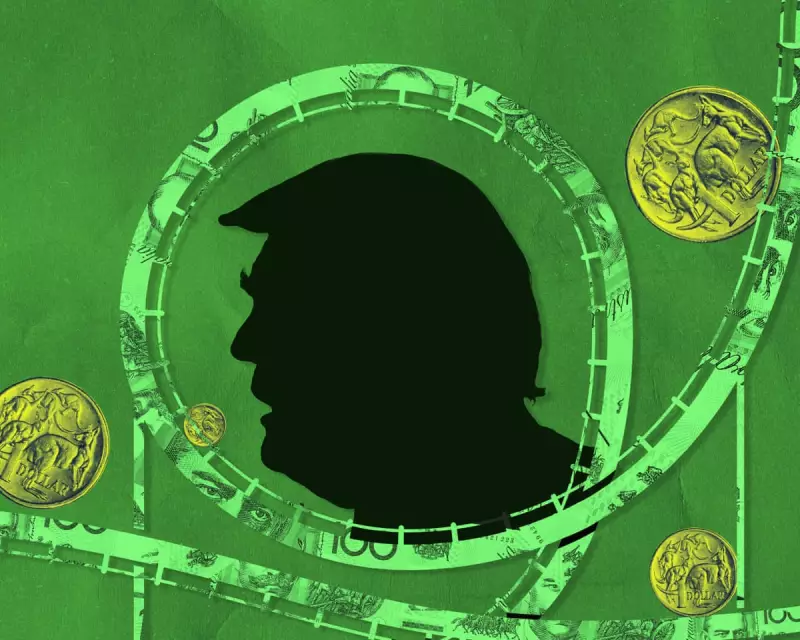
Trump's so-called "liberation day" tariffs in April last year sparked immediate fears of a devastating global trade war. As US import taxes climbed to levels not seen for a century, the Reserve Bank of Australia's board considered the case for a supersized double interest rate cut in May. RBA governor Michele Bullock lamented the situation as "a complete rollercoaster." Initial predictions were dire, with experts forecasting potential collateral damage to the Australian economy reaching $27 billion, or approximately 1% of GDP.
A survey by the Economic Society of Australia revealed that nearly 60% of economists expected the Trump presidency to harm Australian economic growth, with only three out of thirty-nine experts anticipating a positive impact. The theoretical outlook for a medium-sized, open economy like Australia's appeared particularly bleak in this new era of hardening borders and declining world trade.

Australia's Counterintuitive Success Story
Despite the gloomy predictions, reality has told a different story. Australia has emerged as an unlikely winner in this new economic landscape. Counterintuitively, Australian goods exports to the United States have doubled despite higher American tariffs. International sales to the US surged from $16.8 billion in the first ten months of 2024 to $33.2 billion during the equivalent period in 2025.
This remarkable growth has been driven by two primary sectors:
- Beef exports jumped from less than $3 billion in 2024 to $4.2 billion in 2025, partly due to American producers struggling with drought conditions
- Gold exports experienced an extraordinary surge from $1.2 billion to $14.6 billion, driven by fears associated with Trump's policies that turbocharged the precious metal's price by nearly 70%
Yeaman notes that while the baseline 10% American tariff on Australian imports presents challenges, it remains less severe than the extraordinary taxes imposed on many other nations. This relative advantage has, in some cases, made Australian goods more competitive in the US market.
Global Resilience and Analytical Failures
Richard Yetsenga, chief economist at ANZ, suggests that Australia's unexpected resilience forms part of a broader global narrative. "Perhaps the most fundamental analytical failure this year was not recognising that much of the impact of the US tariffs was to redistribute trade and production, rather than to destroy demand," he observes.
Several factors have contributed to the world's relatively stable economic position one year into Trump's second term. European and Japanese nations initially adopted tough rhetoric but ultimately avoided retaliatory measures that could have triggered worst-case global trade war scenarios. As Yeaman explains, "Countries have worked with the US where they can and, where they can't, they've taken the hit and moved on."
The AI Investment Bubble and Hidden Dangers
Warwick McKibbin, an ANU economics professor and leading macroeconomic modeller, identifies two primary reasons for the better-than-expected outcomes. Firstly, he suggests "the tariff war was not as bad as people thought – it was all show and no substance." Secondly, he points to the boom in artificial intelligence investment, particularly in the United States, which has delivered substantial economic and stock market benefits.

However, McKibbin issues a stark warning: "The AI boom is a bubble and pretty close to bursting." He contends that without this investment surge, most of the US economy would appear to be in recession. This represents what many experts consider the most immediate danger to the American economic landscape, surpassing concerns about tariff policies.
Institutional Erosion and Long-Term Concerns
While worst-case scenarios from early 2025 have not materialised, the economic outlook remains dimmer than it would have been without Trump's unpredictable "America-first" policies. The International Monetary Fund's latest world economic outlook update noted "notable resilience despite significant US-led trade disruptions and heightened uncertainty," but officials expressed greater concern about an AI-led stock market correction than Trump's erratic policymaking.
McKibbin draws a powerful analogy, comparing the impact to "the difference between breaking a leg and getting cancer." He elaborates: "The global system as we know it is being undermined and all the institutions are being undermined, and the security and other arrangements have all been changed. All this is undermining the health of the global economy. There are a lot of risks out there."
Australia's Economic Trajectory and Future Risks
In Australia, the year concluded with a welcome acceleration in growth alongside a less desirable increase in inflation. The economy is projected to expand by 2.3% in the past year and 2.2% in 2026 according to CBA estimates, representing significant improvement from 1.3% growth in 2024. While higher interest rates appear likely, with potential RBA increases possibly beginning as early as February, unemployment is not projected to surge dramatically.
Yeaman suggests "for 2026 we see a bit more of a positive outlook, led by the US," noting that another round of American tax cuts could provide short-term economic buoyancy despite long-term affordability concerns. However, he cautions that "we are in a more volatile world and there are very substantial risks that could derail that."
Key concerns moving forward include:
- Escalating tensions in the South China Sea
- The potential bursting of the AI investment bubble
- Trump's attempts to install a compliant figure at the head of the US Federal Reserve
Jenny Gordon, former chief economist at the Department of Foreign Affairs and Trade, observes that while the world has weathered Trump's reckless policymaking "fairly well so far," 2026 could prove "very, very interesting." She questions whether those around Trump might encourage restraint regarding rule of law, though she admits "I'm not holding my breath."
As Bullock's rollercoaster metaphor suggests, the global economic journey under Trump's presidency promises many more highs and lows before reaching its ultimate destination. The fundamental architecture of international economic relations continues to shift, creating both unexpected opportunities and substantial risks for nations navigating this transformed landscape.





