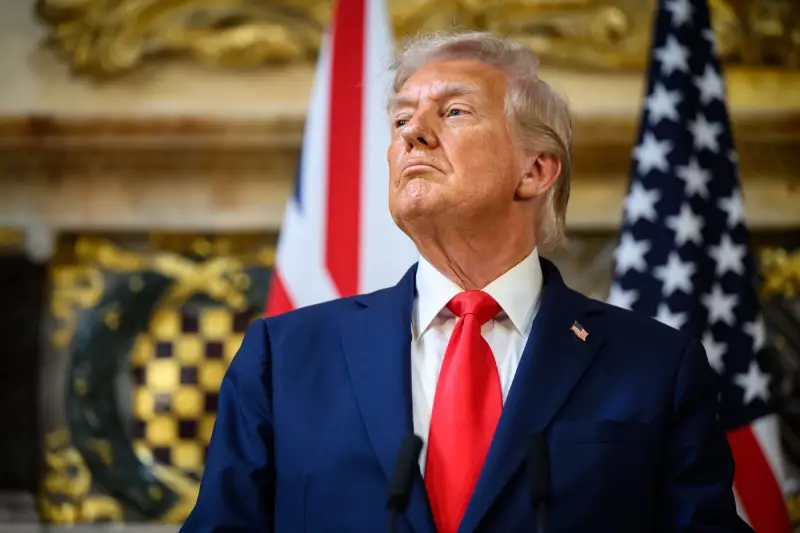
US President Donald Trump has ignited a major transatlantic trade dispute by announcing sweeping tariffs on the United Kingdom and several European allies, linking the punitive measures directly to his long-standing ambition to purchase Greenland.
Tariff Threat Over Arctic Ambitions
In a post on his Truth Social platform on Saturday 17 January 2026, President Trump declared that the UK, alongside Denmark, Norway, Sweden, France, Germany, the Netherlands, and Finland, would face immediate economic penalties. The US will impose a 10% tariff "on any and all goods" sent from these nations starting 1 February 2026, with the rate scheduled to rise sharply to 25% from 1 June.
Mr Trump stated this escalating tariff regime would remain in force "until such time as a Deal is reached for the Complete and Total purchase of Greenland." He accused the listed European countries of having "journeyed to Greenland, for purposes unknown," creating a "potentially perilous situation" that demanded a strong US response to protect global security.

Cross-Party Condemnation from UK Leaders
The move has prompted rare cross-party unity in criticism from British political leaders, who warned of severe economic consequences. Conservative Party leader Kemi Badenoch labelled the plan "a terrible idea," stating President Trump was "completely wrong" and that the tariffs would become "a burden for businesses across our country." She emphasised that Greenland's sovereignty should be decided solely by its people.
Reform UK leader Nigel Farage, often an ally of Mr Trump, broke ranks to say the tariffs would "hurt" Britain. Liberal Democrat leader Sir Ed Davey accused the US President of "punishing the UK and Nato allies" and called on Prime Minister Keir Starmer to stand firm against the "bully in the White House."
Geopolitical Tensions and Military Movements
The tariff announcement follows a week of heightened military activity and diplomatic concern in the Arctic region. The UK government confirmed it had sent a military officer to Greenland at Denmark's request, part of reconnaissance ahead of a planned Arctic Endurance exercise, though Downing Street denied this constituted a formal "deployment."
Mr Trump framed the US demand as a necessary counter to Russian and Chinese ambitions, arguing it was "time for Denmark to give back" and claiming "China and Russia want Greenland, and there is not a thing that Denmark can do about it." His administration has previously threatened to use force to annex the semi-autonomous Danish territory, raising profound questions about the future of NATO.
The stance has triggered public demonstrations, with hundreds rallying in Greenland's capital, Nuuk, for self-governance, while thousands in Denmark protested against any potential US takeover. As the 1 February tariff deadline looms, the UK government faces mounting pressure to resolve a crisis that pits a key security ally against the economic wellbeing of British businesses and consumers.