A landmark trade agreement between the United Kingdom and the United States, hailed as a milestone for the pharmaceutical sector, has been revealed to lack any formal legal text, prompting senior MPs to warn that the UK's pacts with the Trump administration are 'built on sand'.
Deal Announced, Details Missing
The agreement, announced this month, promises zero tariffs on pharmaceuticals moving between the two nations. In exchange, the UK has committed to allowing the NHS to pay up to 25% more for new medicines. However, The Guardian has established that beyond the headline terms published in two government press releases, there is no underlying legal document.
This revelation has sparked significant alarm in Westminster. The health department confirmed that negotiators are still working on the detailed agreement, sharing only its own press release and a link to the US announcement when asked for the formal terms. Notably, the two releases frame the deal differently: the UK version celebrates securing a unique zero-tariff position, while the American text emphasises the increased prices the NHS will pay.

Mounting Instability in US-UK Relations
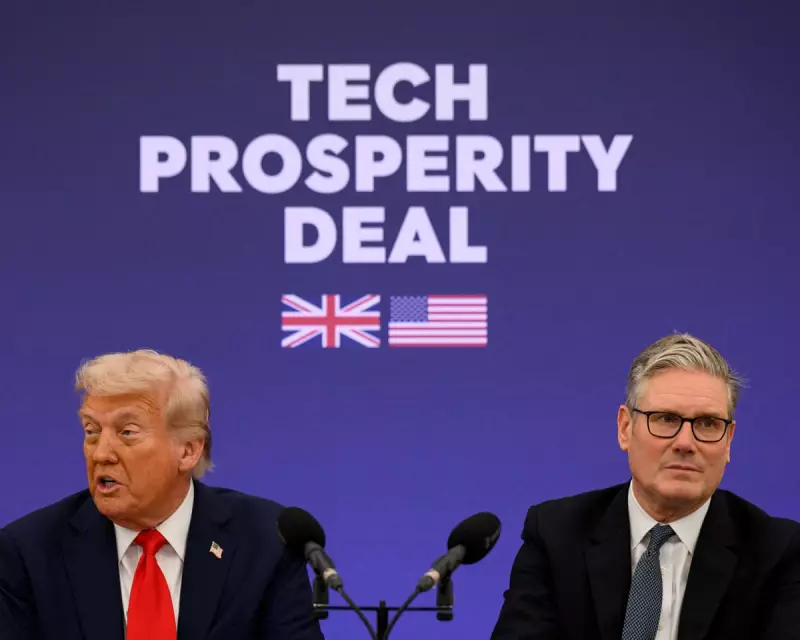
Concerns over the pharmaceutical pact's fragility have been amplified by Washington's recent decision to suspend the £31bn 'tech prosperity deal'. This agreement, once described as a 'generational step-change', was paused by the US citing a lack of UK progress on lowering other trade barriers.
Further issues have emerged with a separate tariff deal struck in May. Concessions for British farmers, praised by Labour leader Keir Starmer as 'historic', have not been formally signed off by the US despite a looming January deadline for implementation. Similarly, a promise to remove the 25% tariff on British steel, reducing it to zero, has not materialised, though the UK rate remains lower than the 50% applied to other nations.
Ministers have privately expressed deep unease. One told The Guardian the UK's series of agreements with the Trump administration were 'built on sand', while another described 'additional layers of volatility and unpredictability' as the 'new normal'.
Experts and Committees Voice Grave Concerns
Trade expert David Henig highlighted the serious risk that the UK has committed to raising drug prices based on a mere verbal promise from President Trump. 'None of this is normal in international trade policy,' Henig stated.
The parliamentary scrutiny committees have issued stark warnings. Layla Moran, Chair of the Health Select Committee, criticised the government's 'naive belief' that the Trump administration is a good faith actor. 'The NHS is too precious to be gambled with,' she said, warning a deal that could already cost taxpayers billions might collapse chaotically.
Liam Byrne, Chair of the Business and Trade Select Committee, urged ministers to prioritise getting the suspended tech prosperity deal 'back on track'.
While government figures downplayed the risk of the US reneging on the pharma deal—suggesting the US pharmaceutical industry itself wanted the certainty—officials admitted volatility is part of dealing with the current US administration. They pointed to concrete outcomes, such as the UK's more favourable steel tariff position compared to other economies.
Tom Bradshaw, President of the National Farmers' Union, urged the government to finalise the beef quota, warning it must not 'continue to be used as a bargaining chip'. As negotiations are set to resume in January, the fundamental stability of the UK's post-Brexit trade strategy with its largest ally remains under intense scrutiny.