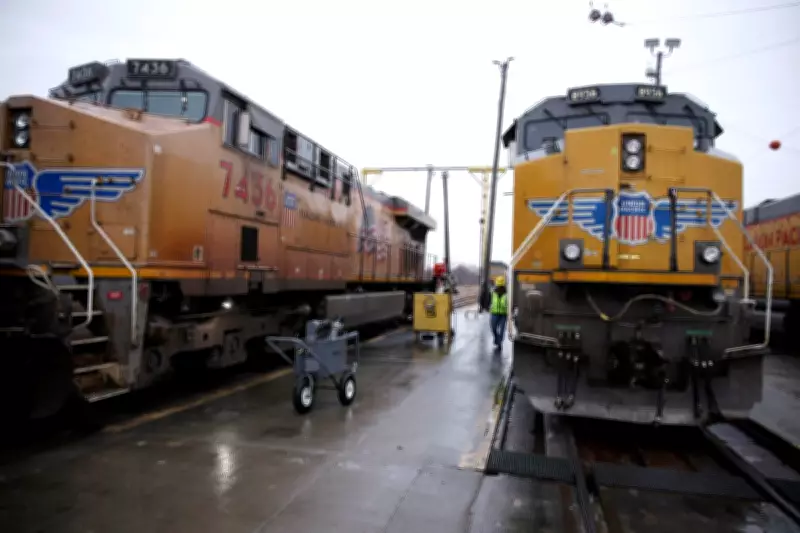
Union Pacific hopes a new application will be enough to persuade regulators that its $85 billion acquisition of Norfolk Southern would be beneficial for the country. The U.S. Surface Transportation Board rejected Union Pacific's initial application because regulators wanted more details about how the deal would affect the competitive balance between the five remaining major freight railroads and the impact on customers.
Union Pacific's Revised Proposal
Union Pacific CEO Jim Vena said the new application makes an even stronger case for the benefits of the merger, which he believes would shave a day or two off delivery times for many shipments by eliminating the need for handoffs between railroads in the middle of the country. The Omaha, Nebraska-based railroad projects that the merger could shift 2.1 million truckloads off highways onto trains.
Regulatory Hurdles
The STB established a high bar for major railroad mergers around the turn of the century after past rail mergers caused freight disruptions and prolonged integration challenges. Now Union Pacific must demonstrate that this deal will enhance competition. If the deal fails to gain approval or the STB requires too many concessions, Union Pacific would owe Norfolk Southern a $750 million breakup fee, as disclosed in their merger agreement.

Market Dynamics
Currently, Norfolk Southern and CSX serve the eastern U.S., while Union Pacific and BNSF serve the west. The two major Canadian railroads compete where possible with tracks crossing Canada and extending into the United States and Mexico. A merged Union Pacific would likely control nearly 40% of the nation's freight, but the railroad argues that BNSF currently delivers that much freight, so the deal would shift market dominance without dramatically changing the competitive balance.
Opposition and Support
Competitors BNSF and CPKC joined a new coalition to highlight concerns that the deal could harm shippers and consumers through higher rates for companies with few rail alternatives. The coalition includes trade groups for chemical and agricultural shippers and unions representing engineers and track maintenance workers. BNSF CEO Katie Farmer stated, "This did not begin with a customer asking for a UP-NS merger to happen. It’s driven by Wall Street on the promise of a big shareholder payout. It will eliminate competition, raise costs for consumers, and destabilize the supply chain."
However, the largest rail union and hundreds of shippers support the deal, which would reduce the number of major freight railroads to five. Union Pacific has promised lifetime employment for all union employees at the time of the merger, though the workforce could shrink through attrition if shipments slow. Union Pacific now predicts more than 1,200 new jobs by the third year after the deal, up from an earlier estimate of 900, based on new traffic data from all major freight railroads.
Next Steps
If the STB accepts this new application, regulators will likely spend over a year analyzing every aspect of the deal.