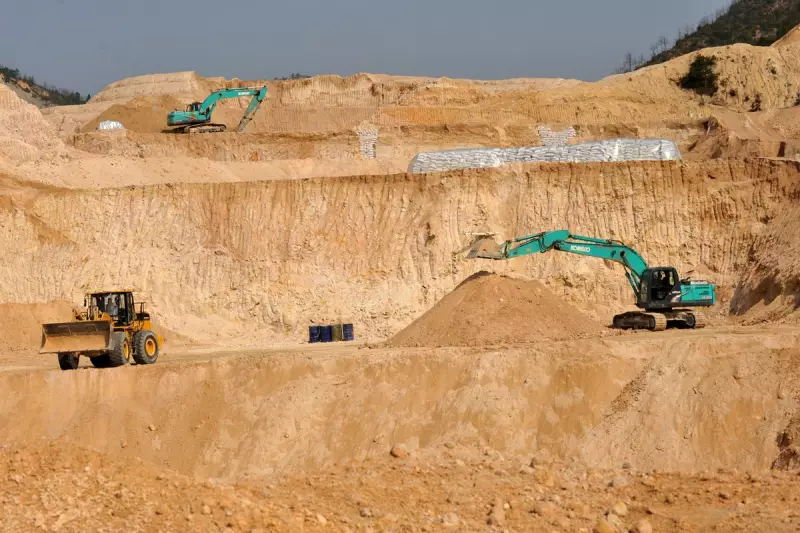
The United States government has taken a significant minority stake in an Oklahoma-based rare earth mining company, marking the latest strategic move in a concerted effort to reduce American dependence on Chinese-controlled supply chains for critical minerals.
Strategic Investment in Domestic Supply Chains
USA Rare Earth announced on Monday that the U.S. Commerce Department is investing a substantial $1.6 billion in their operations. This investment package comprises $277 million in proposed federal funding alongside a $1.3 billion senior secured loan. In return for this financial backing, the Commerce Department will receive 16.1 million shares of common stock, with additional rights to purchase a further 17.6 million shares.
The company's shares surged by more than 13% in pre-market trading following the announcement, reflecting investor confidence in this government-backed initiative.

Breaking China's Market Stranglehold
This investment represents a crucial step in addressing what officials describe as a national security vulnerability. China currently processes over 90% of the world's critical minerals, a dominance that has provided substantial leverage in ongoing trade tensions with Washington. The list of 50 critical minerals includes 17 highly sought-after rare-earth elements that are essential components in numerous advanced technologies.
"USA Rare Earth's heavy critical minerals project is essential to restoring U.S. critical mineral independence," declared Secretary of Commerce Howard Lutnick in an official statement. "This investment ensures our supply chains are resilient and no longer reliant on foreign nations."
Comprehensive Push for Mineral Independence
The Trump administration has intensified efforts to build a robust domestic critical mineral industry, viewing China's control over global supply chains as an unacceptable strategic vulnerability. Industry experts, analysts, and lawmakers have repeatedly warned about the risks associated with American dependence on Chinese mineral supplies.
This latest investment follows several other significant moves by the administration:
- The Pentagon invested $400 million in rare-earth producer MP Materials
- A $150 million loan was extended to a U.S. company in August
- A $1.4 billion partnership was announced with rare earth startups Vulcan Elements and ReElement Technologies in November
Funding and Legislative Support
The administration's broader strategy includes substantial financial commitments through recent legislation. The tax and spending cut bill allocates $2 billion specifically for the Pentagon to enhance the U.S. stockpile of critical minerals, with an additional $5 billion earmarked through 2029 for investment in these essential supply chains.
Between 2020 and 2024, the Pentagon reported awarding more than $439 million to establish domestic rare earth supply chains, demonstrating the sustained nature of this strategic initiative.
Earlier this month, a bipartisan group of lawmakers proposed creating a new agency with $2.5 billion in funding specifically designed to stimulate production of rare earths and other critical minerals, indicating cross-party recognition of the issue's importance.
Project Development and Economic Impact
The substantial investment in USA Rare Earth will advance work on a mine development project in Texas while funding the construction of a magnet manufacturing facility in Oklahoma. These magnets represent crucial components in numerous high-tech applications, from electric vehicles and robotics to sophisticated military equipment.
Based in Stillwater, Oklahoma, USA Rare Earth becomes the third U.S. operator to receive significant Trump administration investment in recent months. This pattern of investment reflects a comprehensive approach to rebuilding American industrial capacity in a sector deemed vital for both economic competitiveness and national security.
The administration's broader strategy even includes unconventional approaches, such as President Donald Trump's attempts to acquire Greenland, which contains substantial rare earth deposits, highlighting the multifaceted nature of this push for mineral independence.