

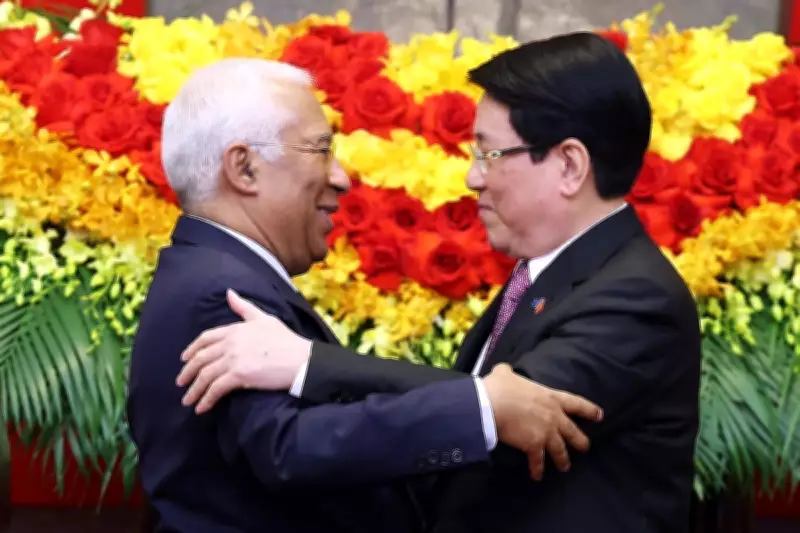
Vietnam and the European Union have significantly elevated their diplomatic and economic relationship, formally upgrading to a comprehensive strategic partnership. This move represents Vietnam's highest level of diplomatic engagement, placing the EU on equal footing with major global powers such as the United States, China, and Russia.
A Strategic Response to Global Trade Realignments
The announcement was made during a high-profile visit to Hanoi by European Council President António Costa. This diplomatic upgrade occurs against a backdrop of substantial recalibration in global trade patterns, largely driven by disruptions in international finance and increasing pressure from US tariffs.
President Costa emphasised the timing and importance of this strengthened alliance, stating, "At a moment when the international rules-based order is under threat from multiple sides, we need to stand side by side as reliable and predictable partners." He further described the partnership as fundamentally about "developing spheres of shared prosperity."

Economic Context and Bilateral Trade Figures
This development follows closely on the heels of another significant EU trade achievement: a free trade agreement with India concluded earlier in the week after nearly two decades of negotiation. For the European Union, this new partnership with Vietnam secures enhanced access to one of Asia's most dynamic and rapidly expanding manufacturing hubs.
The economic rationale is compelling. Bilateral trade between Vietnam and the EU for the first eleven months of 2025 reached an impressive $66.8 billion, marking a 6.6% increase compared to the previous year. The EU currently holds the position of Vietnam's fourth-largest trading partner overall, its third-largest export market, and its fifth-largest source of imports. Conversely, Vietnam stands as the EU's most significant trading partner within the Southeast Asian region.
Vietnam's Economic Ambitions and External Pressures
Vietnam's President Luong Cuong hailed the partnership as a "historic milestone," coming less than a week after the country's Communist Party reaffirmed General Secretary To Lam as its top leader, endorsing his vision of aggressive economic reforms to drive growth.
Vietnam has emerged as a primary beneficiary of globalisation, transforming into a crucial export hub for electronics, garments, and various consumer goods as multinational corporations diversify their supply chains away from China. This export-led model has successfully boosted incomes and modernised the economy. However, Vietnam's substantial and persistent trade surplus has attracted criticism, particularly from the United States and, increasingly, from European officials concerned about equitable market access.
Strategic Diversification and Future Goals
For the EU, this strengthened partnership supports broader strategic efforts to diversify supply chains amidst rising global trade tensions. For Vietnam, the agreement aligns with its ambitious national goal of achieving developed, high-income nation status by 2045.
A key component of this strategy involves aggressively seeking new markets to reduce the country's heavy reliance on the United States, which currently absorbs approximately 30% of Vietnam's total exports. The two sides had previously laid groundwork for deeper cooperation with a free trade agreement signed in 2020. This latest comprehensive strategic partnership represents a further, decisive step in cementing a long-term, multifaceted alliance between Vietnam and the European Union.






