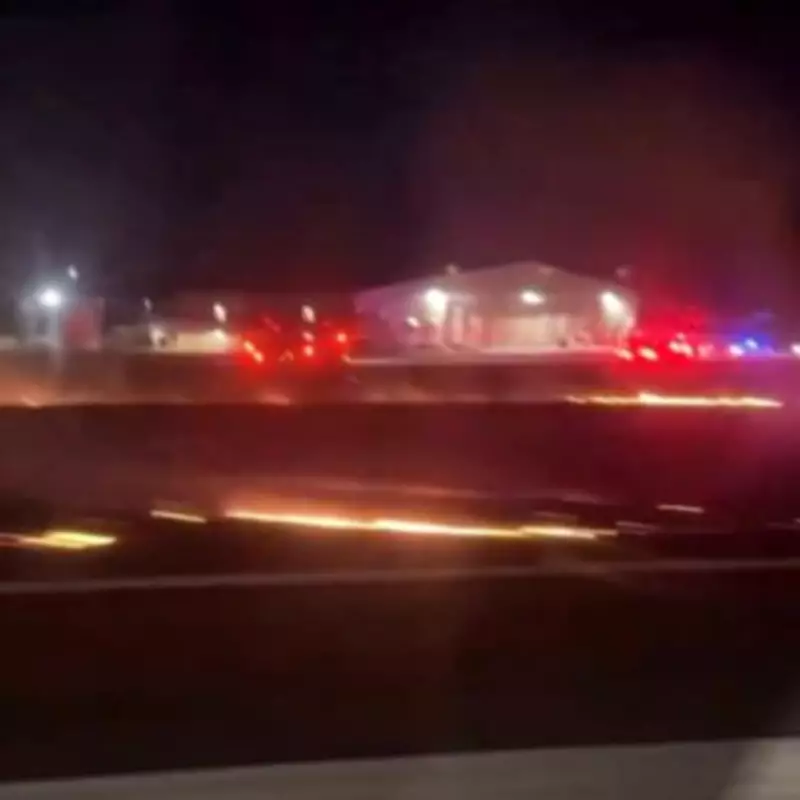
Delta Flight Forced into Emergency Landing After Engine Failure Ignites Airport Fire
A Delta Air Lines Boeing 737 was compelled to execute an urgent emergency landing at Savannah/Hilton Head International Airport following a dramatic engine failure that triggered a fire on the ground. The incident unfolded on Sunday night, sending flames streaking from the aircraft's CFM-56 turbofan engine just moments after takeoff.
Passenger Account Details Terrifying Moment of Engine Blowout
Holly Kesler, a passenger aboard the Atlanta-bound Delta Flight DL1067, described the harrowing experience on social media platform X. She recounted how one of the engines catastrophically "blew," resulting in visible flames erupting from the engine. Kesler praised the pilot and crew for their exceptional handling of the crisis, noting their expert decision to loop back and land the aircraft safely despite the perilous circumstances.
Kesler expressed profound gratitude, stating: "What a relief and a huge shoutout to the incredible pilot and crew of Delta Flight DL1067—engines blew during takeoff en route to Atlanta—but they expertly looped back and landed everyone safely. The howling winds today have continued to fuel the fires around the Savannah Airport. Grateful beyond words for their skill and calm under pressure. Heroes in the sky today!"

Emergency Response and Ongoing Fire Concerns
The engine failure precipitated a wild grass fire adjacent to the runway, exacerbated by strong winds that persisted in the area. These gusty conditions complicated firefighting efforts and raised concerns about the spread of the blaze. Authorities and airport personnel swiftly mobilized to contain the fire and ensure the safety of all passengers and crew members.
The pilots demonstrated remarkable composure and professionalism, immediately returning to Savannah after the engine malfunction. Their quick thinking and adept maneuvering averted a potential disaster, underscoring the critical importance of rigorous training and preparedness in aviation emergencies.
Investigation and Safety Implications
This incident highlights significant safety considerations for commercial aviation, particularly regarding engine reliability and emergency protocols. The Boeing 737, a widely used aircraft model, will likely undergo scrutiny as investigators examine the root cause of the engine failure. Key factors to be analyzed include:
- The specific mechanical failure within the CFM-56 turbofan engine
- Environmental conditions, such as wind speeds, that may have influenced the fire
- Adherence to maintenance schedules and safety checks prior to the flight
- The effectiveness of the crew's emergency response and landing procedures
Aviation regulators and Delta Air Lines are expected to conduct thorough reviews to prevent similar occurrences in the future. Passengers and industry observers alike are calling for enhanced safety measures and transparent reporting on the investigation's findings.
The successful emergency landing at Savannah/Hilton Head International Airport serves as a testament to the skill of the flight crew and the robustness of modern aviation safety systems. However, it also raises questions about engine durability and the challenges posed by extreme weather conditions during critical flight phases.