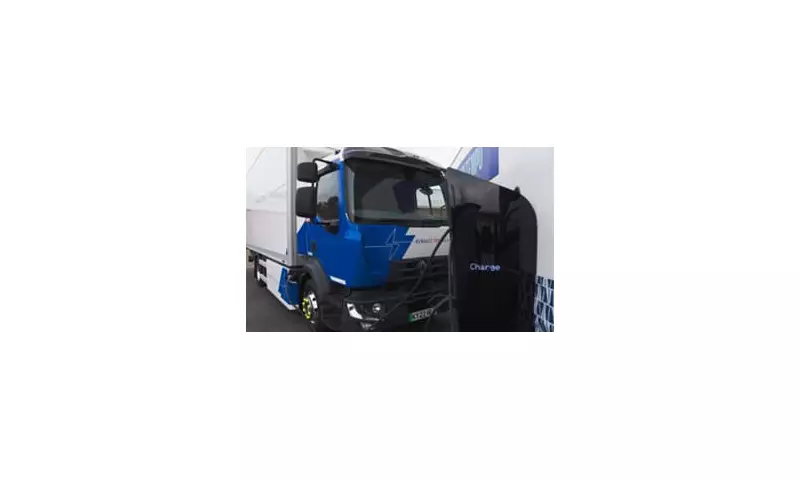
The Labour government has unveiled contentious proposals to ban the sale of new petrol and diesel lorries as part of its ambitious Net Zero strategy, a move critics warn could impose staggering costs on the economy.
The 2040 Deadline and Industry Backlash
Under the radical plans, all new heavy goods vehicles (HGVs) sold in the UK will be required to be zero-emission from 2040. This effectively mandates a switch to electric or hydrogen-powered trucks, ruling out the continued use of traditional fossil fuels or even synthetic alternatives.
The policy has ignited fierce criticism from political opponents and industry leaders. Official estimates, revealed by The Mail on Sunday, suggest Labour's overarching Net Zero drive could cost the nation a colossal £4.5 trillion over the next 25 years. Richard Holden, the Conservative shadow transport secretary, accused Labour of "sleepwalking into a cost shock for the entire economy."

He argued that forcing hauliers to scrap functional lorries prematurely, before the necessary technology and infrastructure are fully ready, would be both environmentally counterproductive and economically damaging. "Those costs will be passed straight through supply chains into higher prices in shops, higher construction costs, and more pressure on inflation," Holden told The Telegraph.
Consultation Proposes Three Enforcement Pathways
The Department for Transport recently published a consultation outlining three potential methods to enforce the transition:
- Setting annual sales quotas for electric HGVs that manufacturers must meet.
- Imposing carbon emissions caps on haulage companies, mirroring an approach used in the EU.
- Requiring delivery firms to ensure an increasing percentage of their fleet is electric, ultimately reaching 100%.
This 2040 deadline for phasing out petrol and diesel trucks was initially proposed by the Conservative government in November 2021.
Haulage Sector Highlights Major Practical Hurdles
The Road Haulage Association (RHA) has expressed significant reservations, emphasising that a successful transition depends on solving two critical issues: the affordability of new vehicles and the nationwide deployment of reliable charging or refuelling infrastructure.
Chris Ashley of the RHA stated the pathway must be "realistic and viable." The scale of the challenge is underscored by industry data: a survey found seven in 10 haulage firms had no plans to adopt zero-emission vehicles, citing high costs and concerns over limited range. As of February last year, there were only around 500 electric HGVs registered in the UK, compared to a total fleet of approximately 535,000.
In a bid to stimulate the market, the government announced last week subsidies of up to £120,000 per vehicle to reduce the cost of electric lorries for hauliers. Keir Mather, the minister for transport decarbonisation, said the government was "backing British businesses to go green" and aimed to provide the certainty needed for investment.
The policy is set to become a major political battleground, with both the Conservatives and Reform UK pledging to scrap the 2030 petrol car ban and roll back other expensive Net Zero commitments.