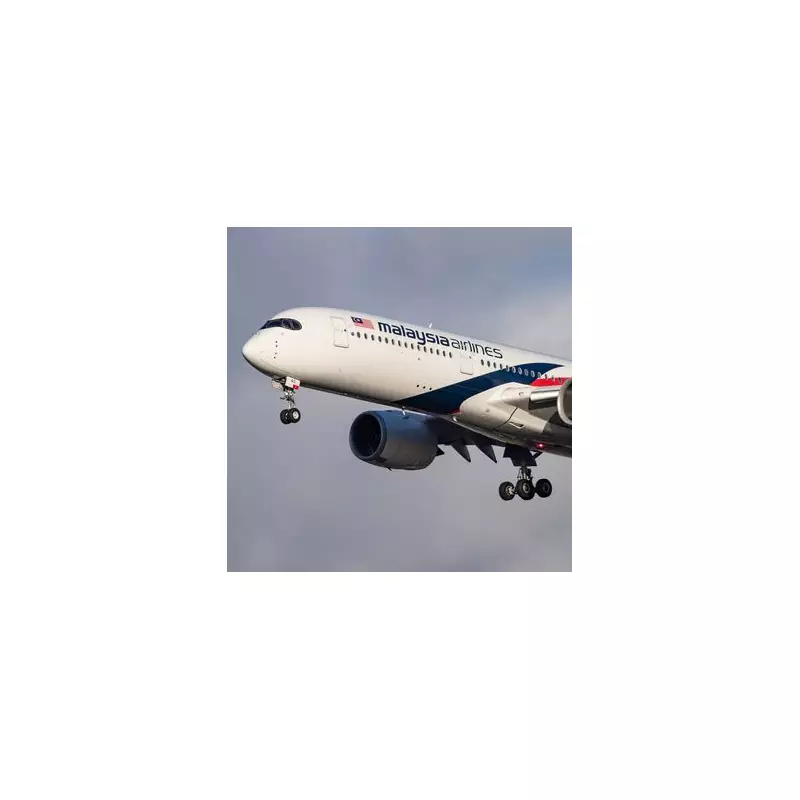
A new glimmer of hope has emerged in the world's most baffling aviation mystery, as amateur investigators monitoring the latest hunt for Malaysia Airlines Flight MH370 report spotting 'unusual behaviour' from a search vessel in the Indian Ocean.
A Decade-Long Mystery
It has been nearly ten years since Malaysia Airlines Flight 370 vanished from radar on 8 March 2014. The aircraft, carrying 239 people from Kuala Lumpur to Beijing, disappeared without a trace, sparking the largest and most costly search in aviation history. Despite extensive efforts, the main wreckage has never been found, leaving families without closure and the world without answers.
On 30 December 2025, a renewed search mission commenced, led by the marine robotics company Ocean Infinity in partnership with the Malaysian government. The operation is surveying a vast area of 5,800 square miles off the coast of Australia, utilising advanced underwater drones and submersible vehicles over an expected 55-day period.

'Unusual' Activity Sparks Speculation
While official updates from Ocean Infinity and Malaysian authorities remain scarce, online sleuths have been closely tracking the movements of the search fleet. On 5 January 2026, a French-speaking YouTube channel, Gilchecksix, highlighted peculiar patterns from one vessel.
The analyst noted that the ship had spent 24 hours conducting a meticulous, slow-speed inspection of a very specific area within the broader search zone. This behaviour was described as 'quite unusual' for standard search and rescue operations, which typically involve broader sweeps.
The speculation is that this focused activity could indicate a potential area of interest has been identified. The YouTuber suggested the vessel may have returned with a Remotely Operated Vehicle (ROV) to examine a specific location on the seabed more thoroughly.
Expert Theories and Engineering Assessments
Intriguingly, the area of focused search aligns with a crash zone previously proposed by investigator Jean-Luc Marchand. However, the YouTube creator was careful to stress this was merely informed speculation, with nothing confirmed by the official search teams.
Separately, Egypt Air chief engineer Ismail Hamad has offered a distinct theory. He told The Express he believes MH370 is located in 'a corridor just offshore and near the western Australian coast'. Mr Hamad stated this conclusion is based on engineering fundamentals, not guesswork, and involves analysing the deviation between the aircraft's magnetic compass and true north.
As the latest high-tech search enters a critical phase, the eyes of the world—and particularly the grieving families—remain fixed on the southern Indian Ocean. The unexplained vessel activity offers a fragile thread of hope that, a decade on, the enduring mystery of MH370 may finally be nearing its end.