In a powerful and emotionally charged hearing, the chair of the US National Transportation Safety Board (NTSB) declared a catastrophic midair collision near Washington DC that claimed 67 lives was "100% preventable". The stark assessment came as investigators detailed a years-long history of ignored warnings and systemic safety failures that culminated in the tragedy.
A History of Missed Opportunities
Board members expressed profound dismay on Tuesday over a litany of unheeded alerts concerning helicopter traffic dangers and other critical issues. These problems persisted long before an American Airlines jet and an Army Black Hawk helicopter collided a year ago near the US capital.
The NTSB identified a key factor in the crash: the placement of a helicopter route directly in the approach path of Reagan National Airport's secondary runway. This created a perilously congested airspace, a situation exacerbated by a lack of regular safety risk reviews. Investigators also highlighted air traffic controllers' over-reliance on instructing helicopter pilots to visually avoid other aircraft, a practice known as "see and avoid."

"We Should Be Angry"
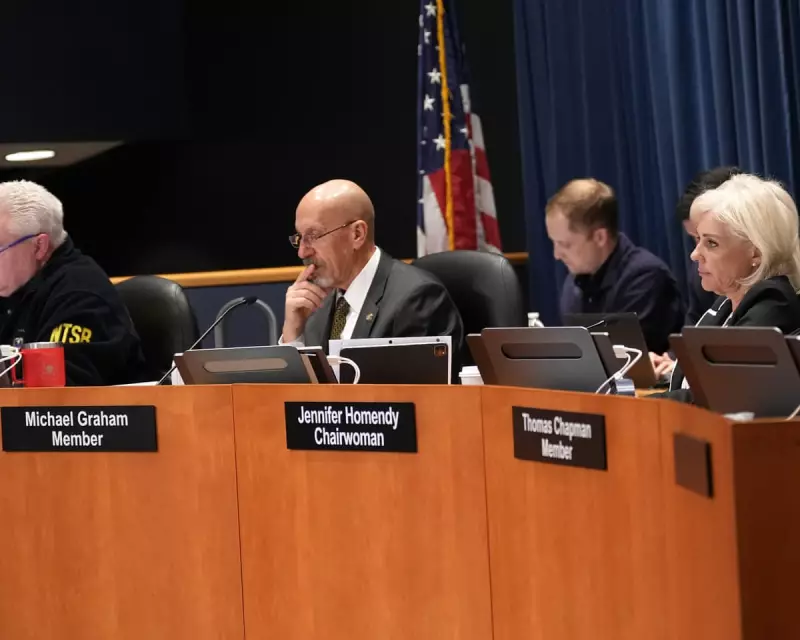
NTSB Chairperson Jennifer Homendy, presiding over the fact-finding hearing, did not mince words. "We should be angry. This was 100% preventable," she stated, her tone occasionally stern. "We've issued recommendations in the past that were applicable. We have talked about 'see and avoid' for well over five decades. It's shameful. I don't want to be here years from now looking at other families that had to suffer such devastating loss."
The hearing emphasised a pattern of missed opportunities to mitigate risks. These included the Federal Aviation Administration (FAA) denying a 2023 request from a regional supervisor to reduce air traffic at Reagan National. Furthermore, authorities failed to relocate the hazardous helicopter route or adequately warn pilots following an eerily similar near-miss incident back in 2013.
Families Seek Meaningful Change
Victims' family members attended the hearing, listening intently to the painful testimony. Some were escorted out, visibly emotional, as animations recreating the final moments of the flight were displayed. Others wore black shirts bearing the names of first responder units.
"The negligence of not fixing things that needed to be fixed killed my brother and 66 other people. So I'm not very happy," said Kristen Miller-Zahn, who watched from the front row, during a break.
The families expressed hope that the long list of recommendations adopted by the NTSB would lead to meaningful change. The proposed measures aim to improve training and staffing, particularly at Reagan National, while strengthening safety standards across airports. The recommendations are designed to foster a stronger culture of safety within both the FAA and the US Army to reduce the risk of a similar catastrophe.
Systemic Failures and a Shocking Dereliction
Before hearing from investigators, NTSB official Todd Inman pointed to "systemic issues across multiple organizations" as the root cause, rather than an individual error. The crash occurred when everyone aboard the jet, flying from Wichita, Kansas, and the helicopter died after the two aircraft collided and plunged into the icy Potomac River. It was the deadliest plane crash on US soil since 2001.
Chair Homendy expressed disbelief that the FAA did not realise the helicopter route allowed for a mere 75 feet of separation from planes landing. "We know over time concerns were raised repeatedly, went unheard, squashed – however you want to put it – stuck in red tape and bureaucracy," she said.
Mary Schiavo, a former US Department of Transportation inspector general, labelled the inaction a "shocking dereliction of duty by the FAA."
Path Forward and Lingering Concerns
In response to the tragedy, the FAA has taken some action, making permanent changes last week to ensure helicopters and planes no longer share the same airspace around Reagan National. The agency has also reduced hourly plane arrivals and worked to increase tower staffing.

However, the NTSB revealed that the Army and FAA were not sharing all safety data before the crash, and Army helicopter pilots were often unaware when they were involved in a near-miss. Human performance investigator Katherine Wilson detailed how an air traffic controller's workload "reduced his situational awareness" in the critical moments before the collision.
The future of aviation safety now depends on the response from Congress, the Army, and the administration. A bill endorsed by Chair Homendy would require advanced locator systems on aircraft to help prevent collisions. Whether these systemic flaws are fully addressed remains to be seen, as the NTSB's final report and subsequent congressional hearings loom in the coming months.