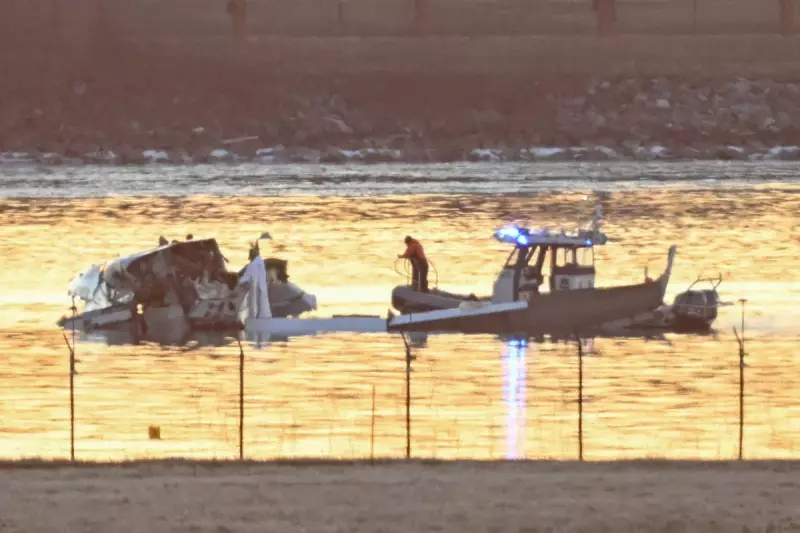
The National Transportation Safety Board (NTSB) is poised to publicly scrutinise a devastating midair collision that occurred near Washington, D.C. on January 29, an incident that tragically claimed the lives of sixty-seven individuals. The fatal crash involved a commercial airliner and a United States Army Black Hawk helicopter, with investigators now prepared to outline a series of critical contributing factors that led to the disaster.
Key Factors in the Washington DC Aviation Tragedy
According to the forthcoming NTSB analysis, the investigation will detail several systemic failures. A primary focus is the poorly-designed helicopter flight route along the Potomac River, which investigators have previously labelled as presenting an "intolerable risk". This route allowed for aircraft to come within a perilously close seventy-five feet of each other, a stark contrast to the standard five-hundred-foot separation required for safety.
Specific Failures and Ignored Warnings
The report is expected to highlight specific operational errors. Notably, the Army Black Hawk helicopter was flying approximately seventy-eight feet higher than its permitted altitude at the time of the collision. Compounding this error, a key location broadcasting system, essential for air traffic awareness, had been disabled by the Army prior to the flight.

Furthermore, the investigation underscores a pattern of ignored warnings. Federal Aviation Administration (FAA) air traffic controllers had reportedly issued alerts about the risks of helicopter traffic around Ronald Reagan Washington National Airport since 2022. These warnings were issued against a backdrop of alarming data: eighty-five documented near misses and over fifteen thousand close proximity events involving aircraft in the three-year period preceding the crash.
Families Demand Action and Legislative Change
In the wake of the tragedy, the families of the victims are applying significant pressure on both Congress and the current administration. They are urgently calling for the full and immediate implementation of all safety recommendations put forward by the NTSB once the final report is released. The families have been vocal in their assertion that this catastrophic accident was "completely preventable," emphasising that procedural and systemic failures directly led to the loss of life.
The impending NTSB revelations are set to reignite a national conversation on aviation safety protocols, military-civilian airspace coordination, and the critical importance of heeding controller warnings to prevent future airborne disasters.