Passengers Unite in Demand for TSA Officer Payments During Government Shutdown
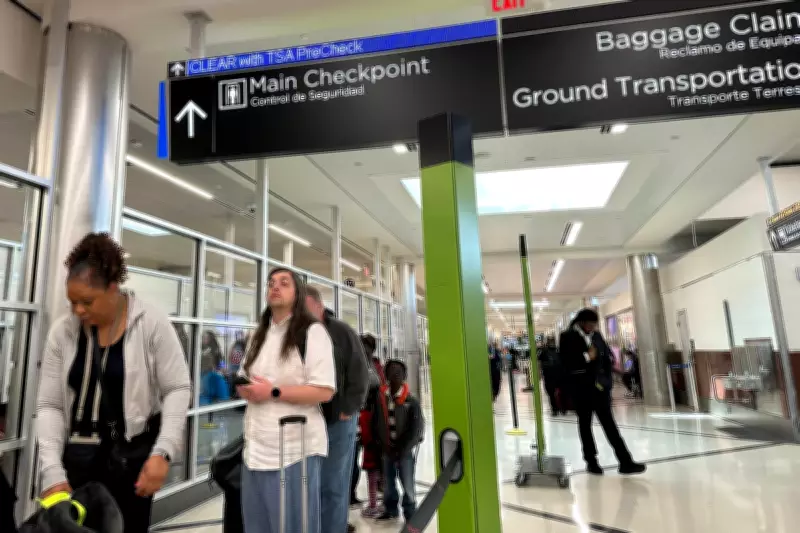
For airline passengers navigating the chaos of America's airports, the solution to the ongoing government shutdown appears remarkably straightforward: pay Transportation Security Administration workers immediately. This sentiment echoed powerfully through the terminals of Hartsfield-Jackson Atlanta International Airport on Saturday, where travelers from all political backgrounds and destinations found common ground in their frustration.
Atlanta Airport Gridlock Highlights Systemic Breakdown
Hartsfield-Jackson, consistently ranked among the world's busiest aviation hubs, normally functions as a precision machine for moving millions of passengers. The current political impasse has transformed this efficiency into widespread disruption, with TSA checkpoints becoming critical bottlenecks. These security stations, designed to screen passengers and luggage for hazardous materials, are now operating with severely compromised staffing levels.
The practical consequences are alarming for travelers. Many passengers departing from Atlanta now arrive up to four hours before their scheduled flights, driven by genuine fear that extended delays could cause them to miss their departures entirely. This precautionary approach reflects growing anxiety about the stability of the entire aviation security system.

Firsthand Accounts Reveal Human Impact
Christian Childress, a private flight attendant from Redwood City, California, offered a professional perspective on the deteriorating situation. While his work typically bypasses standard TSA procedures, he regularly navigates commercial airport security when traveling to assignments. On Saturday, en route to Nashville, Tennessee for leisure, he arrived nearly three hours early for a 1:30 p.m. flight, describing the shutdown effects as unpredictable and concerning.
"Issue number one should be paying the people who need to get paid and keeping our air travel system secure," Childress emphasized. "Then they can debate whatever they want to debate about homeland security." This pragmatic viewpoint captures the frustration of countless travelers who see basic worker compensation as a prerequisite for national security discussions.
Political Standoff Creates Airport Uncertainty
The root cause traces back to February 14, when the U.S. Department of Homeland Security entered a partial shutdown. TSA officers have not received paychecks since that date, as Democrats have resisted funding the agency while other departments continue operating. The political deadlock centers on demands for changes to immigration enforcement following the shooting deaths of Alex Pretti and Renee Good in Minneapolis.
Legislative efforts have repeatedly faltered. A funding bill failed to advance in the Senate on Friday, with Democrats withholding necessary support. Senate Democratic leader Chuck Schumer of New York promised an alternative measure on Saturday specifically targeting TSA funding, though this too appears destined for failure during rare weekend legislative sessions.
Some passengers expressed diminishing patience with the political process. Tyrone Williams, a retiree from Ellenwood, Georgia, voiced a common sentiment while queuing for his Philadelphia flight: "I don't want to go between the Democrats and the Republicans, but I think the Democrats are holding everything up because they can't get their way."
Presidential Threats and Operational Realities
Complicating matters further, President Donald Trump escalated tensions on Saturday with a social media declaration threatening to deploy Immigration and Customs Enforcement officers to airport security roles unless congressional Democrats agree to fund the department. His statement promised that ICE agents would "do Security like no one has ever seen before" with particular focus on Somali immigrants, though no immediate operational plans were clarified.

Meanwhile, practical challenges mounted at checkpoints nationwide. Atlanta's wait times peaked at 90 minutes early Saturday before moderating to 25 minutes by midmorning—still significant for what is typically one of the week's slowest travel days. Staffing shortages have forced intermittent checkpoint closures, creating unpredictable delays across multiple major airports.
TSA Workforce Under Unprecedented Strain
The human cost extends beyond inconvenienced passengers. Approximately 50,000 TSA employees classified as essential continue working without pay during the funding lapse. Nationwide absentee rates reached 10% on Thursday, with some locations experiencing rates two to three times higher. Since the shutdown began, at least 376 officers have resigned, exacerbating existing morale and attrition problems within an agency historically plagued by high turnover.
Financial pressures on TSA workers have become chronic. Screeners have now spent nearly half of the past 171 days with paychecks delayed by political disputes—43 days during last fall's record shutdown, four days earlier this year, and 36 days (and counting) during the current impasse.
Passengers like Jackie Donahue, a nurse from Oldsmar, Florida returning from a European river cruise, recognize this sacrifice. After joining an 11 a.m. security line for a 2:25 p.m. Tampa flight, she expressed gratitude for officers working without compensation: "We need to thank the people that are here."
As the shutdown extends into its second month, the consensus among travelers grows increasingly clear: the debate about broader homeland security policies must not come at the expense of those who protect aviation every day. The machine of air travel cannot function properly without its essential human components being properly valued and compensated.