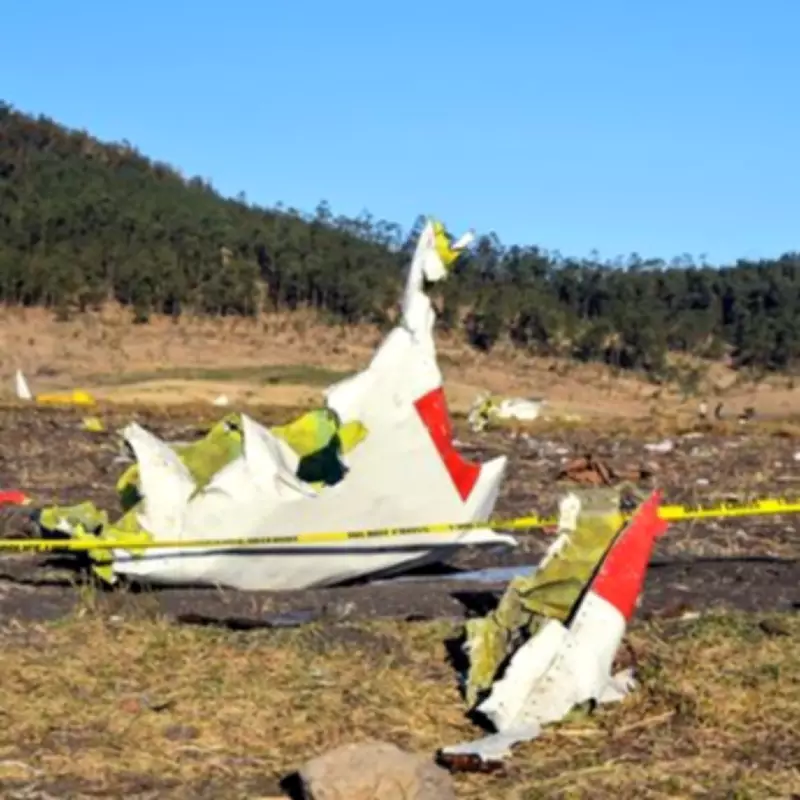
In the final moments of Ethiopian Airlines Flight 302, as the brand-new Boeing 737 MAX 8 hurtled towards the ground at nearly 500 miles per hour, Captain Yared Getachew issued a desperate, final command. The cockpit voice recorder captured his terrified plea: "Pitch up, pitch up!" just before the airliner smashed into a field, killing all 149 passengers and 8 crew members instantly.
The Fatal Takeoff and Immediate Crisis
The ill-fated flight took off from runway 07R at Addis Ababa's highland airport shortly after 8:30 AM on March 10, 2019. Within seconds of leaving the tarmac, it became clear that something was terribly wrong. First Officer Ahmed Mohammed reported a "flight control problem" as the aircraft began to lose altitude due to issues with its fly-by-wire systems.
Captain Getachew, fighting to keep the massive airliner stable, ordered his co-pilot to alert air traffic control. Mohammed, recognizing the problem involved the Boeing's Manoeuvring Characteristics Augmentation System (MCAS) – which had been implicated in another fatal crash just months earlier – shouted "Stab trim cut-out!" The pilots quickly toggled switches to disable the aircraft's electrical trim tab system, which also deactivated the MCAS software.

A Losing Battle Against Multiple System Failures
Despite their efforts, the catastrophic failure of multiple systems quickly overwhelmed the flight crew. They attempted unsuccessfully to manually adjust the plane's stabilisers as the situation deteriorated rapidly. Three minutes into the flight, with the Boeing's nose continuing to pitch down uncontrollably, Captain Getachew ordered Mohammed to request permission to return to the airport.
Flight tracking data showed the aircraft's erratic loss of height worsening dramatically. Several witnesses on the ground reported seeing the plane trail "white smoke" and make strange noises during its fatal dive. One local farmer who watched the aircraft plunge to earth recalled seeing small items that "looked like paper" falling from the plane during its descent.
The Catastrophic Impact and Aftermath
The airliner crashed into a field just 30 miles from the runway it had departed minutes earlier. The final dive had been so steep that the Boeing 737 MAX virtually drilled itself into the ground before shattering into thousands of pieces. The impact was so severe that helicopter rescue pilots searching for survivors initially found the crash site almost invisible.
"When I went to the site, the plane was completely below ground," said Ethiopian Airlines CEO Tewolde Gebremariam. "At that time, we knew there were no survivors." The violent impact at nearly 500mph left no chance for anyone on board.
Boeing's Acknowledgment and Global Grounding
In April 2019, Boeing formally acknowledged that its MCAS software played a role in the Ethiopian Airlines tragedy, as well as in the loss of Indonesia's Lion Air Flight 610 in October 2018, which resulted in 189 fatalities. The two similar crashes in less than five months claimed 346 lives total and led to the worldwide grounding of the Boeing 737 MAX between March 2019 and December 2020.
The financial impact on Boeing was substantial. In January 2020, the company estimated a loss of $18.4 billion for 2019 and reported 183 canceled MAX orders for the year. The aircraft faced a second, brief suspension of flights in January 2024 as safety concerns persisted.
Controversial Findings and Ongoing Debate
The final accident report from the US National Transportation Safety Board, which routinely investigates major air accidents internationally, placed some blame on the flight crew. The report stated: "Appropriate crew management of the event, per the procedures that existed at the time, would have allowed the crew to recover the airplane even when faced with the uncommanded nose-down inputs."
This conclusion has sparked debate within aviation circles about pilot training, system design, and manufacturer responsibility. The tragedy highlighted critical issues in aviation safety, particularly regarding the interaction between automated systems and human operators during emergency situations.

The haunting final words "Pitch up, pitch up!" serve as a chilling reminder of the desperate struggle aboard Ethiopian Airlines Flight 302, a struggle that ended in one of the deadliest aviation disasters of the 21st century and prompted global scrutiny of aircraft certification and safety protocols.