Russia's Energy Grid Assault: How Soviet Legacy Fuels Ukraine's Winter Crisis
As Ukraine endures its most severe winter since the conflict began, millions of citizens face life-threatening conditions without heating or electricity. Temperatures have plummeted to -20°C in recent weeks, with forecasters predicting even harsher weather ahead. This humanitarian emergency stems from Russia's sustained campaign against Ukraine's energy infrastructure, a strategy made particularly effective by historical connections between the two nations' power systems.
Historical Knowledge Enables Precision Targeting
One crucial factor in Russia's devastatingly effective attacks lies in Ukraine's Soviet past. For decades, Ukraine's energy system operated as part of a centralised grid connecting Russia and Belarus, creating what experts describe as "tightly connected to Russia's energy architecture." While Ukraine wasn't dependent on Russian energy supplies, Moscow played the central role in coordinating frequency and balancing supply across the entire network.
This historical integration means Russian forces possess deeper knowledge of Ukraine's centralised energy systems than any external nation could typically obtain. Ukrainian officials argue this Soviet-era understanding has directly informed Russia's ability to target critical energy centres with precision, compounding the damage from each attack.

Centralised Systems Create Widespread Vulnerability
The challenge facing Ukrainian authorities extends beyond immediate damage to fundamental structural weaknesses. Ukraine relies heavily on Soviet-era district heating systems that serve entire urban neighbourhoods through networks of large pipes and pumping stations. In densely populated cities like Kyiv, a high percentage of buildings constructed in the 1960s depend on these centralised thermal systems.
When functioning properly, district heating can be remarkably efficient and cost-effective. However, this centralised infrastructure creates inherent vulnerability during conflict. Damage to a major transmission pipe or key pumping station can disable heating across entire neighbourhoods, particularly during winter when frozen pipes risk bursting if heating power fails.
Compounding Damage Through Deliberate Tactics
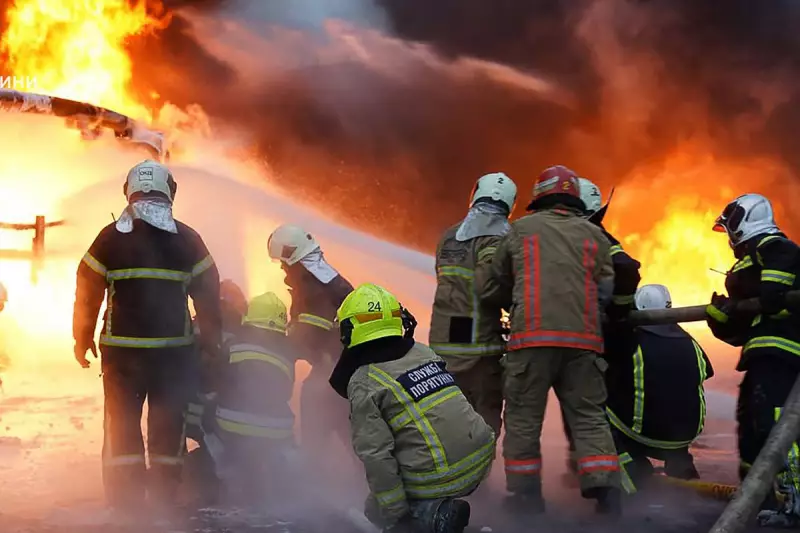
Russia has employed systematic tactics to maximise disruption, using what military analysts term "double-tap" strikes. These involve initial attacks followed by secondary strikes on the same locations once repair crews arrive, endangering emergency workers while compounding repair costs and prolonging service losses.
Kyiv's mayor Vitali Klitschko revealed the particular difficulty of buildings being reconnected for the second time after previous attacks. This pattern indicates Russian forces actively monitor repair progress before striking restored infrastructure again, creating a devastating cycle of destruction and reconstruction.
Energy Infrastructure Under Unprecedented Strain
Since October 2025, Russian attacks have damaged approximately 8.5GW of Ukraine's power generation capacity, representing around 15% of pre-war levels. With available generation nearly matching current demand, the system has minimal capacity to redistribute energy during emergencies.
Ukraine's energy mix further complicates recovery efforts. Approximately half of the nation's electricity comes from nuclear power, with coal-fired plants contributing 23% and gas-fired facilities 9%. All represent features of a highly centralised system that concentrates vulnerability at key points.
Humanitarian Consequences and Emergency Response
The human impact has been catastrophic. Following January strikes, around 5,600 apartment buildings in Kyiv lost heating, with nearly half the city's population – approximately one million people – affected by heat and power outages. The situation became so dire that authorities established "heating tents" where residents could find temporary warmth.

President Volodymyr Zelensky has declared an energy emergency as hospitals, transport systems, and vulnerable households struggle without essential services. While authorities managed to restore heating to about 1,600 buildings quickly, an estimated 4,000 remained without heating days after attacks, highlighting the scale of the challenge.
Long-term Structural Challenges and European Integration
Even before the conflict, Ukraine faced significant infrastructure challenges. Aging water systems, heating devices, and entire buildings required reconstruction. However, Ukraine had begun reducing technical reliance on Russia, culminating in March 2022 when Ukraine's grid integrated with the European Network of Transmission System Operators for Electricity (Entso-E).
This European connection represents a crucial step toward energy independence, though current attacks demonstrate how historical infrastructure connections continue to influence present vulnerabilities. As Ukrainian workers from providers like DTEK conduct emergency repairs in freezing conditions, the broader reality remains that no energy system worldwide is designed to withstand sustained bombardment.
The combination of historical knowledge, centralised infrastructure, deliberate military tactics, and extreme weather has created what analysts describe as "energy terror" – a strategy that weaponises winter conditions against civilian populations. As temperatures continue to drop, Ukraine faces not only immediate humanitarian crisis but long-term questions about rebuilding more resilient, decentralised energy systems for the future.