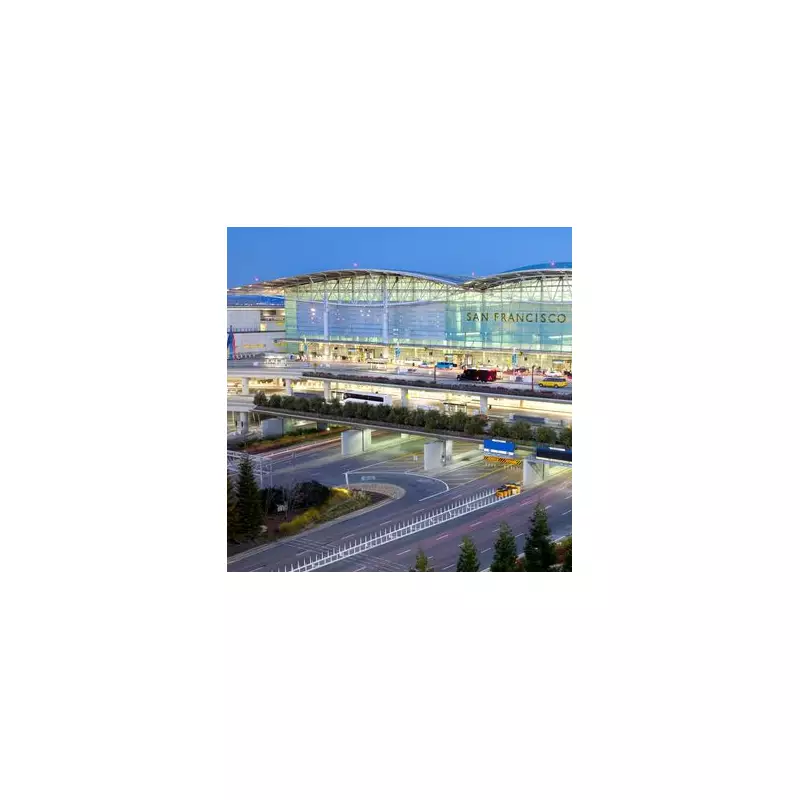
San Francisco Airport's Harvey Milk Terminal 1 Wins Prestigious Architectural Award Again
While many view airports as purely functional transit hubs rather than architectural marvels, one has been officially recognised as the world's most beautiful for the second year running. The prestigious Prix Versailles architectural competition has once again crowned San Francisco International Airport (SFO), specifically its Harvey Milk Terminal 1, as the global winner in its airport category.
A Terminal Designed for People and Planet
Following a multi-billion-dollar transformation that concluded with its opening in June 2024, Harvey Milk Terminal 1 has been lauded for its forward-thinking design. The terminal represents a significant shift in airport philosophy, prioritising both environmental sustainability and passenger experience. Its design allows abundant natural light to flood the space, creating what has been described as a peaceful atmosphere that contrasts sharply with the typical hustle and bustle of air travel.
Remarkably, the terminal has achieved a 79 per cent reduction in its carbon footprint and cut energy consumption by 59 per cent. It has also implemented innovative features such as replacing traditional, disruptive overhead announcements with quieter, more targeted notification systems, alongside providing gender-neutral bathroom facilities.

Cultural Significance and Enhanced Facilities
The terminal holds unique historical importance as the world's first airport terminal named after an LGBTQ+ pioneer. It honours Harvey Milk, the American politician who became the first openly gay man elected to public office in California. This tribute is integrated into the terminal's fabric, featuring a dedicated museum gallery and exhibition space celebrating his life and legacy.
Beyond its cultural elements, the terminal offers practical enhancements for the millions of passengers it serves annually. These include a mezzanine-level security checkpoint designed to improve flow, four new concessions for shopping and dining, and a connecting walkway that links all terminals post-security, streamlining the transfer process.
Mixed Reactions from the Travelling Public
Despite the official recognition and its noble design goals, the accolade has sparked debate among frequent flyers. On social media platforms like Reddit, some travellers have expressed scepticism about the terminal's 'most beautiful' title.
One commenter stated, "I don’t get it. It’s nice and modern. Don’t really know what’s beautiful about it." Another was more direct, simply writing, "I fully disagree." A third offered a detailed critique, noting, "The Harvey Milk upgrade is nice and all, but the curb appeal is meh. Inside, it kind of relies on having a couple of areas that make the terminal feel spacious... Otherwise, it's fine and all, but it's nothing special."
This traveller went on to suggest that features like restaurants with faux outdoor patios and large atriums are becoming commonplace in modern airport design, diminishing the terminal's perceived uniqueness.
Praise for the 'Quiet Airport' Concept
However, not all feedback has been critical. Some passengers have highlighted specific innovations as major improvements. One advocate emphasised the value of the 'quiet airport' approach, stating, "The 'quiet airport' concept cannot be understated. I was recently in an airport that had broadcast announcements for every gate throughout the entire airport. It's a cacophony... With smartphones and text notifications, there really doesn't need to be these broadcast announcements."
Another supporter concurred with the award, commenting simply, "SFO is great, totally agree." Airport Director Mike Nakornkhet expressed pride in the recognition, saying the terminal was designed to set a new benchmark that puts "people and planet first," and that being named for an LGBTQ+ leader enhances the significance of the achievement.
San Francisco International Airport, with its four terminals, serves over 50 million passengers each year. The repeated honour from the Prix Versailles jury underscores a commitment to architectural excellence, even as it reveals that beauty, particularly in the context of global travel hubs, remains very much in the eye of the beholder.