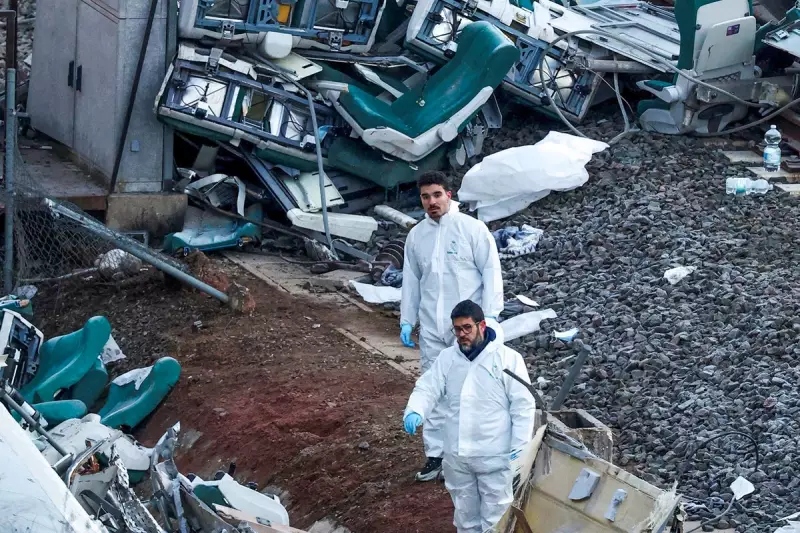
A devastating high-speed train derailment in southern Spain has resulted in at least 39 fatalities and left more than 150 people injured, authorities confirmed on Monday. The tragedy serves as a stark reminder of the potential dangers of rail travel, despite its reputation as a common, affordable, and convenient mode of transport across Europe.
A Continent's History of Railway Tragedy
While the European Union reports a decrease in major railway incidents since 2010, this latest catastrophe in Spain echoes a series of deadly accidents that have scarred the continent in recent decades. The following timeline details some of the most severe rail, tram, and subway disasters.
Recent Years: A Catalogue of Catastrophe
September 2025: In Lisbon, a popular tourist funicular streetcar derailed and crashed into a building, killing 16 and injuring 21. A preliminary investigation found an underground cable acting as a counterweight was unsuitable and broke.

February 2023: A passenger train in northern Greece collided at high speed with an oncoming freight train near the city of Larissa. The fiery wreck killed 57 people, with a later report blaming human error, outdated infrastructure, and systemic failures.
July 2016: Two Italian commuter trains collided head-on in the Puglia region, killing 31. An investigation pinpointed a critical communication error between the stations from which each train departed.
July 2013: A commuter train in Spain derailed on a bend near Santiago de Compostela, killing 80 and injuring 145. It was found to be travelling at 179 kph on a section with an 80 kph speed limit.
Older Incidents with Lasting Impact
The historical record reveals further profound losses of life:
- February 2010: Two commuter trains collided outside Brussels after one ran a red light, killing 19 and injuring 171 in Belgium's worst rail crash.
- June 2009: A freight train carrying gas derailed and exploded at Viareggio station in Italy, killing 32. Poorly maintained axles were blamed.
- July 2006: A Valencia metro train, travelling at excessive speed, crashed in a tunnel, killing 43. Four managers were later found guilty of negligent manslaughter.
- January 2006: In Montenegro, a failed braking system caused a train to plunge into a ravine, killing 45, including five children, in the nation's worst rail disaster.
- November 2000: A cable car fire in an Austrian mountain tunnel at Kaprun killed 155 skiers and snowboarders.
- October 1999: A train passing a red light at London's Paddington station collided with an incoming high-speed service, killing 31 and injuring around 400.
- June 1998: Germany's deadliest postwar rail disaster occurred at Eschede when a high-speed train hit a bridge, causing its collapse. The crash killed 101 people.
Safety in the Spotlight
The immediate aftermath of the Spanish derailment, with footage showing passengers escaping mangled carriages, has once again thrust railway safety protocols and infrastructure maintenance into the spotlight. Each previous disaster led to investigations that uncovered a range of causes, from human error and signal failures to excessive speed and mechanical neglect.
While rail remains one of the safest ways to travel statistically, this latest incident underscores the devastating human cost when complex systems fail. The collective memory of these European tragedies highlights the perpetual need for rigorous safety standards, continuous investment, and unwavering vigilance across the continent's rail networks.