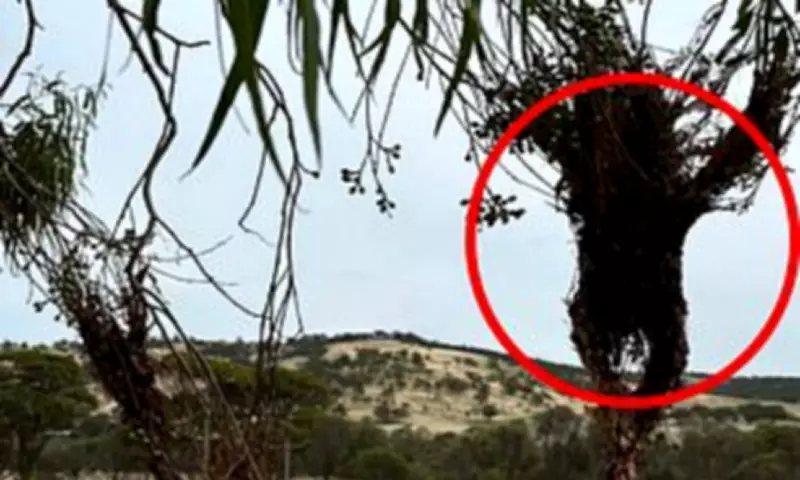
A dog walker in Western Australia's Wheatbelt was startled after she discovered what appeared to be 'human-shaped effigies' hanging from a tree. Experts have now revealed that the structures were the result of venomous caterpillars.
Discovery of the Effigies
Jerry May shared photos of the clusters of branches hanging from trees with Yahoo News, describing how 'one definitely looked person-shaped.' She compared the structures to mandrakes from the popular Harry Potter novels, which are magical plants resembling crying, human-like babies. Another of the bizarre finds looked like a hanged body.
Expert Identification
University of Queensland venom expert Dr. Andrew Walker confirmed that the creepy structures were created by venomous processionary caterpillars. These caterpillars form lines along the ground and spin large nests, such as those seen by Jerry May, which can contain between five and fifty of the creatures.

'If you do open one up, it usually contains a lot of silk, a lot of caterpillars, a lot of shed skin, and a huge amount of poo,' he said. 'In some cases, you'll see a tree that has lost all its leaves and wonder where they've gone, and then you'll find a processionary caterpillar. Sometimes, as soon as you open them up, there are clouds of their tiny hairs in the air - and some people are going to react very badly to them.'
Risks to Humans and Animals
The caterpillars, also known as itchy grubs, are often spotted in armies marching head-to-tail along the undergrowth. They have featured in an episode of the animated children's show Bluey, with the title character and Bingo admiring them. However, the creatures can be a risk for people and animals, with Australian Geographic urging people not to touch them. Their tiny hairs can become dust and cause severe skin irritation.
Dr. Walker warned that the tiny hairs could work their way into the skin and release toxins into the tissue and intestines. The caterpillars are the larvae of an insect called the bag-shelter moth, which is also hairy and can cause a strong allergic response.
Habitat and Behavior
While still larvae, clusters can be found at the base of food trees in coastal areas. For inland locations, like the Wheatbelt, they are typically found in the branches. The nests, which can be mistaken for human effigies, are a remarkable example of nature's oddities.