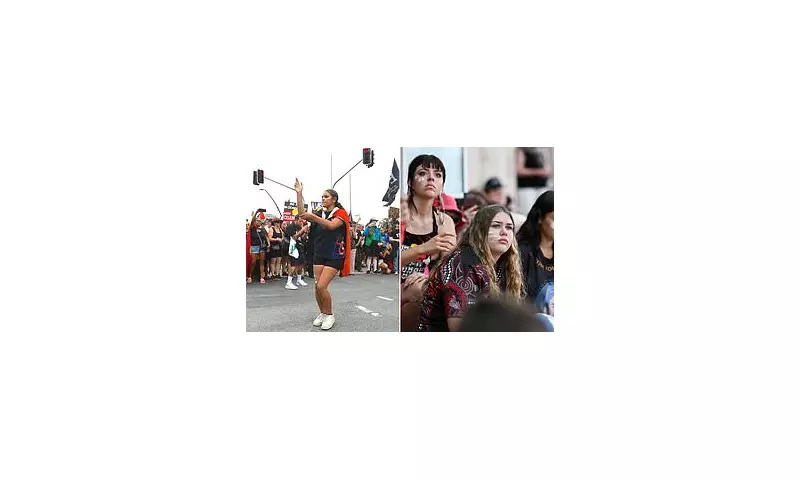
The language used to describe Australia's original inhabitants has undergone a profound transformation since the era of white settlement. Historical terms employed during colonisation, such as 'blacks' and 'natives', have long been recognised as deeply offensive relics of a racist past. Over the subsequent two centuries, Indigenous communities have been subjected to numerous derogatory labels that have compounded historical trauma. In contemporary discourse, one particular word from the past is now viewed by many as carrying offensive implications: 'Aborigine'.
The Shift Away from 'Aborigine'
Prominent human rights organisation Amnesty International explicitly advises against using the term 'Aborigine' on its official website, even when referring to someone who is Aboriginal. The group states that this noun is generally perceived as insensitive due to its racist connotations stemming from Australia's colonial history. Furthermore, it argues that the term inappropriately lumps people with diverse cultural backgrounds into a single, homogenised group.
Amnesty International recommends alternative phrasing that is more respectful and accurate. The organisation suggests saying 'Aboriginal person', 'Aboriginal', or 'Torres Strait Islander' as more appropriate alternatives. Where possible, using the individual's specific clan or tribe name is considered the most respectful approach. When discussing both Aboriginal and Torres Strait Islander peoples collectively, the terms 'Indigenous Australians' or 'Indigenous people' are preferred.

Lexicographical Perspectives
The Macquarie Dictionary, Australia's national dictionary, provides definitions that reflect both historical usage and contemporary sensitivities. It defines an Aborigine as 'a member of a tribal people, the earliest known inhabitants of Australia' or 'a descendant of this people'. However, the dictionary importantly includes a warning that the word can cause offence and suggests using other descriptions instead.
According to Macquarie's guidance, the nouns 'Aborigine(s)' and 'Aboriginal(s)' are considered by many to carry negative, even derogatory, connotations. The dictionary notes that using 'Aboriginal' as an adjective within noun phrases—such as 'Aboriginal people', 'Aboriginal woman', or 'Aboriginal Australian'—is widely preferred. The adjective 'Indigenous' serves as an inclusive term that encompasses both Aboriginal and Torres Strait Islander peoples.
The Rise of 'First Nations People'
In recent years, the terminology 'First Nations people' has gained significant traction and popularity. The Creative Spirits website, which provides research material about Aboriginal culture, strongly recommends adopting this term. The platform explains that all previous terminology was originally coined by non-Indigenous people, whereas 'First Nations people' represents a more accurate and respectful description.
Creative Spirits argues that this terminology should be preferred because Aboriginal people inhabited Australia before anyone else and formed distinct nations rather than small, insignificant groups. The website states: 'Each nation, just like any other nation on the planet, has its own culture, history and language.' The plural form 'nations' deliberately acknowledges the remarkable diversity of cultures within Australia's Indigenous communities.
Expert Opinions and Community Perspectives
In advocating against the use of 'Aborigine', Creative Spirits quotes Maria Tomasic, former president of the Royal Australian and New Zealand College of Psychiatrists. Dr Tomasic has stated that 'Aboriginal people are a diverse group of individuals and use of the term "Aborigine" has negative connotations imposed during colonisation and can perpetuate prejudice and discrimination.'
The platform also expresses reservations about the term 'Indigenous', arguing that it 'generalises mainland and islander cultures into one, ignoring the many different cultures that exist.' Meanwhile, the Aboriginal Advisory Group from Community Legal Centres NSW suggests using 'Aboriginal people' or 'Aboriginal person', describing these phrases as 'more positive and empowering'.

Contemporary Identification Practices
Aboriginal people have increasingly embraced identification through specific language groups, using descriptive phrases such as 'Bundjalung man' or 'Noongar woman'. Regional terms remain in use, with 'Koori' still employed to describe Aboriginal people from most of New South Wales and Victoria, and 'Murri' used for those from northern New South Wales and Queensland.
The Macquarie Dictionary notes that 'Indigenous Australians from particular regions of Australia are also sometimes referred to by names from Indigenous languages.' This practice represents a meaningful shift toward self-identification and cultural specificity.
Diverging Views Within the Community
Not all Indigenous Australians share the same perspective on terminology. Anthony Dillon, an academic and commentator on Indigenous affairs who identifies as both Aboriginal and Australian, has expressed that he finds nothing offensive about the term 'Aborigine'.
Dr Dillon has suggested that some Indigenous people might dislike 'Aborigine' because it could conjure images of 'someone who is clearly and unmistakably a full-blooded Aboriginal person.' He has written: 'There are plenty of people out there with some Aboriginal ancestry who are indistinguishable from white fellas but they insist on being called an "Aboriginal person".' This highlights the ongoing dialogue and diversity of opinion within Indigenous communities regarding appropriate terminology.
The evolution of language reflects broader societal changes and growing awareness of historical injustices. As terminology continues to develop, the central principle remains respect for individual and community preferences in how Indigenous Australians choose to identify themselves.