Holocaust Survivor Sees 'Ghost of Hitler' Behind Trump, Warns of History Repeating
Holocaust survivor Steven Frank, who endured the horrors of Nazi concentration camps, has issued a stark warning about contemporary politics, stating he can see "the ghost of Adolf Hitler" standing behind former US President Donald Trump during his speeches. The 90-year-old, who lost five family members in the Holocaust, including his father, draws disturbing parallels between current US immigration enforcement and the tactics of the Nazi regime.
Chilling Comparisons to Nazi-Era Persecution
Speaking ahead of Holocaust Memorial Day, Mr Frank expressed profound concern over the language and actions surrounding Trump's immigration crackdown. He specifically compared US Immigration and Customs Enforcement (ICE) officers to "Hitler's brown shirts" as they apprehend individuals on the streets. "History is beginning to repeat itself again," he cautioned, highlighting rhetoric that labels immigrants as "druggies" and claims they are "poisoning our people"—echoes, he says, of propaganda used against Jews in the 1930s.
Mr Frank, who was famously photographed by the Princess of Wales and described by her as one of the most "life-affirming people" she has ever met, now watches global events with apprehension. He pointed to disturbing scenes in Minnesota, where officers have been involved in fatal shootings during operations, as evidence of escalating tensions. "I see the ghost of Adolf Hitler looming in the background there, suddenly coming out of the darkness," he said of Trump's behaviour, attributing it to a "hatred of a group of people because they're not Americans by birth."

A Childhood Shattered by War
Steven Frank's perspective is rooted in personal trauma. Born to an English mother, he grew up in Amsterdam and witnessed the Nazi invasion in 1940. Initially, the marching soldiers seemed "quite exciting" to a child unaware of their "sinister intent." However, his world quickly collapsed as anti-Jewish laws were enforced. He was banned from local parks and his school, his name crossed out in the register, leaving him bewildered and isolated.
His family had an opportunity to flee to Britain, but his father, a humanitarian lawyer serving on the board of a Jewish mental hospital, chose to stay to help vulnerable patients, hide Jews, and organise escapes. In 1942, his father was betrayed, arrested, tortured, and ultimately gassed at Auschwitz in January 1943. Five close relatives, including two uncles and an aunt, were murdered in the camps.
Survival Against All Odds
Mr Frank, along with his mother and brothers, was transported to Theresienstadt, a Nazi transit camp in occupied Czechoslovakia. He recalls the harrowing 39-hour journey in a cattle truck, describing the "stench of faeces, urine, sweat and fear" in the sweltering darkness. In the camp, they faced starvation and witnessed "human suffering on an indescribable scale." One of his most terrifying memories was a hail of bullets tearing through their barracks, killing a beloved older couple who had become surrogate grandparents to him—a couple who cherished memories of holidays in England and spoke with his mother in her native tongue.
Miraculously, Steven survived the attack unscathed, later reflecting, "It was almost as if there was this invisible shield protecting me." The camp was liberated in May 1945, when he was nine years old, and a British RAF pilot brought them to safety in Britain.
The Legacy of a Tomato Plant
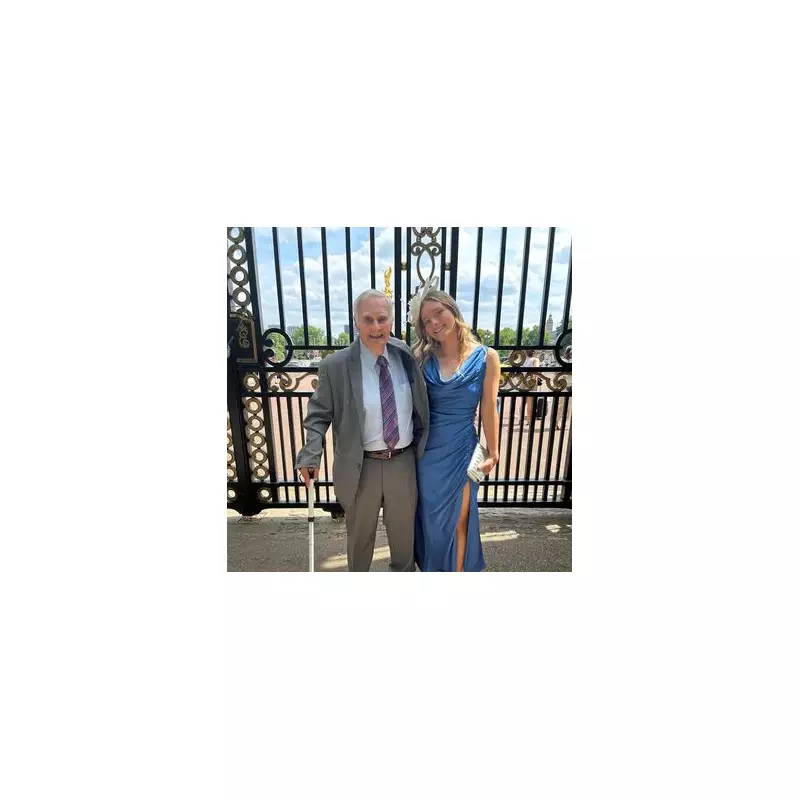
Among his most poignant keepsakes is a tin pan his mother used to make paste to keep her sons alive in the camps, and a deep connection to tomato plants. In Theresienstadt, another prisoner, who was later feared killed in Auschwitz, taught him how to grow tomatoes. When that man was transported away, he asked Steven to care for the plants. Now, in his greenhouse in Hertfordshire, Mr Frank still tends tomatoes, honouring that promise. "Every time I'm watering those tomatoes... I think of this man," he said. His granddaughter, Maggie Fleet, unaware of this history, nicknamed him "Opa-mato"—"Opa" being Dutch for grandad, and "mato" for his dedication to gardening.

Passing the Torch to Future Generations
Mr Frank hopes his granddaughter will carry forward his message of remembrance and critical thinking. Maggie, who accompanied him to Auschwitz where his father died, recalls the profound silence and heaviness of the air there. Her grandfather told her, "This is history for you but for me this was life." She promises to "never forget" and continue spreading his warnings.
In over 1,000 talks to schools, when children ask about the worst thing he experienced in the camps, Mr Frank answers, "I learnt to hate, it's a cancer of the mind." He emphasises, "Hatred is a very evil thing... I have no room for hatred in my heart now." Yet, he urges vigilance, stating, "If you don't remember these things, then these things will be repeated." His testimony serves as a powerful reminder of the dangers of dehumanising rhetoric and the enduring importance of historical memory in safeguarding our future.