Holocaust Survivors' Legacy Lives Through Their Families, Charity Leader Declares
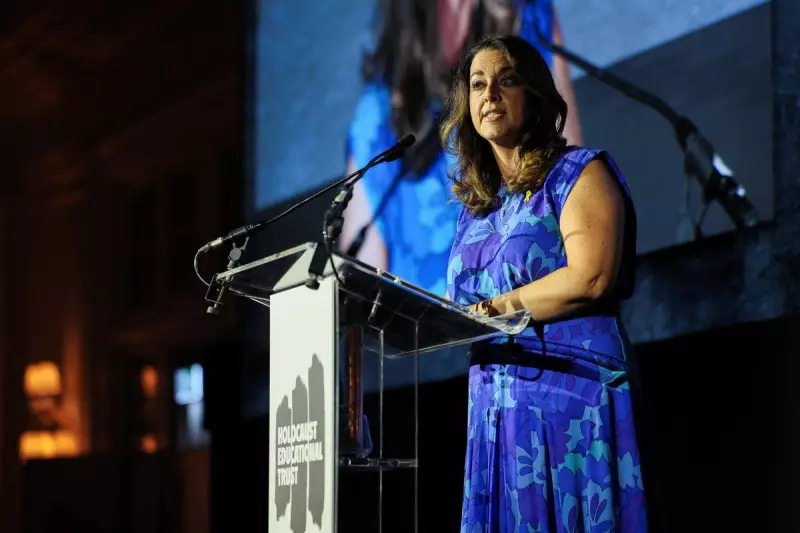
As the world prepares to mark Holocaust Memorial Day at what she describes as a "crucial juncture," the chief executive of the Holocaust Educational Trust has emphasised that the families of survivors represent their enduring legacy. Karen Pollock made these poignant remarks ahead of Tuesday's commemorations, which carry the theme "bridging generations" this year.
A Pivotal Moment for Holocaust Memory
Speaking to the Press Association, Ms Pollock highlighted that commemorations are occurring during an exceptionally significant period, characterised by both rising antisemitism and the diminishing number of living Holocaust survivors. "I think we're at quite a pivotal time, a crucial juncture, when it comes to Holocaust education and memory," she stated.
Ms Pollock noted that survivors are now predominantly in their eighties and nineties, with their numbers sadly declining. This reality has been underscored recently by the deaths of notable figures such as Eva Schloss, the Auschwitz survivor and stepsister of Anne Frank, who passed away aged 96 in early January, and Harry Olmer, a survivor of Terezin and Buchenwald concentration camps, who died a few weeks later.

"These are survivors in terms of eyewitnesses sharing their testimony, but they are champions of the memory, and when their light goes out, there's a question mark about, well, what happens afterwards?" Ms Pollock reflected. "Our theory has always been that we have to teach future generations."
The Next Generation Must Carry the Baton
The charity leader stressed the imperative for younger people to comprehend the horrors of the Holocaust and to assume the responsibility of remembrance. "We need the next generation to know and understand what happened during the Holocaust, to carry the baton, to say to those survivors, reassure them, 'you mustn't worry, because we're going to always remember. We're going to remember you, and we're going to remember the family that you lost'," she explained.
Ms Pollock observed a significant shift in recent years, with descendants of survivors becoming increasingly vocal and committed to sharing their family histories. "There has been a strong feeling, I'd say, over the past decade in particular, where children of survivors are becoming much more vocal and committed to taking on the responsibility of sharing their parents' story, whether in a school classroom or just at a public event," she said.
"And that's because they are so aware that, in a sense, they are the legacy."
Confronting Rising Antisemitism Today
The conversation took on a grave tone as Ms Pollock addressed the contemporary context of increasing anti-Jewish hatred. She referenced two horrific attacks: the Bondi Beach Hannukah celebration shooting in Sydney last December, which killed 15 people and wounded 30, and the Yom Kippur attack at Heaton Park Hebrew Congregation Synagogue in Crumpsall, Manchester, in October, where two worshippers were killed.
"This threat of antisemitism is very real," Ms Pollock asserted. "So I think that you can't mark Holocaust Memorial Day and simply look back and say, 'we will remember'. It's important to remember, and that's why we teach about it."
She emphasised that remembrance must honour the six million murdered Jewish individuals—each with a name, family, and dreams—but also translate into active opposition to present-day hatred. "It would be an empty pledge to say 'never again' if we didn't also say we have to be aware and fight back and stand up against the anti-Jewish hatred we're seeing today. It has to be a meaningful remembrance," she insisted.
Finding Hope in Darkness
Despite the challenges, Ms Pollock finds hope in those who stand against antisemitism and, most profoundly, in the survivors themselves. "They are real heroes," she said. "They are models of how to behave and how to communicate and how to be. They remind you to live life to the full and grasp every opportunity and to be positive. And that's a strange thing, when you think about the darkness of the Holocaust, the light that they bring."

As Holocaust Memorial Day approaches, her message underscores that the legacy of survivors is not confined to the past but is actively carried forward by their families and all who commit to education and remembrance in the face of ongoing prejudice.