Interpol-Backed Police Operation Makes Nearly 200 Arrests in Amazon Gold Mining Sweep
In a landmark international law enforcement effort, police forces from Brazil, French Guiana, Guyana and Suriname have arrested nearly 200 individuals during their first-ever joint cross-border operation targeting illegal gold mining in the Amazon region. Authorities confirmed the details of the major crackdown on Thursday, highlighting a significant escalation in the fight against environmental crime.
Unprecedented Cross-Border Cooperation
The operation, which received crucial backing from Interpol – the international police cooperation agency – as well as the European Union and specialist Dutch environmental crime police, represents a new level of coordination between Amazon nations. Conducted throughout December, the initiative involved more than 24,500 checks on vehicles and individuals across remote border areas that have traditionally been difficult to police.
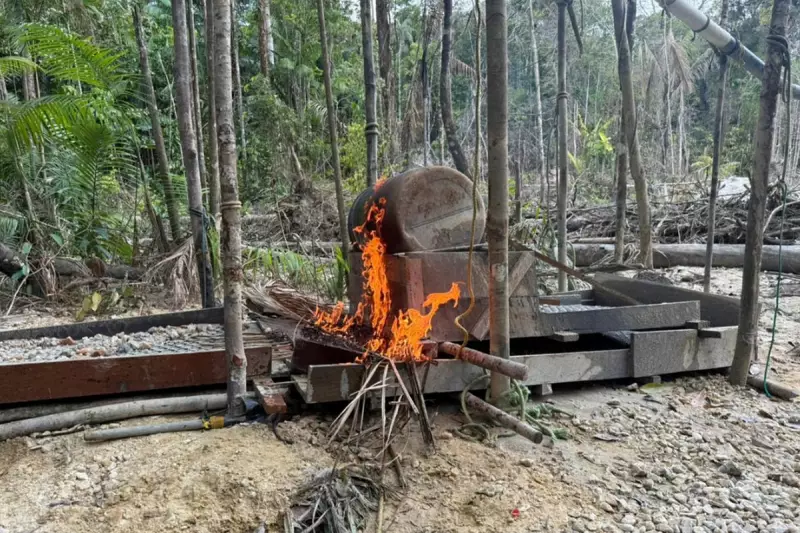
Operation Guyana Shield, as it was codenamed, led to the seizure of substantial quantities of cash, unprocessed gold, toxic mercury, firearms, drugs and specialised mining equipment. Interpol officials described the operation as marking a significant step forward in regional cooperation, where dense rainforest, vast distances and porous borders have historically hampered enforcement efforts against illegal mining networks.

Major Seizures and Organised Crime Links
Among the most significant arrests were three men detained in Guyana on suspicion of gold smuggling and money laundering. Officers seized unprocessed gold and approximately $590,000 in cash during their apprehension. Investigators believe the suspects form part of an organised crime group with potential links to a major gold exporting company operating within Guyana.
Authorities also confiscated cylinders of mercury valued at over $60,000 in Guyana and Suriname. The highly toxic substance, commonly used in illegal gold mining to separate gold from other materials, had been concealed inside solar panels and transported by bus, demonstrating the sophisticated methods employed by criminal networks.
Environmental and Human Cost of Illegal Mining
Illegal gold mining has emerged as a primary driver of deforestation and river pollution throughout the Amazon basin, contaminating waterways with mercury and devastating lands relied upon by Indigenous communities. In recent years, the activity has expanded rapidly as global gold prices approached record highs, pushing miners deeper into remote forest regions and transforming gold into one of the most profitable commodities for transnational organised crime.
"Illegal gold mining is growing rapidly and causing serious harm to the environment and local communities, especially in remote and fragile areas," stated Interpol Secretary General Valdecy Urquiza in an official release, emphasising the urgent need for coordinated international action.
Coordinated Border Checks and Additional Seizures
South American police carried out meticulously coordinated checks along shared borders, including inspections on both sides of rivers that separate the participating nations. Officers thoroughly searched vehicles, boats and small riverside shops that sell fuel, tools and other supplies commonly utilised in illegal mining operations. Some of these establishments are suspected of facilitating the cross-border smuggling of gold and mercury.
During the extensive operation, police additionally seized counterfeit medicines, alcohol and cigarettes worth more than $40,000, alongside mining pumps, mats used to collect gold, firearms and numerous mobile phones. In a particularly concerning discovery, officers stopped a bus carrying undocumented migrants, including several minors. Some of these children are suspected victims of forced labour or sexual exploitation, starkly underscoring the severe human impact of illegal mining networks.
The successful operation demonstrates how enhanced international cooperation and intelligence sharing can disrupt criminal enterprises that profit from environmental destruction and human exploitation in one of the world's most vital ecosystems.