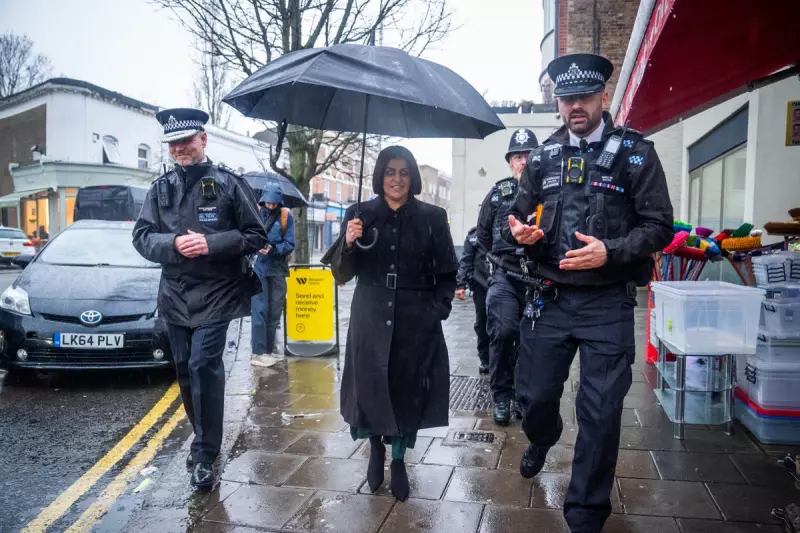
In a landmark announcement set to reshape law enforcement across England and Wales, Home Secretary Shabana Mahmood has confirmed the creation of a new National Police Service, widely dubbed the "British FBI". This radical overhaul aims to centralise the fight against serious and complex crimes under a single, powerful national organisation.
A Unified Front Against National Threats
The newly established National Police Service will absorb the functions of several existing agencies, including the National Crime Agency and regional organised crime units. This consolidation is designed to create a more cohesive and effective response to crimes that transcend local boundaries.
Counter Terror Policing, the National Police Air Service, and National Roads Policing will also be merged into the NPS. The Home Office believes this restructuring will alleviate pressure on local police forces, which have often been forced to divert precious resources from community-level issues to tackle national policing challenges.

Addressing a System "Built for a Different Century"
Ms Mahmood, who will formally unveil the plans in a policing white paper on Monday, argued that the current model is outdated. "Some forces lack the skills or resources they need to fight complex modern crime," she stated. The new NPS is intended to allow local officers to refocus their efforts on fighting crime within their own communities.
The service will be led by a newly created role: the National Police Commissioner, who will become the most senior police chief in the country. This commissioner will oversee a national public order commander, a position established in direct response to the 2024 riots, reflecting concerns over rising community tensions and increasingly widespread incidents of disorder.
Broad Support and Cautious Optimism
The Metropolitan Police, Counter-Terror Police, and the National Police Chiefs' Council have all publicly welcomed the move towards a single national service. However, they emphasised that the transition "must be delivered with care" and that its ultimate success hinges on "maintaining strong connections with local policing".
Graeme Biggar, the head of the National Crime Agency, is a notable backer of the plan. He described the current fragmented system as "out of date" and called for "a single, stronger national law enforcement body".
Additional Reforms and Significant Savings
Alongside the creation of the NPS, Ms Mahmood announced a new national forensics service. This initiative aims to save money and address a significant backlog of 20,000 digital devices awaiting examination. A series of regional crime hubs will also be established to tackle specific offences such as drug supply, serious fraud, and child sexual abuse.
Once operational, the NPS will set national standards for police training and procure new technology, including facial recognition systems, on behalf of all forces. Centralising procurement from 43 separate forces to a single national body is projected to save approximately £350 million by the time of the next general election.
The Home Office highlighted potential efficiencies, citing examples where a national framework for purchasing officers' trousers had yielded savings, and where some forces were paying more to embroider uniform shirts than for the shirts themselves.
Political Scrutiny and Broader Changes
The announcement forms part of a wider package of reforms expected in Monday's white paper. These may include reducing the total number of police forces in England and Wales, abolishing the role of police and crime commissioners, and changing how officers are recruited and managed.
Shadow home secretary Chris Philp responded cautiously, stating that the changes "must not come at the expense of local and community policing". He warned that "more top-down reorganisation risks undermining efforts to catch criminals and it delivers no real improvement on the ground."
The creation of the National Police Service represents the most significant restructuring of British policing in decades, promising a more unified approach to national security while aiming to free local forces to focus on the crimes that most directly affect their communities.