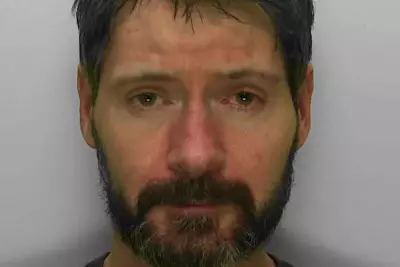
Coroner Refers Mysterious Byron Bay Death to Homicide Squad
The New South Wales coroner has formally recommended that the mysterious death of Jackson Stacker, a 25-year-old Melbourne man found deceased near Byron Bay in 2021, be referred to the homicide squad for further investigation. State Coroner Teresa O’Sullivan highlighted that certain aspects of the early police inquiry raised significant concerns, prompting this critical move.
Disappearance and Discovery
Jackson Stacker was travelling from Melbourne to Queensland in his Toyota Hiace van when Covid-19 border closures stranded him in the northern rivers region of New South Wales. His father, Ian Stacker, described him as seeking an alternative lifestyle focused on living off the land with minimal environmental impact. However, Stacker soon found himself entangled in a world of homelessness, drugs, and desperation in Byron Bay.
On 23 August 2021, Ian received a call inquiring if his son’s van was for sale after it was discovered abandoned at a rest stop in Sleepy Hollow near Pottsville, approximately 40 kilometres north of Byron Bay. The vehicle was ransacked, with keys in the ignition and a smell of rotting food permeating the interior. Two days later, police located Stacker’s remains under a tree in a nearby paddock, exposed to the elements for about a month. The skeletal remains were scattered, with his scalp and dreadlocks found 14 metres from the body.

Coroner’s Findings and Family Concerns
In her findings delivered on Thursday, Coroner O’Sullivan noted that a large hunting-style knife was discovered in Stacker’s left chest area, with the handle resting on the skeletal remains of his right hand, which was positioned under his body. Forensic pathologist Dr Leah Clifton, who conducted the autopsy, concluded the cause of death as “unascertained,” though she indicated it was most likely due to injuries inflicted by the knife. However, advanced decomposition prevented a definitive conclusion.
The Stacker family has consistently argued that the initial police investigation was hampered by a premature assumption that Jackson had taken his own life. They pointed to evidence suggesting he was not sufficiently distressed to commit suicide by 23 July 2021, the day after he was last seen alive. O’Sullivan acknowledged that while it was probable Stacker was distressed or depressed in the days leading up to his death, there was no note or express indication of self-harm to confirm suicide.
Furthermore, no DNA evidence was extracted from the knife, and there was no proof that Stacker owned such a weapon. The absence of defence wounds and the nature of the two chest wounds presented complexities, as O’Sullivan noted it was unlikely Stacker would have remained still during an attack. Described as a well-liked individual with no history of aggression, the circumstances surrounding his death remain deeply puzzling.
Recommendations and Ongoing Questions
Coroner O’Sullivan stated that on the available evidence, she could not make findings regarding the cause and manner of death to the requisite standard. While she did not conclusively deem the early investigation inadequate, she emphasised that it would have been appropriate to refer the case to the homicide squad for initial assistance. There was also an insufficient explanation for the delay in establishing a strike force to probe the matter further.
In a statement, the Stacker family expressed that the coroner’s findings validate their long-held position that serious unanswered questions persist. Stacker’s mother, Sandra MacFarlane, revealed that over the past two years, additional information and witnesses have emerged, warranting a thorough and independent investigation. She emphasised a mother’s deep understanding of her child, reinforcing the need for closer scrutiny into the tragic events.
This case underscores the enduring mystery and emotional toll on those left behind, as authorities now turn to the homicide squad to potentially uncover new leads and bring clarity to Jackson Stacker’s untimely death.