A senior police officer in India has found himself at the centre of an unexpected disciplinary controversy after appearing for duty with strikingly dyed red hair, leading to a formal order instructing him to revert to his natural colour.
Social Media Virality Triggers Formal Intervention
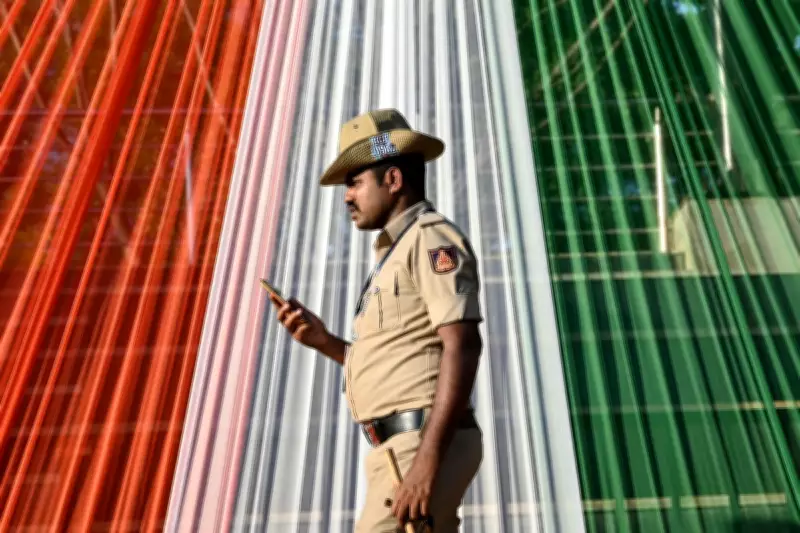
The incident involves Rashmi Ranjan Das, a 49-year-old deputy superintendent of police serving in the Jagatsinghpur district of the eastern state of Odisha. Photographs of Mr Das reporting for work with his bright red hair began circulating widely on social media platforms this week, quickly trending online and attracting significant public attention.
The viral images prompted immediate concern from senior police officials, who viewed the unconventional appearance as incompatible with the expected standards of uniformed service. While there exists no specific clause in official police regulations governing hairstyles or hair colour, personnel are generally expected to maintain a simpler, more conventional appearance that respects the dignity of their uniform.

Official Directive Issued by Senior Command
In response to the growing social media discussion, the office of Inspector General of Police Satyajit Naik, who oversees the state's Central Range, issued a formal order directing Mr Das to change his hair back to its natural colour. The directive represents a significant escalation from previous informal advice that had reportedly been given to the officer regarding his appearance.
"Everyone in the police force should respect the uniform and give utmost priority to discipline and public decorum," Inspector General Naik stated in comments reported by local broadcaster NDTV. He further elaborated to news agency PTI, explaining that "after finding the DSP being trolled on social media, I instructed the Jagatsinghpur SP to tell the officer to maintain decorum and keep his hairstyle decent, befitting a man in uniform."
Broader Implications for Uniformed Services
The incident has sparked broader conversations about appearance standards within India's police forces and other uniformed services. Inspector General Naik emphasised that "everything cannot go by written orders," suggesting that certain expectations of propriety extend beyond formal regulations. He stressed that "from constables to senior officers, everyone in the police service should respect the uniform and give utmost priority to decency."
Police sources indicate that Mr Das, who is currently attached to the Human Rights Protection Cell and is known among colleagues as a firm officer with experience handling organised crime cases, had previously received informal suggestions to reconsider his appearance. However, these earlier advisories were not acted upon, with the social media virality ultimately triggering the formal intervention.
Mixed Reactions and Officer's Response
Reactions to the incident have been mixed, with some viewing the directive as necessary for maintaining discipline, while others consider it an overreaction to a relatively minor matter. Another officer commented anonymously that "creating a controversy over a non-issue serves no purpose," reflecting divided opinions within the force about where to draw the line between personal expression and professional standards.
Mr Das himself has declined to comment publicly on the directive, maintaining silence amid the ongoing discussion about appropriate appearance for uniformed personnel. The case highlights how social media scrutiny can rapidly transform personal style choices into matters of official discipline, particularly within traditionally conservative institutions like police forces.
As uniformed services worldwide grapple with evolving standards of appearance and personal expression, this incident in Odisha serves as a notable example of how visual presentation continues to be closely tied to perceptions of professionalism and authority within law enforcement organisations.