London Phone Theft Epidemic: A Personal Account of a Calculated Crime
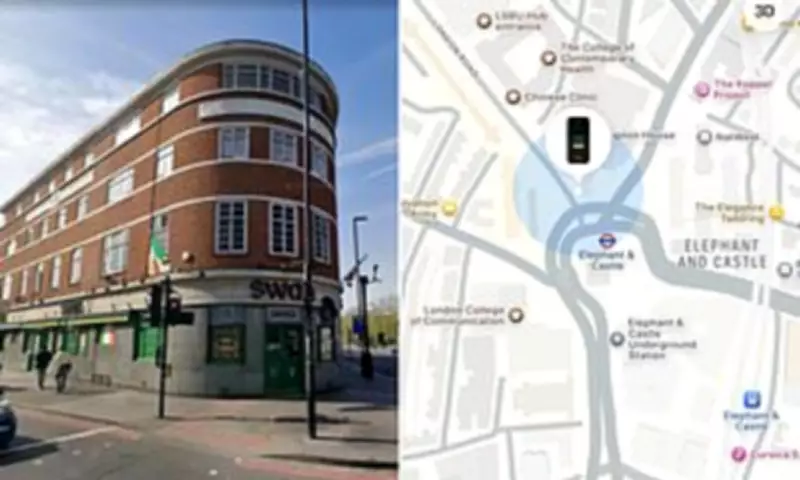
When I first moved to London, phone theft seemed like urban folklore—a grim anecdote you hear, shake your head at, and file away under 'thankfully not me'. It never crossed my mind that I would become one of those stories myself. Yet, on a Saturday night in Stockwell, that illusion shattered in under five minutes at The Swan pub, where my phone was stolen, adding to the half a million cases reported across the city since 2019.
The Swift and Silent Theft
It happened quickly, quietly, and without any force or confrontation. A man approached me inside the multi-storey club, neatly dressed and self-assured, blending easily into the crowded bar. Nothing about him signalled immediate danger. He was the exact opposite of my stereotypical vision of London's phone thieves, who I pictured speeding down Oxford Street on a scooter, face half-covered by a balaclava, dressed in dark, forgettable clothing. In fact, this man, clad in chinos and a shirt, entirely contradicted that idea—a detail I now understand was intentional.
'You are so pretty,' he said, smiling. 'Let me take you on a date?' Not the usual opening line from a phone thief, but an unwanted praise that, as a young woman, I dismissed politely. I returned to my friends, thinking nothing more of it. However, he lingered, hovering close enough to command attention without causing a scene. Then, he introduced a second man—the so-called cousin—marking the start of a coordinated two-man theft.

A Coordinated Distraction
The first man resumed talking, asking rapid-fire questions about my background and life in London, gripping my arm at one point to keep me focused. While my attention was deliberately occupied, the second man moved in. Without bumping into me, drawing attention, or me feeling a thing, he removed my iPhone from my pocket. By the time I realised it was missing seconds later, both men had vanished into the darkness. There was no dramatic chase or shouting—just the sudden, disorienting awareness that something important was gone, taken intentionally.
Alarming Statistics from the Met Police
Statistics released by the Met Police paint a harrowing picture of this crime. In 2019, 91,481 phone thefts were reported, falling to 55,820 in 2020 during pandemic restrictions. However, cases climbed to 63,777 in 2021, 90,810 in 2022, and peaked at 117,211 in 2024. In the first three months of 2025 alone, a further 27,167 phones were reported stolen, indicating the trend remains high. A spokesman for the Met Police noted that while violent crime has reduced, 'volume crime such as theft, shoplifting, and burglary remains a concern,' with targeted operations and increased patrols helping to reduce neighbourhood crime by 14 percent.
The Aftermath: Tracking and Financial Threats
Back at The Swan, panic set in immediately. Borrowing a friend's phone, we booked an Uber home and watched in despair as my mobile disappeared on the Find My iPhone app. That night, it was tracked to Plaistow, approximately nine miles away. The following day, it moved to Elephant and Castle, stationary inside an unknown building. Meanwhile, accessing my banking app revealed attempted transfers: money moved internally within half an hour of the theft, followed by attempts to move funds elsewhere. Thankfully, my bank intervened before any money left my account, but the speed was chilling—this was not just opportunistic; it was organised.
The Lingering Impact and Broader Implications
Phone theft is not just about losing an object; it's about access to banking, photos, contacts, authentication codes, and fragments of your life stored behind a screen. In minutes, strangers attempted to penetrate my daily existence. What lingers most is the clarity of how calculated the encounter was: two people with clear roles—one to distract, one to steal—both disappearing in a busy pub surrounded by people. There was no reckless behaviour, just a brief, engineered window of vulnerability that worked all too well.

Unfortunately, I am far from alone. This type of theft is happening across London with alarming regularity, subtle, rehearsed, and designed to be over before you realise it. The lesson? Don't trust appearances. An all-black outfit doesn't make a thief, and dressing smartly doesn't make a gentleman. Five minutes at The Swan was all it took, and somewhere in Elephant and Castle, my phone is still blinking idle on a map.
A spokesperson for The Swan said: 'Please be assured that we continue to monitor our premises closely to prevent thefts, and we are proactive in our approach to ensure incidents of this nature are avoided. Thankfully, events like this are not common at The Swan, and we are committed to keeping it that way.'