Home Secretary to Present Sweeping Policing Reforms to Parliament
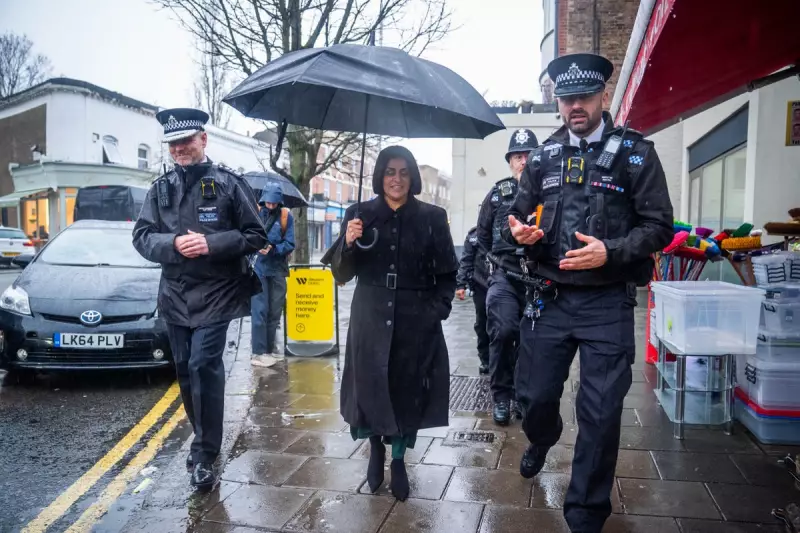
Home Secretary Shabana Mahmood is poised to unveil what is being described as the most significant overhaul of policing in England and Wales for two centuries. She will present her radical proposals to Members of Parliament in a statement to the House of Commons on Monday afternoon.
A New National Police Service and Reduced Force Numbers
The centrepiece of the reform package is the creation of a new National Police Service (NPS), designed to function as a "British FBI" focusing on cross-regional and international crime. Concurrently, the number of regional police forces is set to be dramatically reduced from the current 43 to potentially as few as 12. This consolidation aims to streamline operations and reduce administrative overheads.
Ms Mahmood has framed these changes as a necessary response to what she terms an "epidemic of everyday crime," such as shoplifting and phone theft, which she argues too often goes unpunished. She promises a new policing model that balances local crime-fighting with a powerful national investigative capability.

Mixed Reactions from Police Leadership and Oversight Concerns
The announcement has elicited a complex response from within the policing community. While some senior figures, like National Police Chiefs' Council Chairman Gavin Stephens, support the reduction in force numbers, others have raised significant concerns.
Nick Smart, President of the Police Superintendents' Association, welcomed modernisation efforts but criticised the lack of consultation with the operational workforce tasked with delivering the changes. He warned that without clear definitions separating national and local crime responsibilities, the reforms risk failure.
Furthermore, the Association of Police and Crime Commissioners has sounded an alarm over the concentration of power. Chairwoman Emily Spurrell stated that placing "unprecedented power" in the hands of the Home Secretary and the NPS head is "constitutionally alien" and must be counterbalanced by robust independent scrutiny.
Additional Measures: Accountability, Response Times, and Digital Crime
The reform package extends beyond structural changes. It includes several previously announced initiatives:
- A new "licence to practise" for police officers.
- Reduced bureaucracy to increase officer presence on streets.
- Enhanced accountability, granting the Home Secretary power to dismiss underperforming chief constables.
- New national response time targets: 20 minutes for rural areas and 15 minutes for urban areas in emergencies.
Chairman Gavin Stephens noted that while response times are important, policing must also adapt to modern threats like cybercrime and fraud, which concern him more for his own family than traditional crimes.
Funding and Focus on Specific Crime Types
Ministers have also announced a £7 million investment to combat shoplifting, with £5 million allocated to Operation Opal, a national intelligence unit targeting organised retail crime gangs. Policing Minister Sarah Jones issued a stark warning to criminals, stating "there is nowhere to hide now."
Recognising the evolving nature of crime, the reforms mandate police forces to hire more technology specialists in digital, cyber, and forensic fields to tackle offences involving deepfakes and artificial intelligence.
Recruitment and Political Scrutiny
The plans include a drive to recruit more volunteer special constables, whose numbers have plummeted from over 20,000 in 2012 to just 5,534 last year. However, the Police Federation has questioned whether fewer forces will necessarily lead to better policing.
The proposals have also drawn political fire. Shadow Policing Minister Matt Vickers expressed concern that such a top-down, decade-long reform could undermine local community policing and serve as a distraction from the government's record. The Home Secretary's ambitious package, aiming to both improve performance and achieve savings, now faces detailed parliamentary and public examination as the debate over the future of British policing intensifies.