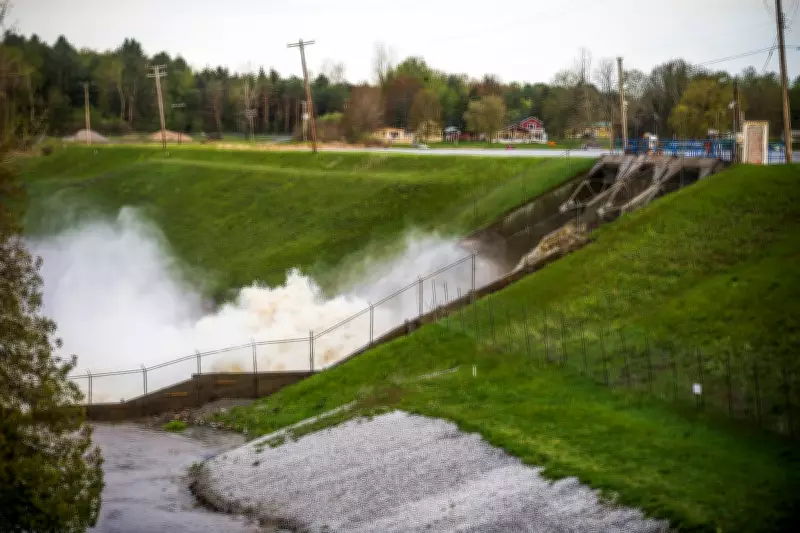
The state of Michigan has been cleared of liability in a disastrous 2020 dam failure that flooded communities, destroyed more than 100 homes, and drained a popular summer lake. Court of Claims Judge James Redford issued a 100-page opinion on Thursday, acknowledging the “real and lasting damages” of the Edenville Dam collapse but ruling that the state’s environmental regulators were not at fault.
Judge Cites Unprecedented Flood as Cause
Redford determined that days of relentless rain and an unprecedented 100-year flood triggered the calamity in the Midland area, not the state-authorized level of Wixom Lake. He cited expert testimony indicating that a lower lake level before the disaster was unlikely to have prevented the catastrophe. “This does not mean that what plaintiffs suffered and continue to suffer is not an immensely difficult and heavy burden,” the judge wrote.
Plaintiffs’ Claims Rejected
Lawyers representing thousands of people had sued the state, arguing that decisions by environmental regulators contributed to the dam collapse, ruined property values, and diminished their enjoyment of Wixom Lake, located 150 miles (241 kilometers) northwest of Detroit. If Redford had ruled in favor of property owners, the case would have proceeded to financial recovery. Messages seeking comment from the plaintiffs’ lawyers were not immediately returned.

The judge also rejected comparisons to the Flint water crisis, where state decisions caused lead to leach from pipes. He emphasized that the dam failure was a different situation.
Background on the Dam Failure
The privately owned Edenville Dam on the Tittabawassee River produced hydroelectricity until its federal license was revoked in 2018. A reservoir behind the dam, known as Wixom Lake, was at the center of the dispute. The dam was in the process of being turned over to area residents when the failure occurred, releasing a torrent that also overtopped the downstream Sanford Dam and flooded the city of Midland. The lake rose more than 5 feet (1.5 meters) above its normal level and 3 feet (0.9 meters) higher than the highest level recorded in 1929. The east side of the dam's soil embankment was overwhelmed and became unstable. Since the failure, Wixom Lake is being slowly restored.
Expert Report on the Disaster
The Federal Energy Regulatory Commission commissioned experts to study the dam failures. A 2022 report concluded that the failure was “foreseeable and preventable” but could not be “attributed to any one individual, group or organization.” This finding aligns with the court’s decision to absolve the state of liability.