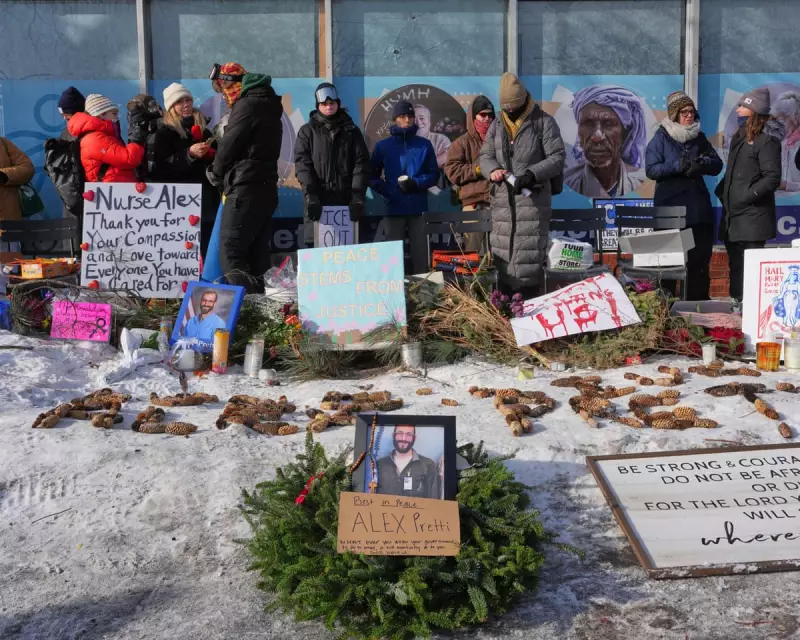
Minneapolis Community Grieves as Federal Agent Shooting Claims Second Life
The streets of Minneapolis remained tense yet sombre on Sunday morning, following the fatal shooting of 37-year-old nurse Alex Pretti by a United States Border Patrol officer. This tragic incident occurred on Saturday, marking the second time in under three weeks that a Minneapolis resident has been killed by federal agents operating in the city.
A City Under Siege: Vigils and Anger Grow
As temperatures plunged near zero degrees Fahrenheit, hundreds of mourners and news crews gathered at the scene. The location quickly transformed into a growing memorial, with flowers, candles, and handwritten signs placed in the snow and on the asphalt to honour Pretti. This poignant display has become an increasingly familiar sight in a city grappling with an intensified federal immigration enforcement campaign.
The shooting prompted immediate action from local residents, who erected makeshift barriers using wooden pallets, trash cans, and furniture to block traffic. Subsequent protests saw federal agents deploy chemical irritants and flash-bang grenades, debris from which was still visible on Sunday. Although the city later removed the barriers, reopened roads, and stood down National Guard troops, declaring the area "calm and peaceful" overnight, the underlying anger was palpable.

Back-to-Back Tragedies Fuel Community Resolve
Alex Pretti's death follows closely on the heels of another tragedy: the killing of 37-year-old Renee Good, also by a federal agent, less than three weeks prior. This pattern has left the community both angry and anxious, yet more determined to resist. Spray-painted messages like "ICE OUT" and "Fuck ICE" adorned freeway overpasses and building walls throughout the neighbourhood, a stark visual protest against the presence of Immigration and Customs Enforcement (ICE) agents.
A Saturday evening vigil drew hundreds into the subzero cold to light candles and mourn. Similar gatherings occurred in parks and on street corners across the state, while nationwide protests were sparked by the news. Minneapolis Mayor Jacob Frey noted on social media that the memorials were peaceful, with no arrests or significant incidents reported.
Local Businesses and Officials Respond to Crisis
The human impact of the federal operation was vividly captured by local businesses. Glam Doll Donuts, situated directly across from the shooting site, posted a poignant message on social media. The owners shared a photo from their front windows, lined with signs stating ICE was not welcome, but everyone else was. They lamented that the view they had enjoyed for nearly 13 years would "never be the same," and opened for a few hours on Sunday to offer warmth and community.
In response to the shooting, Minneapolis officials sought an immediate court ruling on Saturday for a temporary restraining order to halt federal agents' activities in the city. However, new videos surfaced on Sunday showing agents brawling with observers at a north Minneapolis apartment building, indicating that enforcement actions were continuing unabated.
Mounting Pressure and an Unsustainable Situation
The federal government has shown no indication of slowing its campaign, defending agents' actions without investigation and offering explanations that contradict video evidence gathered by residents. Officials have blamed local leaders, including Governor Tim Walz and Mayor Frey, for non-cooperation. In a significant escalation, Attorney General Pam Bondi sent a letter to Governor Walz on Saturday demanding the state turn over data on food assistance programs, end sanctuary policies, and provide voting rolls.
Minneapolis Police Chief Brian O'Hara described an untenable situation in a national television interview, stating his officers were "stretched incredibly thin." He emphasised the gravity of the moment, noting, "This is the second American citizen that's been killed, third shooting within three weeks. People have been speaking out, saying that this was going to happen again. And I think everyone is kind of waiting for folks on both sides to come together and just figure this thing out. This is not sustainable."

Community Networks Strengthen in Face of Adversity
Beyond the street-level protests and vigils, an unofficial network of neighbours has expanded to thousands, organising to support the community. This network facilitates tasks such as taking children to school, delivering groceries to those afraid to leave their homes, and providing rides for residents who fear being pulled over by agents. Former Minneapolis Mayor RT Rybak framed the city's global spotlight as an opportunity to demonstrate unity in a "common purpose" of mutual protection, writing, "A community uniting around the idea that everyone belongs does not mourn alone."
As Minneapolis confronts this ongoing crisis, the resolve of its residents appears to strengthen, even as the dangers of resistance become more apparent following the deaths of two community observers. The city now stands as a focal point in the national debate over immigration enforcement and community safety.