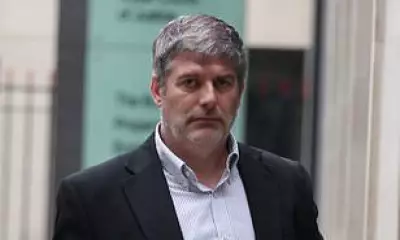
NSW Anti-Slavery Commissioner Condemns Authorities Over Iranian Football Team Departure
The NSW Anti-Slavery Commissioner has launched a scathing critique of the Australian Federal Police and Sydney Airport authorities for what he describes as their failure to adequately intervene when the Iranian women's football team departed Australia. Dr James Cockayne has expressed profound concern that several players who returned to Iran could face severe reprisals after their public protest during the Asian Cup tournament.
Allegations of Exit Trafficking Under Australian Law
In a detailed opinion piece published by the Sydney Morning Herald, Dr Cockayne presented a compelling argument that the circumstances surrounding the team's departure may constitute exit trafficking under Australian criminal legislation. 'All available signs suggest that members of the Iranian women's football team, and their support crew, were and are being coerced to return to Iran,' Dr Cockayne wrote. 'If so, that would constitute exit trafficking under Australian criminal law – a crime punishable by up to 12 years' imprisonment.'
The commissioner revealed that he had formally written to Australian Federal Police Commissioner Krissy Barrett on Monday, urgently requesting a criminal investigation into the matter. This communication occurred before five team members managed to escape from their hotel accommodation and subsequently received humanitarian visas allowing them to remain in Australia.
Airport Scenes Spark Commissioner's Distress
Dr Cockayne described feeling deeply distressed by the scenes witnessed at Sydney Airport on Tuesday evening, when team members who had not sought asylum departed Australia for what could be a dangerous return to Iran. 'They also left me feeling dismayed – and not a little confused about the role that the Australian Federal Police, Sydney Airport and Qantas all seem to have played in making this exit happen,' he stated in a separate Thursday declaration.
The commissioner highlighted troubling reports suggesting that 'the so-called 'minders' accompanying the team are security officials from Iran,' raising serious questions about potential coercion and intimidation tactics employed against the athletes.
Critical Questions Remain Unanswered
Dr Cockayne has posed several crucial questions to authorities regarding their handling of the situation. He has demanded clarification about whether the AFP conducted any investigation into potential trafficking allegations, whether the players received independent legal counsel about their right to remain in Australia, and what specific measures Sydney Airport implemented to address the 'clear and highly publicised risk of exit trafficking.'
'I certainly do not want to believe that our national police force, or the businesses that run our national flag carrier and our busiest airport, may have turned a blind eye or even unwittingly contributed to exit trafficking,' Dr Cockayne emphasized. He further questioned why suspected perpetrators were permitted to leave Australia with police escorts facilitating their airport transit.
Contrasting Campaigns and Travel Logistics
The commissioner's criticism appears particularly pointed given Sydney Airport's recent advertising initiative encouraging public reporting of suspected human trafficking activities within airport facilities. 'What did it do in this case to address this clear and highly publicised risk of exit trafficking, through its facilities?' Dr Cockayne challenged.
Travel arrangements revealed that while Qantas transported the team from the Gold Coast to Sydney on Tuesday, the footballers and support staff were immediately transferred by bus to the international terminal before continuing their journey to Kuala Lumpur via Malaysian Airlines. Qantas confirmed they were not involved in the international leg of the team's travel.
Complex Asylum Decisions and Relocation
The situation became further complicated when one of the seven Iranian squad members granted humanitarian visas unexpectedly reversed her decision to seek asylum in Australia. Home Affairs Minister Tony Burke explained to parliament that 'in Australia, people are able to change their mind, people are able to travel. We respect the context in which she has made that decision.'
This reversal necessitated the immediate relocation of the remaining six women who chose to stay in Australia, as the player disclosed their location when contacting the Iranian embassy. 'Unfortunately, in making that decision, she had been advised by her teammates and coach to contact the Iranian embassy and get collected,' Minister Burke revealed.
The minister earlier clarified that government officials had not pressured the women regarding their visa decisions, though he acknowledged 'the one pressure we couldn't take away was the context ... what pressures they might have felt with their own family members.'
Dr Cockayne concluded his remarks by expressing hope for urgent answers to these serious questions, stating 'Like many Australians, I look forward to these urgent issues being answered.' The commissioner's intervention highlights significant concerns about Australia's implementation of anti-trafficking measures in high-profile international cases.