TV Safety Warning by Officer Unmasked Him as a Murderer
A California police officer's appearance on television to warn female drivers about the dangers of traveling alone inadvertently revealed his identity as the killer of a young student, leading to a flood of public tips and his eventual conviction. The chilling case unfolded in San Diego in December 1986, when 20-year-old Cara Evelyn Knott was murdered, and the subsequent TV broadcast exposed officer Craig Peyer as the perpetrator.
The Broadcast That Sparked a Breakthrough
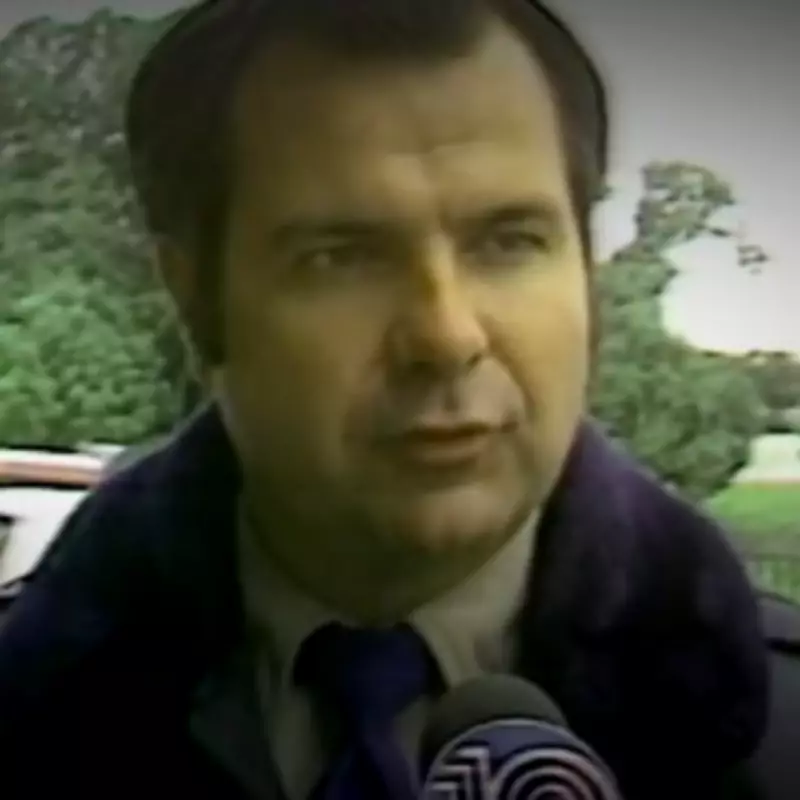
Just days after Cara Knott's death on December 27, 1986, local news station KCST-TV aired a segment on self-protection for women drivers, featuring California Highway Patrol officer Craig Peyer. In the report, Peyer advised viewers on road safety, emphasizing the hazards of stopping for car trouble. "Once you stop, there's an inclination for a lot of people to want to leave their vehicle. That’s a very dangerous thing to do," he stated. The segment seemed routine, but for a handful of female viewers, it triggered a shocking realization.
Within an hour of the broadcast, multiple women called the police, claiming they recognized Peyer from previous encounters where he had pulled them over near the scene of Cara's death and made inappropriate sexual advances. Over 20 calls poured in, detailing similar experiences with the officer, whose 13-year unblemished record had previously shielded him from suspicion.

The Investigation and Evidence
Police reopened the case, re-examining Peyer's whereabouts on the night of Cara's murder. Cara was last seen alive at a gas station two miles from where her body was found, with an attendant recalling a marked CHP patrol car making a U-turn after she drove away. Forensic evidence later proved crucial: fibres from a California Highway Patrol uniform were found on Cara's body, and a drop of blood on Peyer's boots matched her rare blood type.
Additional clues included a rope in Peyer's car that matched marks on Cara's neck, though this evidence was excluded in court due to the novelty of the forensic technique. Investigators concluded that Peyer had stopped Cara's car on an isolated off-ramp, and when she threatened to report his advances, he attacked her, leaving scratches on his face that were visible in the TV broadcast.
The Trial and Sentencing
Craig Peyer was arrested in early 1987 and stood trial for Cara Knott's murder. Despite a complex legal process that nearly led to his acquittal, he was convicted and sentenced on August 4, 1988, to 25 years to life in prison. Peyer, now in his late 70s, is eligible for a parole hearing in January 2027. This case highlights how a public broadcast can unexpectedly unravel a crime, bringing justice to victims through community vigilance.