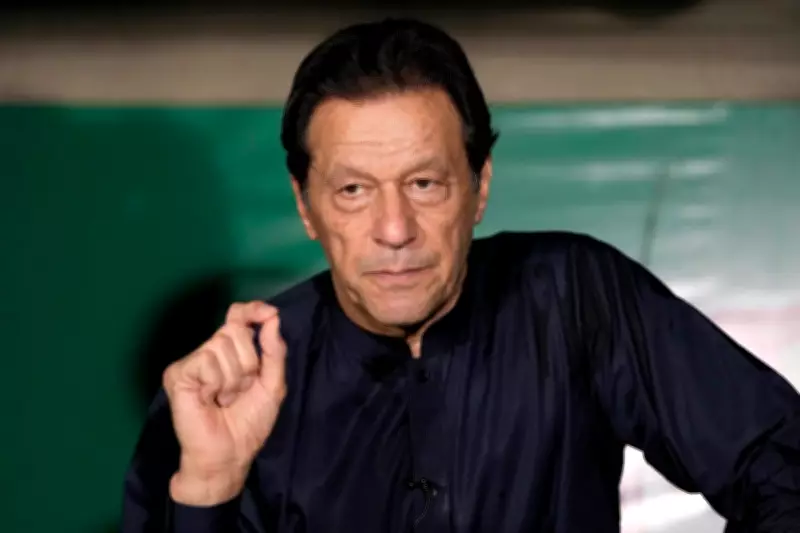
Pakistan's Supreme Court has issued a directive ordering authorities to assemble a specialized medical team to conduct a comprehensive examination of imprisoned former Prime Minister Imran Khan. This urgent judicial intervention follows Khan's recent report to his legal counsel that he has experienced a severe and alarming loss of vision, amounting to approximately 85% impairment in his right eye.
Court Mandates Immediate Medical Assessment
According to official statements from Khan's political party, Pakistan Tehreek-e-Insaf (PTI), the Supreme Court's order explicitly requires that a qualified medical board must conduct this critical examination before the deadline of February 16. The court's involvement underscores the gravity of the health concerns raised by the 73-year-old former premier, who has been incarcerated since 2023 following a conviction in a corruption case.
Conflicting Accounts of Khan's Health Condition
Information Minister Attaullah Tarar publicly stated two weeks prior that Khan had undergone a brief medical procedure for an eye condition at a hospital in Islamabad and was reported to be in good health. However, Khan's family members have strongly contested this account, revealing that they were not consulted or informed before he was transported to the medical facility.

The Islamabad hospital released an official statement on January 30, confirming that Khan had reported significantly reduced vision in his right eye. He was initially examined by a senior prison doctor, and based on that assessment, the hospital proceeded with a medical procedure, which they claim was conducted with Khan's explicit consent.
Allegations of Medical Neglect and Delayed Treatment
Khan's legal representative, Salman Safdar, presented a detailed report to the Supreme Court earlier this week, outlining a troubling timeline. Safdar stated that his client had normal vision just several months ago but began experiencing persistent blurred vision, which was promptly reported to prison authorities. According to Khan's account relayed through his attorney, a specialist later diagnosed a damaging blood clot, and he now retains only 15% vision in his right eye due to what is alleged to be critically delayed medical intervention.
Aleema Khan, the former prime minister's sister, addressed reporters on Thursday, providing further distressing details. She asserted that her brother had been complaining of blurred vision for a continuous period of three months, but prison authorities failed to take appropriate action until his eyesight deteriorated so severely that it necessitated an emergency hospital visit in late January. She directly attributed the worsening of his condition to this prolonged delay in receiving adequate medical care.
Political Party Demands and Ongoing Tensions
The PTI party has issued a forceful statement on social media, condemning what it describes as poor and negligent treatment of Khan's deteriorating eyesight. The party has threatened to pursue legal actions and is demanding that Khan be granted immediate and unrestricted access to his personal physicians, specialized eye treatment, and a transfer to a hospital for proper care. Both Khan's family and the PTI have made repeated appeals to the government of Prime Minister Shehbaz Sharif, requesting permission for family visits and examinations by independent eye specialists alongside Khan's own doctor.
Khan's Enduring Political Influence
Despite his imprisonment and removal from office through a parliamentary vote of no confidence in April 2022, Imran Khan remains an immensely popular political figure in Pakistan. He has consistently alleged that his ouster was the result of a U.S.-backed conspiracy involving his political rivals and former army chief Qamar Javed Bajwa. These claims have been firmly denied by Washington, Pakistan's military establishment, and his political opponents, highlighting the deep and ongoing political divisions within the country.
The Supreme Court's order for a medical examination brings renewed attention to Khan's health and the conditions of his imprisonment, intersecting with broader political tensions and raising significant questions about medical care for high-profile detainees in Pakistan's justice system.