Metropolitan Police Launch Investigation into Controversial Chants at London Rally
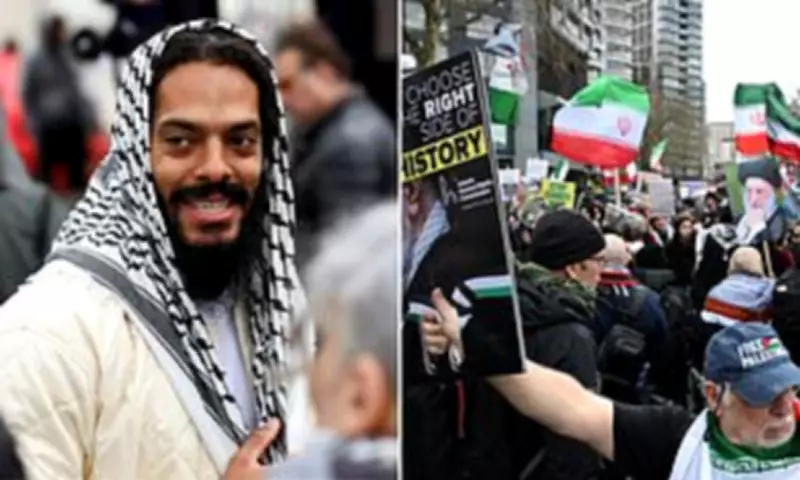
The Metropolitan Police have initiated a formal probe into chants of 'death to the IDF' led by punk musician Bobby Vylan during the Al-Quds Day rally in London. Officers made twelve arrests today as activists waved Iranian flags and displayed posters of the country's supreme leader. The demonstration, which was reduced to a static protest after being banned by Home Secretary Shabana Mahmood, saw thousands of pro-Iran supporters gather on the South Bank of the Thames.
Controversial Performance and Police Response
Pascal Robinson-Foster, known as Bobby Vylan from the punk duo Bob Vylan, repeated his controversial Glastonbury chant while appearing as a speaker at the demonstration. Members of the crowd joined in with the chants, prompting immediate police attention. The Metropolitan Police stated they were 'aware of chanting made by a speaker at the Al Quds protest and will be investigating.' They acknowledged the concern such footage and language causes, particularly within London's Jewish communities.
Police confirmed the investigation specifically relates to the 'death, death to the IDF' chant. This follows previous advice from the Crown Prosecution Service, which determined there was insufficient evidence to proceed with a case when similar language was used earlier. The force deployed over 1,000 officers to manage the event, anticipating a difficult public order situation.
Demonstration Details and Arrests
The rally, organized by the Islamic Human Rights Commission (IHRC), was originally planned as a march through London streets but was curtailed due to what the Home Secretary described as 'the risk of serious disorder.' Instead, a two-hour static protest was permitted, with the River Thames serving as a buffer between pro-Iran demonstrators and counter-protesters gathered on the north side.
Demonstrators congregated for prayers and brandished placards with messages including 'boom boom Tel Aviv' and 'Israel is a terror state.' Chants of 'from the river to the sea' echoed through the crowd as people held pictures of the assassinated Ayatollah Ali Khamenei and his successor, Mojtada Khamenei. Police warned they would arrest anyone chanting intifada slogans, showing support for Palestine Action, or holding placards inciting hate.
Counter-Protests and Political Statements
Approximately one hundred counter-protesters assembled on the opposite side of the Thames, organized by Stop The Hate. They waved Israeli flags and held signs reading 'Hamas is terrorist.' Police vans were stationed on Lambeth Bridge, with a police boat patrolling the river to maintain separation between the groups.
During his speech, Bobby Vylan accused the West of being run by 'cold-hearted monsters' and criticized the government for 'gaslighting' protesters. He branded police officers as 'pigs' and claimed Zionist influence in the UK was 'palpable.' Other speakers, including Hussain Shafiei of the Workers Party, made inflammatory statements about British politics and the Middle East conflict.
Background and Funding Controversy
Al-Quds Day began in Iran in 1979 following the Ayatollah's revolution and has been held in London for forty years. The IHRC, which organized the event, has received £458,500 in taxpayer-funded donations since 2020 through Gift Aid claims, despite being under Charity Commission investigation. A 2023 Prevent report described the group as an 'Islamist group ideologically aligned with Iran.'
Met Assistant Commissioner Ade Adelekan stated that the decision to ban the march was not taken lightly, marking the first time in fourteen years that Scotland Yard has prohibited a protest march. After the event concluded at 3 PM as planned, police hailed their operation as successful, noting that both groups dispersed without attempts to breach conditions.
The investigation continues as authorities review footage and evidence from the demonstration, which has reignited debates about free speech, extremism, and public safety in the context of ongoing Middle East tensions.