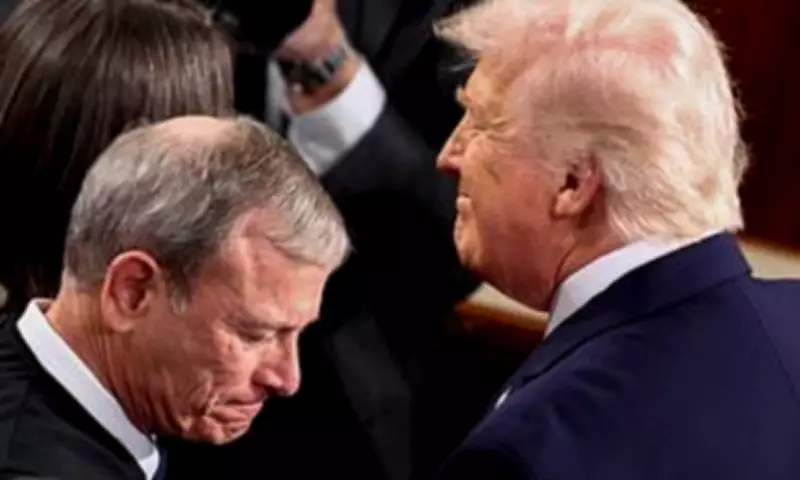
Chief Justice Roberts Issues Stern Warning Over Personal Attacks on Judiciary
In a significant address at Rice University's Baker Institute for Public Policy in Houston on Tuesday, Chief Justice John Roberts of the United States Supreme Court delivered a forceful message condemning personal attacks on judges. The conservative jurist emphasized that while critiques of judicial opinions are a normal part of democratic discourse, personally directed hostility poses a serious threat.
'Personally directed hostility is dangerous and it's got to stop,' Roberts declared, underscoring the need to protect the integrity and independence of the judiciary. His comments have been widely interpreted as a thinly-veiled rebuke of former President Donald Trump, who recently launched a ferocious barrage at the Supreme Court over a tariff ruling in the early hours of Monday.
Context of Roberts' Remarks
Roberts' statement comes amid heightened political tensions surrounding the judiciary, with increasing instances of public figures targeting individual judges rather than focusing on legal arguments. He acknowledged that criticism of court decisions is expected and healthy in a functioning democracy, but stressed that crossing the line into personal attacks undermines the rule of law.
The Chief Justice's warning highlights growing concerns about the erosion of respect for judicial institutions, which could have long-term implications for the stability of the legal system. His remarks at the Houston event were delivered in a measured tone, yet carried a sense of urgency, reflecting the gravity of the situation.
Political Backdrop and Implications
Observers have linked Roberts' comments directly to Donald Trump's recent outburst against the Supreme Court. Trump, known for his confrontational style, has frequently criticized judges in personal terms, a pattern that has raised alarms among legal experts and advocates for judicial independence.
This incident is not isolated; it follows a broader trend of political figures escalating rhetoric against the judiciary, potentially endangering public trust in courts. Roberts' intervention serves as a reminder of the delicate balance between free speech and the need to safeguard judicial impartiality from undue influence or intimidation.
As the head of the federal judiciary, Roberts' words carry considerable weight and may prompt reflection among politicians and the public alike. The ongoing debate over the role of courts in contentious issues, such as tariffs and other policy matters, makes his call for civility particularly timely and relevant.