Michigan Synagogue Attacker's Family Killed in Israeli Strike Days Before Assault
In a tragic escalation of personal grief into public violence, the Lebanese-born man who deliberately drove his vehicle into a synagogue in Michigan had suffered the loss of four close family members in an Israeli military strike in Lebanon merely one week earlier. The incident, which the Federal Bureau of Investigation has categorised as a targeted act of violence against the Jewish community, unfolded on Thursday afternoon outside Detroit, leaving the assailant dead and a community shaken but physically unharmed.
Details of the Violent Assault on Temple Israel
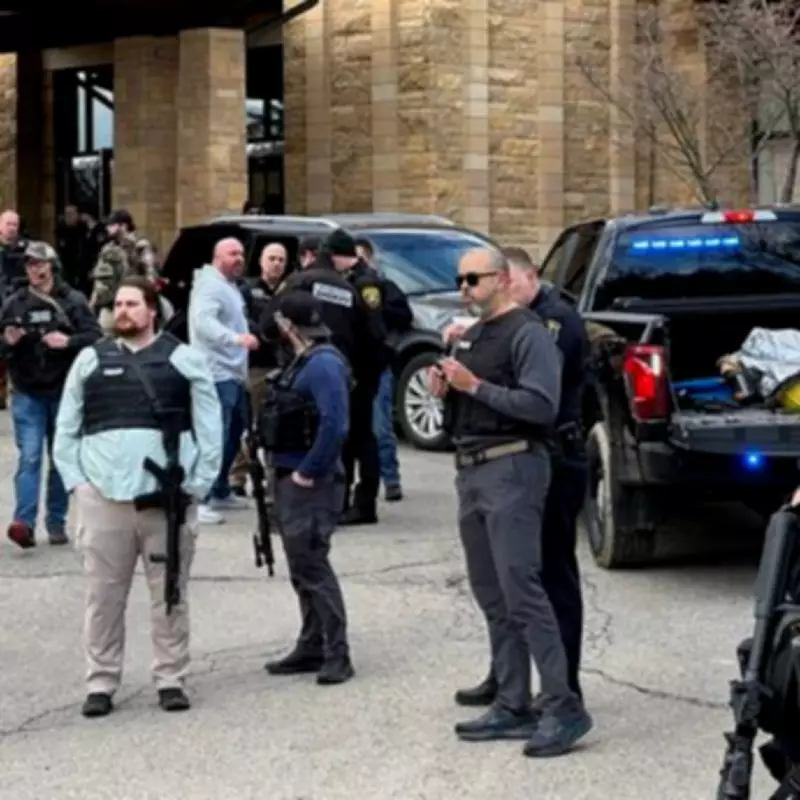
Authorities have identified the suspect as Ayman Mohammad Ghazali, a 41-year-old man who arrived in the United States in 2011 on an immediate relative visa and subsequently obtained citizenship in 2016. According to official reports, Ghazali crashed his car into Temple Israel, a synagogue housing an early childhood centre with approximately 140 children present at the time. Following the collision, he allegedly began firing a gun through the vehicle's windshield, engaging in an exchange of gunfire with an armed security guard stationed at the premises.
Initial beliefs suggested that security personnel within the building had fatally shot the gunman, with authorities later stating he was neutralized. However, Jennifer Runyan, the special agent in charge of the FBI’s Detroit field office, clarified during a Friday news conference that Ghazali ultimately died from a self-inflicted gunshot wound. This occurred after his vehicle became stuck and the engine caught fire. A subsequent search of the car revealed large quantities of a liquid suspected to be petrol alongside fireworks, indicating potential plans for a more destructive attack.
The Personal Tragedy Preceding the Attack
The motive behind this violent act appears deeply rooted in a recent personal catastrophe. It has now been confirmed that, on March 5, an Israeli airstrike in the Lebanese town of Mashgharah resulted in the deaths of four of Ghazali's relatives. A local official, speaking anonymously to the Associated Press, detailed that the strike occurred just after sunset during Ramadan, killing Ghazali's two brothers, Kassim and Ibrahim Ghazali, as well as Ibrahim's children, Ali and Fatima. Their mother was seriously wounded and remains hospitalised.
This devastating loss, occurring only days before the Michigan assault, provides a stark backdrop to the suspect's actions. The timing underscores a narrative of profound personal grief transforming into a public, targeted violent outburst against a religious institution.
Community Response and Safety Protocols
Miraculously, none of the synagogue’s staff, teachers, or the 140 children in the early childhood centre sustained injuries during the terrifying incident. Cassi Cohen, the director of strategic development at Temple Israel, was present in a hallway near the crash site. She described hearing a loud bang, immediately gathering staff members, and securing herself in an office.
"When I heard the crash, I knew it was bad," Cohen recounted, noting the proximity of a classroom with children up to four years old and over thirty staff members. She credited the community's safety preparedness, stating, "Thankfully, we have had many active shooter drills and our staff is prepared for these situations." This emphasis on preparedness likely played a crucial role in preventing casualties among the vulnerable individuals present.
The FBI continues to investigate the full circumstances surrounding the attack, treating it as a deliberate targeting of the Jewish community. The revelation of the suspect's recent familial loss in Lebanon adds a complex layer to the investigation, intertwining international conflict with domestic security concerns.