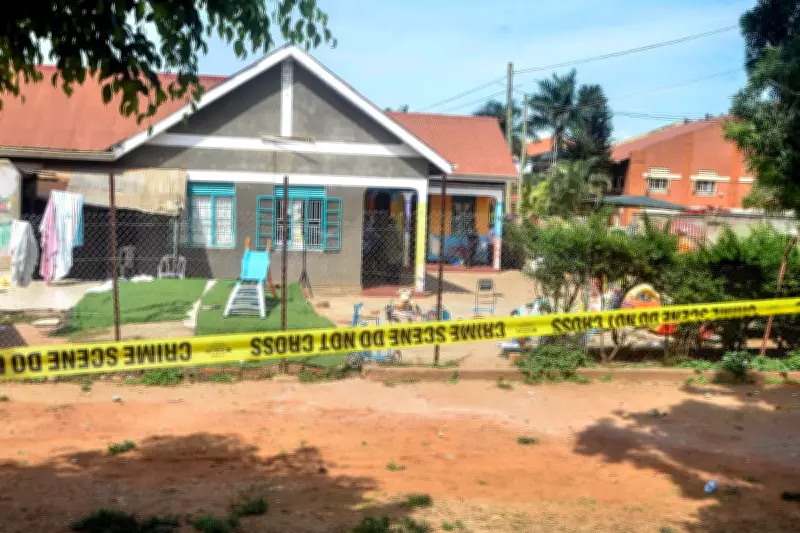
Uganda's First Mobile Court Trial Begins for Nursery Machete Attack
The trial of a man accused of murdering four children in a brutal machete attack has commenced in a tent erected near the crime scene in Kampala, Uganda. This landmark case represents the inaugural test of Uganda's controversial mobile court sessions, designed to allow local communities to attend proceedings that generate significant public interest.
Details of the Horrific Attack
Christopher Okello Onyum stands accused of killing four nursery students at the Gaba Early Childhood Development Program in a Kampala suburb on April 2nd. The shocking incident has reverberated throughout the East African nation, with the motive remaining unclear despite ongoing investigations.
On Monday, Onyum entered a plea of not guilty to four counts of murder. According to witness testimony, the attacker disguised himself as a parent, engaged in brief conversation with nursery staff, then locked the facility's gate before launching his violent assault on the children.

The aftermath saw an enraged crowd attempt to lynch Onyum, who was ultimately rescued and taken into police custody. If convicted, he could potentially face the death penalty under Ugandan law.
Controversy Surrounding the Mobile Court System
President Yoweri Museveni's directive to expedite the trial and conduct proceedings in the highly public setting of a mobile court has sparked significant controversy. Critics argue this approach risks sensationalizing a tragedy that has caused immense pain to bereaved families while potentially interfering with proper judicial processes.
The Uganda Law Society has issued a strong statement condemning the president's intervention as executive interference that undermines the suspect's fundamental right to a fair trial. "This is not justice," the society declared. "It's a judicial lynching rally."
Groundbreaking Judicial Proceedings
Hundreds of local residents gathered for the trial, which is being conducted in a large tent erected on church grounds not far from where the attack occurred. This represents the first practical implementation of mobile courts following the publication of formal operational directives in a legal notice this March.
The Ugandan judiciary has defended its decision to proceed with the mobile court format, emphasizing its "commitment to taking justice closer to the people through innovative approaches." This experimental system aims to increase transparency and community engagement in high-profile cases that capture national attention.
As proceedings continue, legal observers will closely monitor whether this novel approach balances public interest with judicial integrity, particularly given the emotional nature of the case and the severe charges involved.