Guatemala has been plunged into a nationwide state of emergency following a wave of deadly violence orchestrated by powerful criminal gangs from within the country's prisons. President Bernardo Arévalo decreed the 30-day measure on Sunday after eight police officers were killed in retaliatory attacks.
Hostage Crisis and Deadly Retaliation
The crisis began on Saturday when inmates affiliated with major gangs took 46 people hostage across three separate prisons. The hostages, comprising 45 guards and a psychiatrist, were used as leverage to demand the transfer of incarcerated gang leaders to lower-security facilities.
In a brutal response to state efforts to quell the uprising, gang members targeted police officers. Authorities confirmed that eight officers were killed "in the line of duty" in attacks around the capital, Guatemala City, and surrounding areas. Interior Minister Marco Antonio Villeda labelled the perpetrators "terrorists," stating the killings were a direct response to state actions against them. Ten other officers were wounded and one suspected gang member was killed in the violence.

Security Forces Retake Control
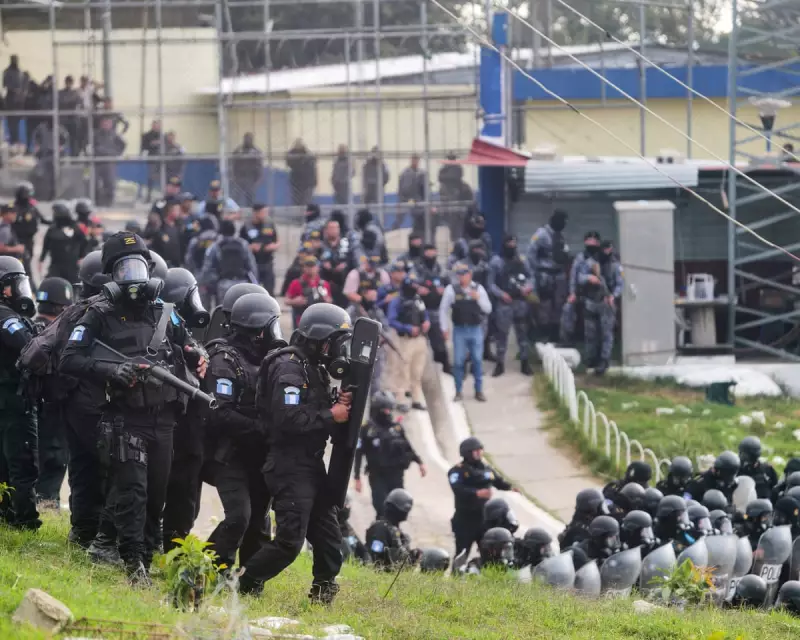
In a series of coordinated dawn raids on Sunday, Guatemalan police, backed by the armed forces, stormed the three prisons to end the standoff. Using armoured vehicles and teargas, they entered the Renovacion I maximum-security prison in Escuintla, about 75km south of the capital.
The operation was successful, with authorities regaining control of all three facilities without a single casualty among the hostages or security forces. All 46 hostages were freed safely. During the operation at Renovacion I, nine hostages were rescued. A further 28 were freed at Fraijanes II prison and nine at Preventivo prison on the outskirts of Guatemala City.
In a significant blow to the gangs, security forces captured the alleged leader of the Barrio 18 gang, identified as Aldo Dupie, alias "El Lobo" (The Wolf). Official footage showed him being led away in bloodstained clothing.
Nationwide Emergency Measures
Facing one of the most severe security challenges of his presidency, President Arévalo enacted the state of emergency on Sunday evening. The order, which requires approval from the opposition-controlled Congress, suspends constitutional rights including freedom of assembly and allows for arrests without a court warrant.
The move underscores the grave threat posed by gangs like Barrio 18 and its rival Mara Salvatrucha (MS-13), both designated as terrorist organisations by the United States. These groups are blamed for fuelling Guatemala's high levels of drug trafficking and violence; the country's homicide rate of 16.1 per 100,000 inhabitants is more than double the global average.
The crisis prompted an urgent call for unity from congressional president Luís Contreras. The US embassy advised its personnel to shelter in place, and the Guatemalan government ordered schools to close on Monday. Defence Minister Henry Saenz vowed the army would "remain on the streets" to continue dismantling the criminal networks responsible for the violence.