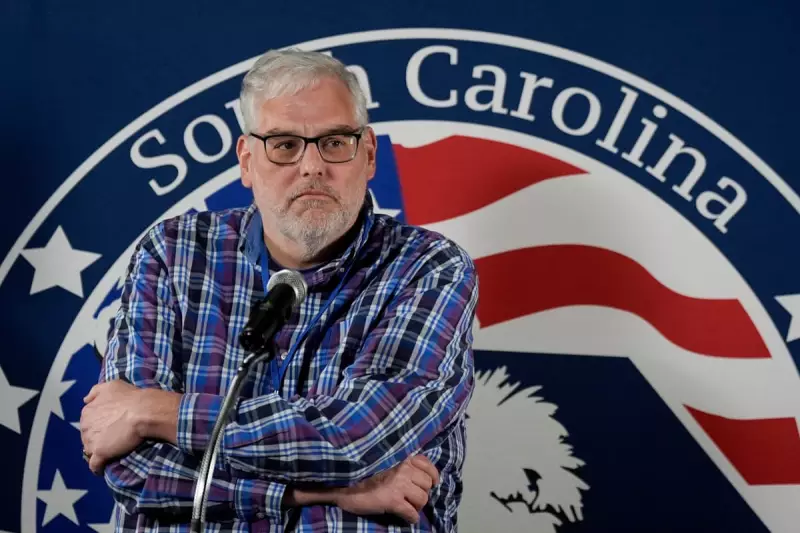
For over two decades, Associated Press reporter Jeffrey Collins has served as an impartial witness to one of the state's most solemn and controversial duties: carrying out the death penalty. Based in South Carolina, Collins has observed 14 executions since 2002, including lethal injections, electrocution, and the recently revived firing squad.
The Solemn Duty of a Witness
Collins became the primary media witness for executions in South Carolina almost by default, remaining as the last AP reporter in the bureau after a 13-year hiatus in executions ended. The state resumed capital punishment in September 2024 after acquiring the sedative pentobarbital, a move enabled by a new law that shields the identity of drug suppliers. This secrecy, Collins argues, makes the role of independent observers more critical than ever.
"Our mission is to let people know what happens," Collins stated in an interview with The Guardian. With executions never filmed, journalists' accounts often become the only impartial record, cited later in court proceedings. South Carolina law permits three journalists to witness each execution, acting as pool reporters for the wider media.

Three Methods of Execution: A First-Hand Comparison
Collins has a unique perspective, having seen all three methods currently offered to inmates in South Carolina: lethal injection, electrocution, and firing squad. His first execution was of Richard Charles Johnson on 3 May 2002. In total, he has witnessed 10 lethal injections, three firing squads, and one electrocution.
He described the 2004 electrocution as a jarring experience. "You hear a thunk when everything starts," he recalled, noting the visible physical effect on the inmate as the current coursed through their body. In contrast, he said lethal injections are a longer, quieter process where the inmate's breathing gradually slows over 45 to 90 seconds before stopping.
The most recent additions to his experience are the three firing squad executions carried out in 2025, after the state provided the option. Collins described a tense wait of 40 to 70 seconds after a hood is placed on the inmate, followed by a sudden, loud bang that often causes witnesses to flinch. He noted the stark difference in one case, that of Mikal Mahdi, where the inmate groaned and made noises of apparent discomfort for nearly 90 seconds after the shots, leading to allegations from his lawyers that the execution was botched.
The Weight of Witnessing and a Call for Transparency
Witnessing so many state-sanctioned deaths takes a personal toll. Collins said he makes a point of doing something life-affirming the day after an execution, such as taking his daughter to lunch. He maintains that his role is purely observational. "There's nothing I did to start it, there's nothing I could do to end it," he reflected. "I'm just there to observe."
However, he is a vocal critic of the secrecy shrouding the execution process in South Carolina. He advocates for executions to be videotaped, even if kept under seal, to provide a definitive record. "The secrecy prevents the entire story from being told," he argued, pointing to unanswered questions about shooter training, drug quality, and placement of the target in firing squad executions.
For Collins, the fundamental reason for his grim duty remains clear: "The people of South Carolina have decided through their elected representatives to have the death penalty. People need to know what it looks like." His detailed, unflinching accounts ensure the public does exactly that.