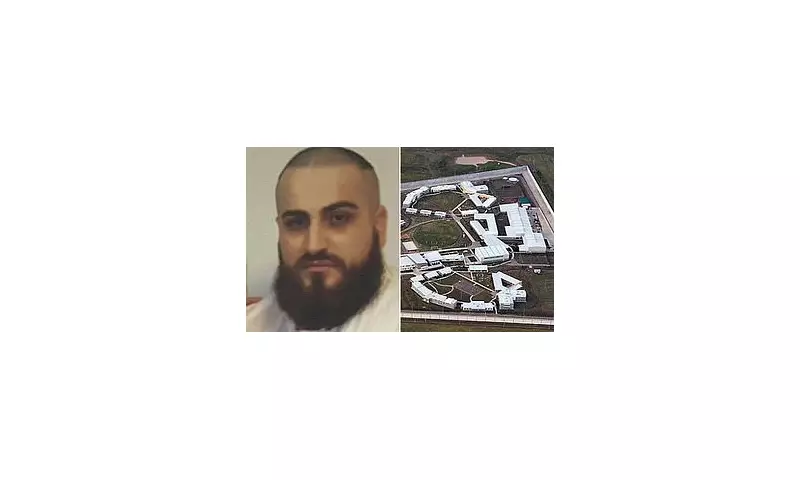
Taxpayers in Victoria could be forced to foot a multi-million pound bill to upgrade the state's highest security jails, following a landmark Supreme Court case brought by a notorious drug lord. The ruling, which found parts of Barwon Prison were built illegally, may grant some of the country's most dangerous criminals access to more comfortable conditions.
Kingpin's Legal Victory Over 'Open Air' Access
The case was spearheaded by George Marrogi, who is currently serving a 38-year sentence for murder and drug smuggling. Through a team of barristers, Marrogi argued that his rights were breached in the Olearia, Acacia, and Melaleuca Units of Barwon Prison, as well as the Exford Unit at the Metropolitan Remand Centre.
He specifically contended that the enclosed exercise yards, with their concrete walls and limited windows, failed to provide genuine access to 'open air'. 'It really just felt like an extension of my cell, so it was depressing and brought me no relief from my situation,' Marrogi told the court.

Justice's Inspection Leads to Damning Findings
Justice Claire Harris agreed with the argument this week after personally inspecting the facilities. She concluded that while in those specific areas, Marrogi was unable to feel sunlight, wind, or rain during his daily outdoor time.
Justice Harris found that exercise yards in the Exford Unit, two cells in the Olearia Unit, three yards in the Acacia Unit, and two yards in the Melaleuca Unit were illegally constructed. She noted there was 'no sensation of being exposed to the weather' at the Melaleuca Unit, stating the double sets of bars created 'a strong feeling of being enclosed.'
The ruling clarified that a space enabling a prisoner to be in the open air is an evaluative exercise, considering factors like access to sun, rain, wind, and a sense of exposure to the elements.
Security Concerns and Wider Implications
The court acknowledged Marrogi's status as a significant security risk, noting he had run a drug syndicate from within prison using a mobile phone. Concerns were raised that making maximum-security cells more 'open' could potentially increase escape risks.
A Victorian Government spokesperson stated: 'We are aware of the court's decision and will consider the findings. We make no apology for ensuring the highest risk prisoners in the state are securely kept.'
Although the case examined only the cells Marrogi occupied, the outcome is poised to reshape conditions across the state's entire prison system. Furthermore, the ruling has spurred additional legal action, with more inmates filing cases against conditions at the Carlton close supervision unit at Western Plains Prison, arguing they are also unlawful.
Marrogi's extensive criminal history includes:
- A manslaughter conviction as a youth, leading to a six-year minimum sentence.
- A murder charge in 2005 for stabbing a man during a brawl.
- Subsequent convictions for arson and drug smuggling.
- Documented incidents in prison including planning a jailbreak, assaulting officers, and setting fire to his cell.
Justice Harris also found the manner in which Marrogi was strip-searched on dozens of occasions breached prison regulations. The case will return to court at a later date, leaving the final cost to the public purse yet to be determined.