Alabama Man Faces Execution for 1991 Robbery Despite Not Firing Fatal Shot
Charles “Sonny” Burton, a 75-year-old Alabama man, faces execution for his involvement in a 1991 robbery that resulted in a customer's death, despite not being the one who pulled the trigger. The case has ignited a fierce debate about fairness, accomplice liability, and the application of the death penalty in circumstances where the defendant did not directly cause the fatal injury.
The 1991 AutoZone Robbery and Fatal Shooting
The incident occurred on August 16, 1991, during a robbery at an AutoZone store in Talladega, Alabama. Burton, then aged 40, was one of six men involved in the criminal operation. Testimony indicates that before entering the store, Burton stated he would “take care of it” if anyone caused trouble. During the robbery, another participant, Derrick DeBruce, yelled for everyone to get down while Burton, also armed, forced the manager to open the safe.
As the robbery was concluding, Doug Battle, a 34-year-old Army veteran and father of four, entered the store. He complied by throwing down his wallet and getting on the floor, but exchanged words with DeBruce. According to testimony from LaJuan McCants, who was 16 at the time, Burton and others had already left the store when DeBruce shot Battle in the back. McCants further testified that Burton later asked DeBruce in the getaway car why he had shot the man.

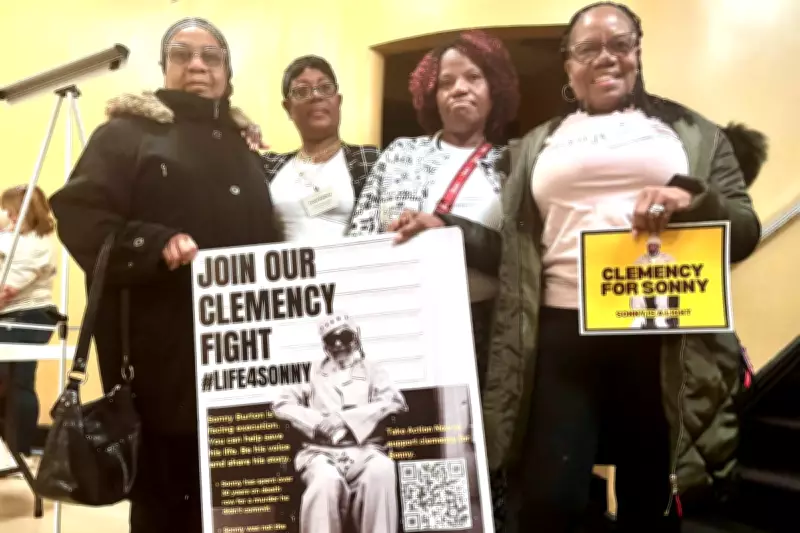
Divergent Legal Fates and the Current Clemency Battle
Both Burton and DeBruce were originally sentenced to death for their roles in the crime. However, DeBruce was later resentenced to life imprisonment without parole, leaving Burton as the sole individual facing execution. This disparity lies at the heart of the clemency campaign now underway.
In January, the Alabama Supreme Court authorised Governor Kay Ivey to set an execution date for Burton, with the method being nitrogen gas. Burton's attorney, Matt Schulz, has labelled the case an “extreme outlier” and argues it raises fundamental questions of justice. “We hope and pray that Governor Ivey recognises that this case slipped through the cracks,” Schulz stated. “It would be wrong to execute a man who did not even see the shooting take place, after the state agreed to resentence the shooter to life without parole.”
Pleas for Mercy from the Victim's Family and Jurors
Remarkably, the victim's own daughter is among those urging Governor Ivey to grant clemency. Tori Battle, who was nine years old when her father was killed, wrote a letter to the governor asking her to “consider extending grace to Mr. Burton.” She described her father as a man who valued peace and did not believe in revenge.
Adding significant weight to the plea, six of the eight living jurors from Burton's 1992 trial do not object to commutation, with three actively requesting it. Juror Priscilla Townsend said in an interview, “It’s absolutely not fair. You don’t execute someone who did not pull the trigger.” She explained that the jury recommended death after an emotionally charged trial but stated they would not have done so had they known the shooter would receive a lesser sentence.
Legal Precedent and Prosecutorial Stance
The legal framework for executing accomplices was established by the U.S. Supreme Court in 1987, which ruled that individuals who did not pull the trigger could face the death penalty if they displayed a “reckless indifference” for human life. Robin M. Maher of the Death Penalty Information Centre notes this has led to “arbitrariness among the jurisdictions,” with at least 22 documented executions of such accomplices.
However, Alabama law requires prosecutors to prove the accomplice had a “particularised intent to kill.” Burton's legal team contends this intent was never conclusively established. Despite these arguments, the Alabama Attorney General's office, led by Steve Marshall, opposes clemency, emphasising that Burton's conviction and death sentence have been upheld at every judicial level.

Burton's Background and Declining Health
Sentencing documents reveal Burton grew up with an alcoholic father who frequently beat him. Despite this difficult childhood, his sister, Eddie Mae Ellison, describes him as having become a protector for younger family members. “He is not perfect, but he is not the person depicted by prosecutors,” she asserted.
Ellison also highlighted her brother's failing health, noting he is now frail and requires a wheelchair or walker to move outside his cell. “He did not lay a hand on the man,” she pleaded. “Why do you feel it is necessary to take his life?” The case now rests in the hands of Governor Ivey, who has granted clemency in a death row case only once before, as the nation watches a legal and moral drama unfold in Alabama.