Freed After 18 Years: The Fight Against Indefinite IPP Sentences
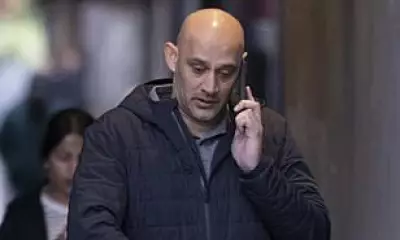
Haroon Ahmed describes his nearly two decades behind bars on an Imprisonment for Public Protection (IPP) sentence as being held "like a hostage." Now aged 37 and finally free after the Court of Appeal quashed his indefinite jail term last November, he is speaking out about what he calls a profound injustice that continues to affect thousands.
A Sentence Without End
In 2008, at just 19 years old, Ahmed received an IPP sentence for his role in a knifepoint robbery at a Derby service station. The manager was left unhurt but badly shaken. While his accomplice, who held the knife, received a five-year determinate sentence, Ahmed was handed the controversial indefinite term with a minimum tariff of two and a half years.
"I was told to keep my head down and never question it," Ahmed recalls of those early years. "When that minimum time was up, a letter was pushed under my cell door. A Parole Board panel I had never met decided I must serve at least another two years before they would consider my case again."

He spent almost eight years behind bars before receiving an in-person Parole Board hearing. It would be twelve years until his first release, only to be returned to jail indefinitely a year later after a conviction for actual bodily harm.
Fighting the System
Frustrated by what he saw as an unjust system, Ahmed escaped from prison several times, including a high-profile incident in 2015. "You've given me a sentence where I've technically got no release date. What can you actually do to me? So if I see a way out, I'm gonna take it," he explains.
He now describes this behaviour as a form of self-harm that kept him incarcerated longer. "They never understood that most of that behaviour was actually doing to myself, the escaping, the violent acts was a form of self-harm," he reflects.
The Turning Point
As Ahmed matured behind bars, public and political concern about IPP sentences grew. The terms were scrapped in 2012 amid human rights concerns about their implementation, but nearly 2,500 inmates remain trapped under the abolished system.
In 2023, Ahmed discovered he could submit an application to the Court of Appeal using forms printed in the prison library. Watching his appeal hearing via video link from HMP Oakwood last year, he felt transported back to 2008 as lawyers rehashed the details of the robbery.
Judges Mr Justice Soole and Lord Justice Popplewell ultimately ruled: "Having considered all the material which was before the Judge, we respectfully conclude that the imposition of the sentence of second last resort on this young applicant was not justified."
They quashed his IPP term, replacing it with a five-year prison sentence (which he had already served) and a five-year licence period.
A Childhood of Rebellion
Ahmed's journey into the justice system began early. Rebelling against his strict family, he left school in Year 7 and received his first jail sentence at just 12 years old - four months in a young offenders' institute.
"From there it was a downward spiral for me," he admits. "I wasn't listening to anyone, and I started to become a problem in the community and with my family. I found myself in and out of custody throughout my life until I received my IPP in 2008."
Ironies of Incarceration
After his first escape in 2011, Ahmed was transferred to a high-security prison. Ironically, he describes those years as the best of his prison life as he finally received an education, completing his GCSEs and A-Levels.
Yet the psychological toll of indefinite detention remained. "We are basically hostages," he states. "We have grown from teenagers to men, and we are watching people with much worse offending come to custody and be released. Every sentence is being reduced - people are getting 30 per cent off, 40 per cent off. Nothing is coming for IPP."

The Human Cost
To date, at least 94 people have taken their own lives in prison after losing hope of release from IPP sentences. The United Nations has condemned the terms as "psychological torture," while 233 IPP prisoners are serving their sentences in secure hospitals, often because the hopeless nature of their detention has left them profoundly damaged.
Ahmed describes watching fellow inmates deteriorate: "I have seen some people 10 years later and they are not the same. They are smoking synthetic drugs, they are self-harming, they are killing themselves, they have lost family members. They don't see any hope."
Calls for Government Action
Ahmed is calling for the government to take responsibility for what he sees as their mistake. "It was their mistake. And I would like them to take responsibility, because I had to for my offending. I had to for the wrongs I did," he told The Independent.
He supports proposals from the Howard League for Penal Reform that would give all remaining IPP prisoners a release date within two years at their next parole review. "I think two years is a long, long time, but it's better than nothing," he says. "In that two years, you can start to feel the weight off your shoulders. You can start to adjust to going home."
He adds urgently: "Let them go home, let them let their families know that something is happening. Let everyone just put this to the side now and get it over and done with. Until then, you are still causing trauma and you're still causing torture - because this has been classed as a torture sentence."
Systemic Failures
Ahmed says he received no meaningful support during his incarceration, only being approached about joining an IPP forum shortly before his release after 18 years. "No, you can't come to me 18 years later and offer a forum. I feel like it's disrespectful. I feel like it's a tick box for the prison service," he states.
While Prisons Minister James Timpson has insisted the government is supporting IPP prisoners through a refreshed IPP Action Plan, Ahmed's experience suggests systemic failures persist.
A Ministry of Justice spokesperson responded: "It is right that IPP sentences were abolished and we have already taken action to support these offenders to move on with their lives. This includes additional support for IPP prisoners and changing the law to ensure those serving these sentences in the community can be more swiftly considered for licence termination."
Looking Forward
Now free and back in Derby, Ahmed wants to support other IPP prisoners in challenging their sentences, particularly given drastic legal aid cuts in 2013 that made accessing support more difficult.
He credits his positive mindset with helping him survive the 18-year ordeal and wants to show others: "If I can do it and come out and be successful, then other IPPs can."
His case highlights ongoing concerns about a justice system that continues to hold nearly 2,500 people under sentences abolished over a decade ago, with human rights organisations and reform advocates calling for urgent action to address what many describe as one of the greatest injustices in modern British penal history.