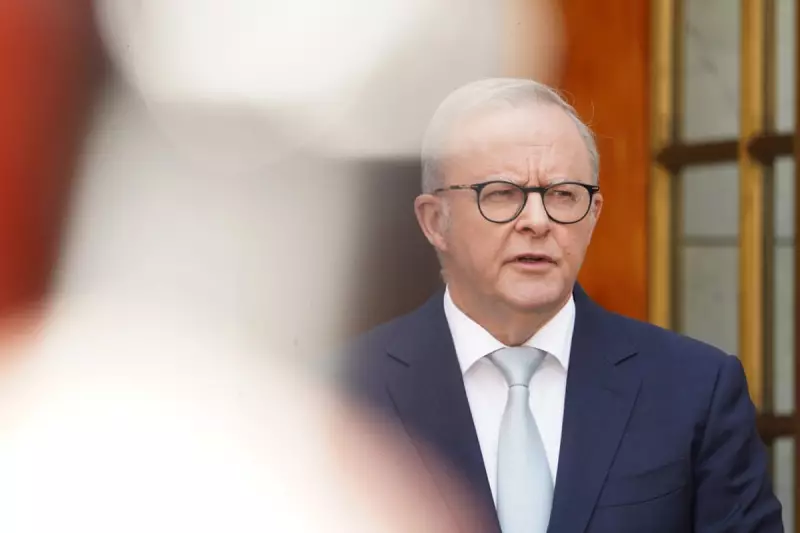
In response to the recent mass shooting at a Hanukah event on Bondi beach, the Australian government has fast-tracked plans to strengthen the nation's laws against hate speech and extremism. Prime Minister Anthony Albanese announced a suite of proposed legal changes on Thursday, accelerating the formal response to a report on antisemitism delivered in July.
Five-Point Plan to Combat Hate and Division
The government's strategy, developed in the wake of the attack which authorities allege was inspired by Islamic State, centres on a five-point legislative plan. The proposals aim to crack down on individuals and groups accused of spreading hatred and radicalisation.
The key changes include creating a new aggravated hate speech offence targeting preachers and leaders who promote violence. The plan also seeks to increase penalties for hate speech that incites violence and to formally recognise hate as an aggravating factor in sentencing for online threats and harassment.

Furthermore, the government intends to develop a regime for listing organisations whose leaders engage in hate speech promoting violence or racial hatred. A new federal offence for serious vilification based on race and/or advocating racial supremacy is also on the table.
New Visa Powers and Unanswered Questions
Alongside the legal reforms, the Home Affairs Minister will be granted new powers to cancel or reject visas for those deemed to be spreading hate and division. This move is part of a broader effort to prevent external ideologies from fuelling domestic tensions.
However, specific details remain scant. Both Prime Minister Albanese and Home Affairs Minister Tony Burke were reluctant to specify which exact groups or phrases would be targeted by the new laws. When asked about contentious slogans such as "from the river to the sea," Burke stated the laws would "set a test," rather than outlaw specific phrases.
Albanese emphasised a cautious approach, stating the government needed to ensure the proposals were legally sound. "These are quite complex … we want to make sure that we get it right," he said, without providing a timeline for implementation.
Pressure for Action and Potential Targets
The government has faced mounting pressure to act, particularly from Jewish communities and political opponents, following the Bondi attack. Independent MP Allegra Spender, whose Wentworth electorate includes Bondi, had previously pushed for stronger hate-speech provisions.
While government sources did not name specific targets, Minister Burke referenced concerns raised by ASIO chief Mike Burgess about groups like Hizb ut-Tahrir and neo-Nazi organisations. Burgess has previously stated such groups test the limits of legality without explicitly breaking laws.
The former ASIO chief, Dennis Richardson, added weight to calls for reform, telling ABC radio that existing hate speech laws "haven't been enforced with the rigour that they should be." The government's proposed listing regime could potentially create penalties for people supporting or funding blacklisted groups.
The Albanese government's accelerated response marks a significant shift in its approach to domestic security and community cohesion, directly linking the Bondi tragedy to a broader need to confront extremist rhetoric and antisemitism in Australia.