Fresh documentation has revealed a significant two-year gap in the known timeline of Bondi Beach terrorist Sajid Akram before his move to Australia, raising new questions for investigators.
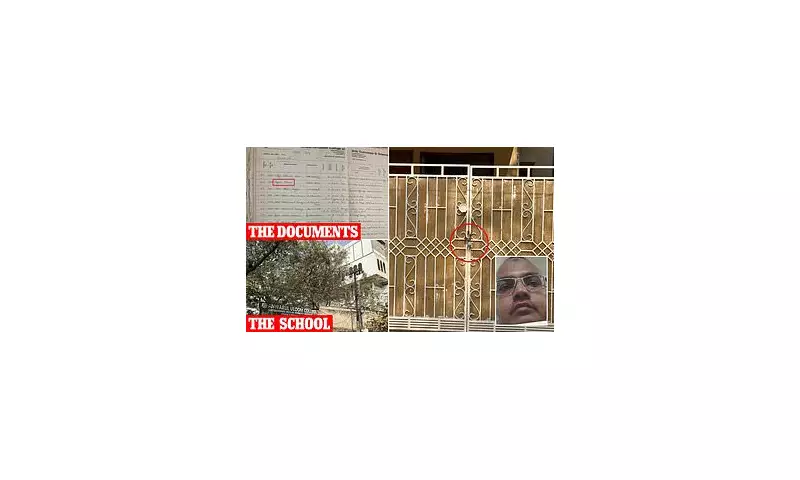
Records from Anwarul Uloom College in Hyderabad, obtained by the Daily Mail, show Akram graduated with a bachelor's degree in commerce in July 1996. This contradicts the widely reported graduation year of 1998.
Unaccounted Years and Family Estrangement
It remains unclear what Akram did during those two years before he left India in November 1998 for Australia, ostensibly seeking a new life and work. The director of Anwarul Uloom College, which caters to the local Muslim community but is not a religious school, stated he had no recollection of Akram, citing the thousands of students admitted annually.

Akram, 50, and his Australian-born son Naveed, 24, are alleged to have opened fire on a crowd celebrating Hanukkah at Bondi Beach on December 14. The attack left 15 people dead, including a 10-year-old girl, and 40 injured. It ended when police shot Sajid Akram dead and took his son into custody.
Indian police revealed that Akram's marriage to Italian-heritage Christian Venera Grosso in 1999 caused a furious family row, isolating him from his relatives in Hyderabad. In an apparent attempt to reconcile, he later had a traditional Muslim nikah ceremony performed in India.
Investigations in India and the Philippines
In the wake of the attack, Akram's family in Hyderabad has fled their home in the Al-Hasanth Colony, leaving the property padlocked. Neighbours described the family as isolated and non-interactive.
Telangana's director general of police, B. Shivadhar, confirmed Akram visited Hyderabad six times since 1998, often concerning family property matters. Assistant Commissioner Kishan Kumar stated Indian authorities are supporting the investigation but emphasised there is no indication Akram's radicalisation was connected to India.
Australian authorities are probing a trip Akram and his son took to the Philippines from November 1 to November 28. Their last known destination was Davao on Mindanao, a region with historical links to Islamic State activity. Philippine authorities, however, deny it is a training hotspot and say there is no evidence the pair undertook military exercises.
Aftermath and Charges
Following the Bondi massacre, investigative agencies visited the Akram family home in Hyderabad twice. The family claims they had limited contact with Sajid over 27 years and were unaware of his extreme beliefs.
In the lead-up to the attack, the pair rented an apartment in Sydney's Campsie, where investigators allegedly found an ISIS-propaganda style video. Two Islamic State flags were reportedly discovered in their car.
Police allege four firearms were found at the massacre scene, with two more recovered in searches—all legally owned. Naveed Akram, critically injured in the police shootout, faces 59 offences, including 15 counts of murder.
The victims of the attack were: Alex Kleytman, 87; Rabbi Yaakov Levitan, 39; Reuven Morrison, 62; Matilda, 10; Tibor Weitzen, 78; Marika Pogany, 82; Rabbi Eli Schlanger, 41; Dan Elkavam, 27; Peter Meagher, 61; Edith Brutman, 68; Boris Tetleroyd, 68; Tania Tretiak, 68; Adam Smyth, 50; Boros Gurman, 69; and Sofia Gurman, 61.