The recent revelation that the alleged perpetrators of the Bondi beach terror attack travelled to the southern Philippines has cast a spotlight on the region's long-standing status as a hub for Islamist militancy. Authorities confirmed that father and son Sajid and Naveed Akram arrived in Manila on 1 November, visiting Davao city on Mindanao island, before returning to Sydney on 28 November.
Why is Southern Mindanao a Terrorism Hotspot?
The southern Mindanao region has been a fertile ground for jihadist groups for decades, driven by historical grievances and a desire to establish an Islamic state in the predominantly Catholic nation. The area's dense forests and porous maritime borders have made it conducive to guerrilla warfare and the movement of foreign fighters.
While analysts note that extremist activity has declined, it has not vanished. The most significant recent conflict was the five-month siege of Marawi city in 2017 by Islamic State-aligned militants, which resulted in widespread destruction and displacement. Todd Elliott, a security risk analyst, stated that "Marawi is still a hotbed of jihadist support."

Which Militant Groups Remain Active?
Despite being significantly weakened, several groups persist. The once-notorious Abu Sayyaf group has largely been neutralised through surrenders. The Bangsamoro Islamic Freedom Fighters (BIFF) continue operations but are diminished, while the Moro Islamic Liberation Front has embraced peace.
The most prominent current threat is Isis-East Asia, a loose network of about 300 to 500 fighters who have carried out sporadic attacks. In December, authorities killed alleged high-ranking leader and bomb expert Mohammad Usman Solaiman of the Daulah Islamiyah group, which was blamed for bus bombings in 2022.
A History of Attacks and Government Response
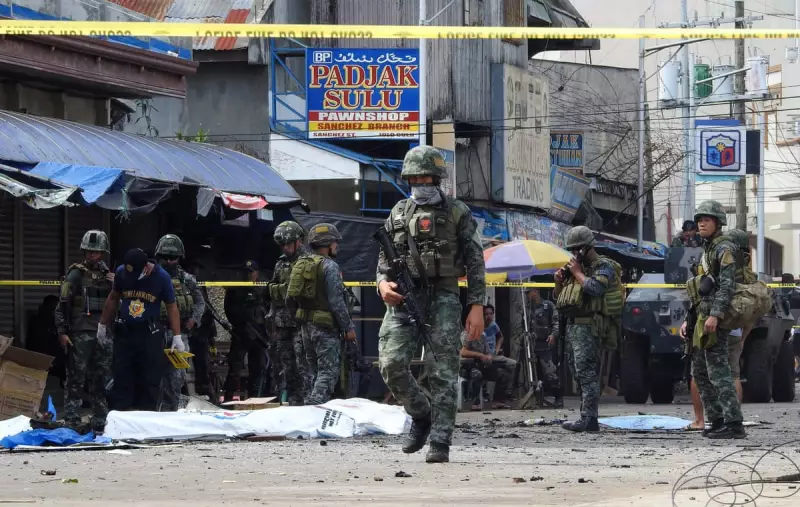
While major attacks have decreased since the fall of IS and the pandemic, deadly incidents persist. The most lethal recent attack was the twin bombings of a Catholic church in Jolo, Sulu, in 2019, which killed 20 and injured 100. Further bombings in Jolo in 2020 and at Mindanao State University in December 2023 show the ongoing threat.
The Philippine government has intensified its crackdown, using a 2020 anti-terror law to bolster its powers. Military operations have led to the death, arrest, or surrender of key figures, fragmenting the remaining groups and reducing their operational reach. However, the Akrams' visit underscores that the region's reputation as a terrorism hotspot endures, raising urgent questions for international investigators.